Time
A clock is one of the most trusted objects in modern life. It tells us when to leave, how long we waited, and how much of the day is gone. But it cannot explain why childhood summers felt endless, why grief can stop a room, or why the future can press on the body before it arrives. Time is stranger than the clock makes it seem.
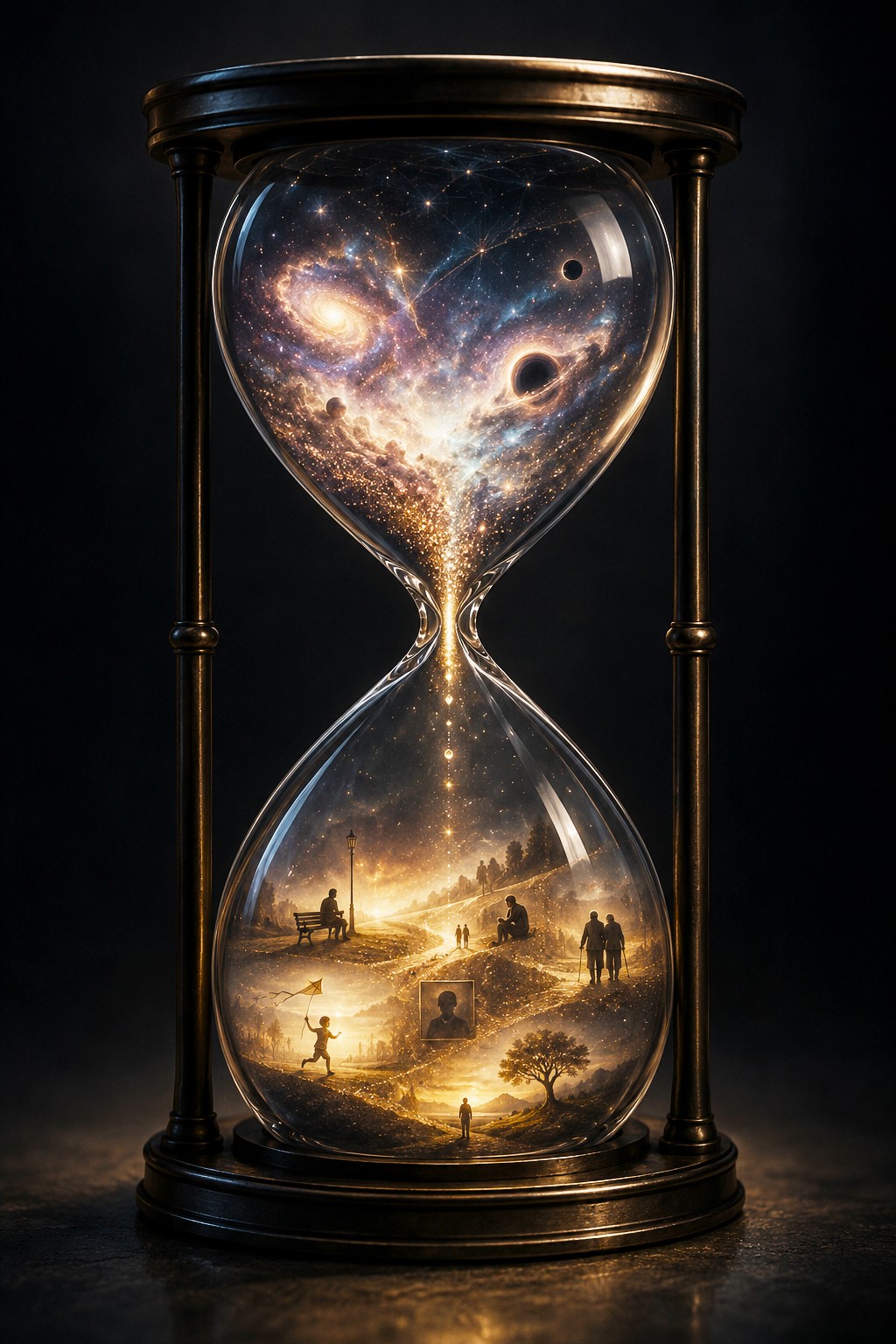
A clock can tell you when a train leaves, when a meeting starts, or how long you have been awake. But it cannot tell you why childhood summers felt endless, why grief distorts a room, or why the future can feel heavier than the present.
That is because a clock does not contain time.
It measures a rhythm.
It counts a regular sequence of changes and offers that sequence back to us as order. A second passes. A hand moves. A number changes. A pulse repeats. From that repetition, we build schedules, deadlines, histories, anniversaries and alarms.
But time itself is stranger than the clock makes it seem.
We speak about time as though it were a substance. We save it, spend it, lose it, waste it, run out of it and ask where it went. The language is useful, but it can also mislead us. It makes time sound like a thing in our possession, when much of what we call time is really change, memory, expectation, pressure and loss.
Time may be less a thing we live inside than a thing that lives inside us.
The Measure of Change
At its simplest, time is the measure and ordering of change.
Without change, there is nothing to time. No movement. No ageing. No before. No after. No growth. No decay. No memory. No waiting.
A room with no change could not tell you that a minute had passed. A universe with no change would have no events to arrange. Time appears when one state gives way to another, when something can be said to have happened, and then something else happens after it.
This is why time and story are so closely related.
A story is not just a collection of things. It is a sequence of change. A beginning becomes a middle. A decision creates a consequence. A person becomes different because something happens to them. Without time, there is no plot. Without change, there is no meaning to arrange.
The same is true of the universe.
In cosmology, time allows us to trace the universe’s stages. Each era expresses a different rhythm and scale of transformation. These epochs form the spine of the universe’s narrative.
Cosmologists have divided the full story of the universe into five eras, not because the universe has chapters in the human sense, but because each vast period is defined by a different kind of change.
First comes the Primordial Era: the explosive beginning, when the universe expands, cools, and the basic conditions for matter emerge. This is time at its most violent and compressed. Some of its most important transformations happen in fractions of a second, seconds, and minutes. Matter and antimatter separate. Light elements form. The universe changes from something almost impossible to imagine into something that can eventually make atoms, stars and galaxies.
The strange thing is that the Primordial Era contains both unimaginable speed and vast waiting. The earliest events happen faster than thought can hold, but the universe still has to cool, spread and settle before familiar structures can form. Time begins as violence, then becomes preparation.
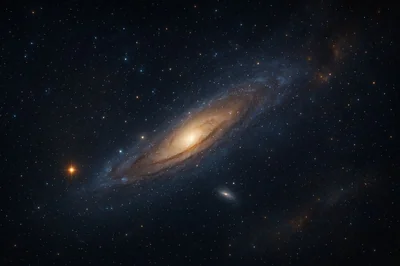
Then comes the Stelliferous Era, the age of stars. This is the era we live in. Gas gathers. Stars ignite. Galaxies form. Elements are forged inside stellar furnaces. Planets gather around suns. In at least one place, chemistry becomes biology, biology becomes consciousness, and consciousness begins to ask what time is.
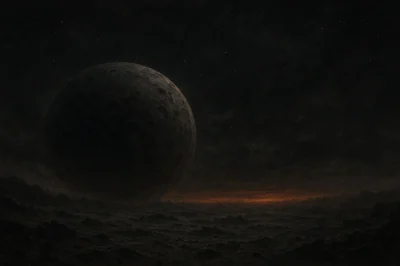
After that comes the Degenerate Era. Stars no longer form as they once did. The bright engines of the universe burn out. What remains are remnants: white dwarfs, neutron stars, brown dwarfs, cold planets and black holes. The universe has not ended, but its main drama has changed. It is no longer an age of ignition. It is an age of leftovers, embers and slow exhaustion.
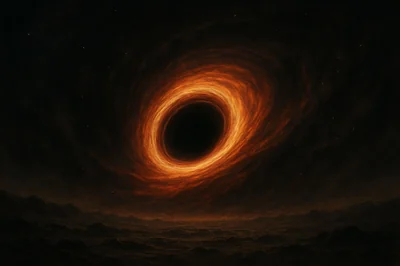
Then comes the Black Hole Era. Even the ordinary remnants have faded or decayed. Black holes become the dominant structures. The universe is no longer a place of shining stars and forming worlds, but of immense dark objects slowly giving up their energy across almost unimaginable spans.
Finally comes the Dark Era.
This last era is strange because it does not really describe a stretch of time in the usual sense. It has no clear final page. It is less an era with a duration than a name for what remains when almost every meaningful transformation has run down.
By then, the universe has expanded so far, and become so cold and diffuse, that interaction itself has almost disappeared. Matter is no longer gathered into the kinds of structures that make stars, planets, life or stories. Particles drift through distances so vast that meeting becomes less an event than an almost impossible accident.
Time does not end like a story ends.
It thins.
This is where the idea of time becomes almost impossible to hold. An era that stretches towards infinity stops feeling like an era at all. It becomes a horizon: not a chapter, but the fading of chapters.
Time shapes every change in the universe. From explosive beginnings to near stillness, each epoch expresses a different rhythm of transformation. It marks beginnings, endings and the rhythms of evolution. It is the frame through which every era becomes legible.
At one scale, time is the history of the cosmos. At another, it is the order in which one thing becomes another.
The universe expands.
Matter forms.
Stars ignite.
Elements are forged.
Planets gather.
Life emerges.
Bodies evolve.
Minds begin to remember.
Each stage depends on sequence. Each transformation requires a before and after. Time links cause to effect and creates the structure within which stories can be told.
But even here, time is not simple.
No Master Clock
There is no master clock standing outside the universe, keeping one perfect rhythm for all things. Time is not measured from nowhere. Every measurement is taken from somewhere.
A clock belongs to a place. It follows a path. It exists within a relation. What it measures is not a universal substance called time, floating above all things. It measures a local order of change.
This matters because it changes the feeling of the word.
When we say “time”, we often imagine something absolute. Something shared. Something that passes equally for everyone and everything. But the universe is not organised around one external viewpoint. Events are measured from positions within the universe, not from outside it.
The clock does not escape this.
It is not wrong. It is not fake. It is simply local.
It gives us a stable rhythm from where it is. That rhythm is useful enough to run cities, coordinate trains, launch satellites, organise schools and meet someone for coffee. But usefulness is not the same as ultimate truth.
Clock time is one layer of order.
It is not the whole of time.
The Present Trap
Here is the strange part.
We never actually experience the past.
We remember it now.
We never actually experience the future.
We imagine it now.
Every regret happens in the present. Every hope happens in the present. Every fear of what might come is felt now. Even memory, which feels like a return, is an event taking place inside the current moment.
We do not walk into yesterday. We rebuild it.
We do not enter tomorrow. We predict it.
The only thing consciousness ever touches directly is now.
This does not mean the past was not real. It does not mean the future does not matter. It means our access to both is mediated through the living present. The past reaches us as memory, record, scar, habit and consequence. The future reaches us as imagination, intention, anxiety and plan.
The present is not a tiny point between two vast territories.
It is the place where all time becomes experience.
That is why time feels so intimate. We do not merely observe change. We carry it. We turn it into identity. We say, “That happened to me.” We say, “One day I will become.” We say, “I am running out of time.”
A life is not just a sequence of events. It is a present mind arranging change into meaning.
The Time Inside Us
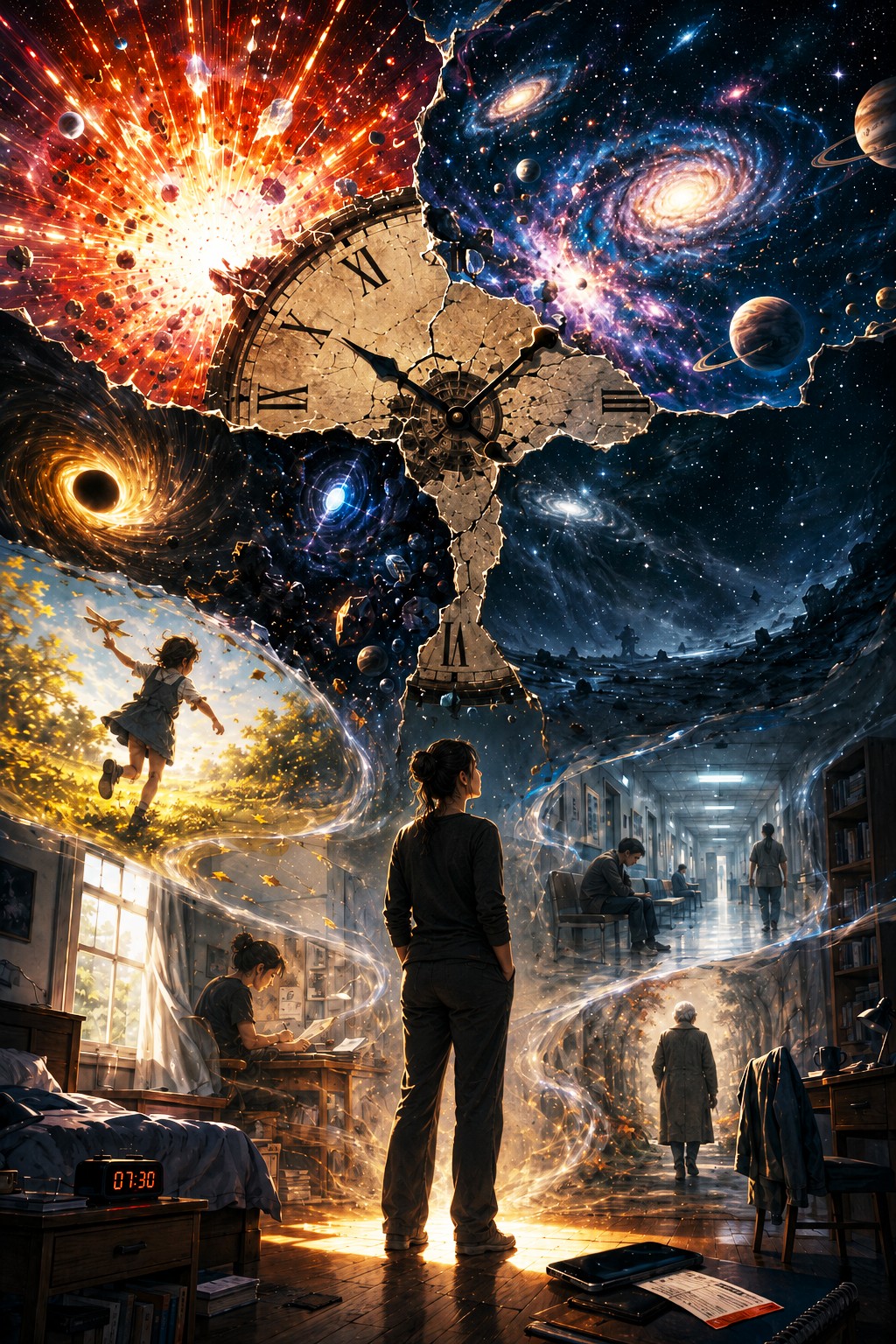
Once we understand that consciousness only touches the present, lived time becomes stranger.
A clock may move evenly, but experience does not.
Fear stretches the present. Boredom thickens it. Grief can make an ordinary room feel suspended outside history. Joy can make hours disappear. A deadline can pull an imagined future into the body as tension. A memory can make something long gone feel closer than the morning.
This is not because the clock has failed.
It is because human beings do not experience time as pure measurement. We experience the present under the pressure of what has happened, what may happen, what we want, what we fear, and what we have not yet understood.
A child’s summer can feel endless because the future has not yet been divided into bills, meetings, appointments and ageing. A waiting room can make five minutes feel cruel because the mind fills each second with possibility. A period of grief can collapse the usual order of life because the world still moves, but meaning no longer keeps pace.
The body does not ask, “How much time has passed?”
It asks, “What does this moment mean?”
That question changes everything.
The same hour can be empty, urgent, peaceful or unbearable depending on the state of the person living through it. Time, as measured by a clock, may be regular. Time, as carried by a mind, is not.
This is why the past and future have such force.
They are not present as places we can visit, yet they shape the present from inside it.
A person can be sitting at a table, physically safe, while a memory fills the body with danger. Another person can be lying in bed, surrounded by quiet, while the imagined future turns the ceiling into a threat. Nothing has happened yet. Something has already happened. Neither event is physically present.
Still, the body responds.
This is lived time.
Not time as a clock counts it, but time as the present mind reconstructs change.
What Time Refers To
So what does the word “time” actually refer to?
It depends on the level.
In everyday life, time refers to shared measurement. It is the clock, the calendar, the appointment, the deadline and the agreed rhythm of social order.
In physics, time refers to the ordering of events and the local measurement of change. It is not a universal clock above reality, but part of how reality is structured from within.
In cosmology, time refers to the unfolding of the universe. It lets us speak about eras, transformations, emergence and decay.
In biology, time refers to growth, ageing, rhythm and adaptation.
In psychology, time refers to memory, anticipation, attention and the emotional weight of change.
In narrative, time refers to sequence. It is how events become a story.
The mistake is assuming all these meanings are the same.
They overlap, but they are not identical.
Clock time helps society coordinate. Cosmic time helps us understand the universe’s development. Lived time helps us understand why a moment can feel larger than its duration. Narrative time helps us organise identity. Mortality gives all of it weight.
Time is not one simple object.
It is a layered relation between change, order, measurement and experience.
What Change Becomes
A clock can tell you that a minute has passed. It cannot tell you what that minute was.
It cannot tell you whether it was wasted, endured, treasured, feared or forgotten. It cannot tell you why one year disappeared while another still echoes. It cannot tell you why a person can spend decades moving forward while living from a moment they never left.
The clock measures rhythm.
The universe unfolds through change.
The mind turns change into memory, expectation and story.
Somewhere between those layers, time appears.
Not as a single thing moving past us, but as the way change becomes ordered, measured and felt from a particular position in reality.
Perhaps time is not the thing we move through.
Perhaps time is what change becomes when seen by something that remembers, predicts and dies.
That is why time can be counted without being understood.
That is why a clock can be correct and still tell us almost nothing.
Time is real as order, relation and change. But the time we live, fear, lose and remember is made inside the present.
Primordial Era
The primordial era refers to the earliest phase of the universe , beginning with the Big Bang around 13.8 billion years ago. During this time , the universe was extremely hot and dense, filled with a rapidly expanding…
Stelliferous Era
The stelliferous era is the long stretch of cosmic time when stars are actively forming and shining. Beginning hundreds of millions of years after the Big Bang and lasting for trillions of years, it’s marked by bright…
Degenerate Era
The degenerate era is the future period of the universe when star formation has ended and existing stars have burned out, leaving behind remnants like white dwarfs, neutron stars, and black holes. With little unusable…
Black Hole Era
The black hole era is the distant future of the universe when most matter has collapsed into black holes and almost all other cosmic structures have faded away. During this time, black holes slowly lose mass through…
Dark Era
The dark era is the final stage of the universe’s evolution. By this time, stars have long ceased to shine, black holes have evaporated, and all large-scale structures have dissolved. Only sparse particles, low-energy…