How the Collapse of the Soviet Union gave Rise to Mafioso Rap
The Cold War ended in Moscow, but one of its aftershocks moved through New York basslines. As America celebrated the free market, whole neighbourhoods were left staring at wealth from the wrong side of the glass. Mafioso rap turned that contradiction into cinema: luxury, violence, strategy, survival and the low price of one American dream.

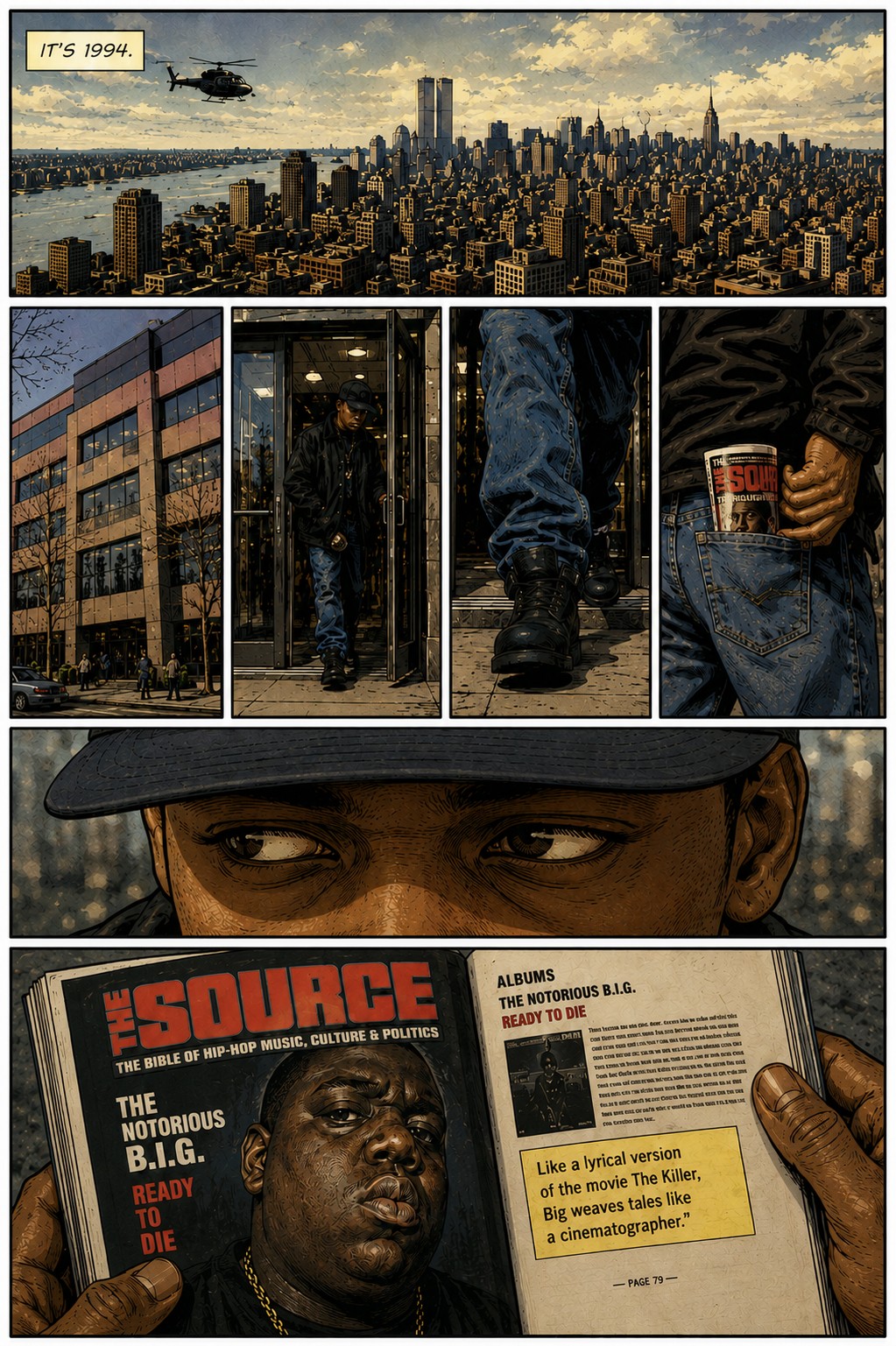
It’s 1994. A young Shawn Carter, 24, emerges from an office building in Queens. He pauses to peer at the world from beneath his cap’s low brim and pulls a copy of The Source from his baggy jeans. Christopher ‘Biggie’ Wallace gazes defiantly back from page 79. Shawn’s eyes linger on a particular line of the glowing review for Biggie’s debut album Ready to Die: ‘Like a lyrical version of the movie The Killer, Big weaves tales like a cinematographer.’
With that, the camera is rolling on Mafioso rap. Its rhymes are sophisticated, cinematic narratives delivered through cold-blooded and menacing detail, meticulously and aggressively calculated to a smooth finish, like a mastermind laying out a plan to a soundtrack of dark, heavy, bassy, slow to mid-tempo beats and sweeping orchestral samples, evoking the luxury and power of a mob movie.
Like the pioneers of New Journalism, Mafioso rappers like Nas, Jay-Z, Raekwon and Biggie crafted their narratives with the economy of a director immersed in the story. It was an innovation born of necessity, as growing up on the streets of New York was like being born into an unrecognised urban war zone.
Free Market Claims Victory
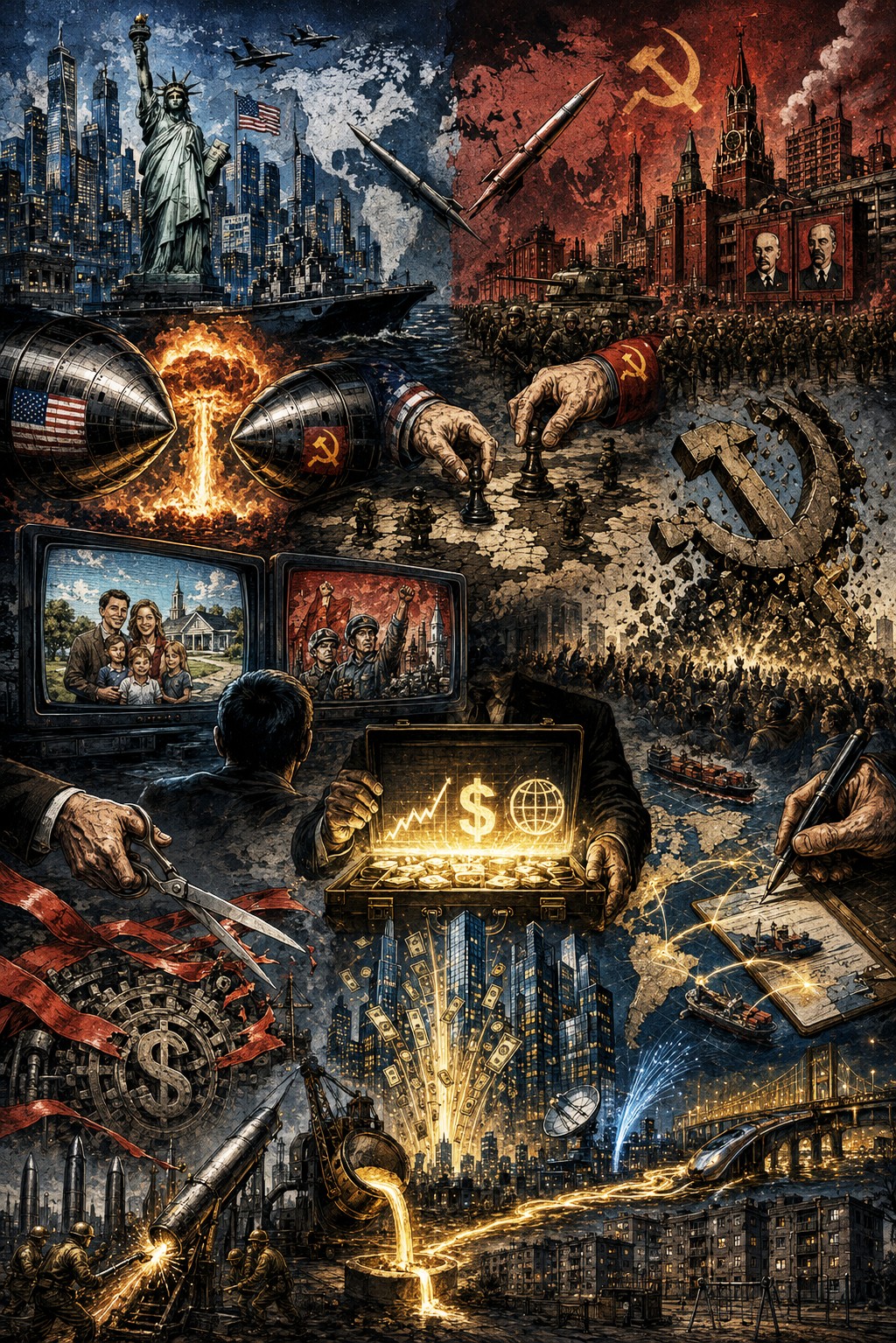
Leading up to the early 90s, the Cold War was half a century of geopolitical tension: the U.S. and its Western allies versus the Soviet Union and its Eastern Bloc.
Nuclear weapons and the risk of mutually assured destruction necessitated fighting through proxy conflicts, propaganda, and a relentless arms race.
America needed a robust economic model to prove its effectiveness on the world stage, and neoliberals argued that free markets and minimal government intervention were superior to centralised, state-controlled systems, which lacked efficiency and innovation.
The Soviet Union’s collapse in 1991 seemed to substantiate these claims, shaping ideas of success, wealth, personal responsibility, and a belief that America’s way of life was inherently right. It embedded the idea that anyone could rise to the top of a free market, nurturing neoliberal policies that had taken root during Reagan’s presidency in the 80s.
The Peace Dividend
The political climate at the end of the Cold War facilitated the implementation of neoliberal policies. While the U.S. was riding high on its Cold War victory, Reagan and Bush aggressively promoted deregulation and tax cuts, reshaping the world in its image, often at the expense of weaker nations.
With tensions lifted, military spending decreased. The resulting surplus, dubbed the ‘peace dividend’, was to be redirected into domestic programmes, infrastructure, and advancing Cold War research. As though a reward and a natural progression of American neoliberal strength, policymakers and investors increasingly looked toward technologies developed during the Cold War. In the years that followed, these developments helped fuel the technology boom that would transform American life during the 1990s.
New York, New York
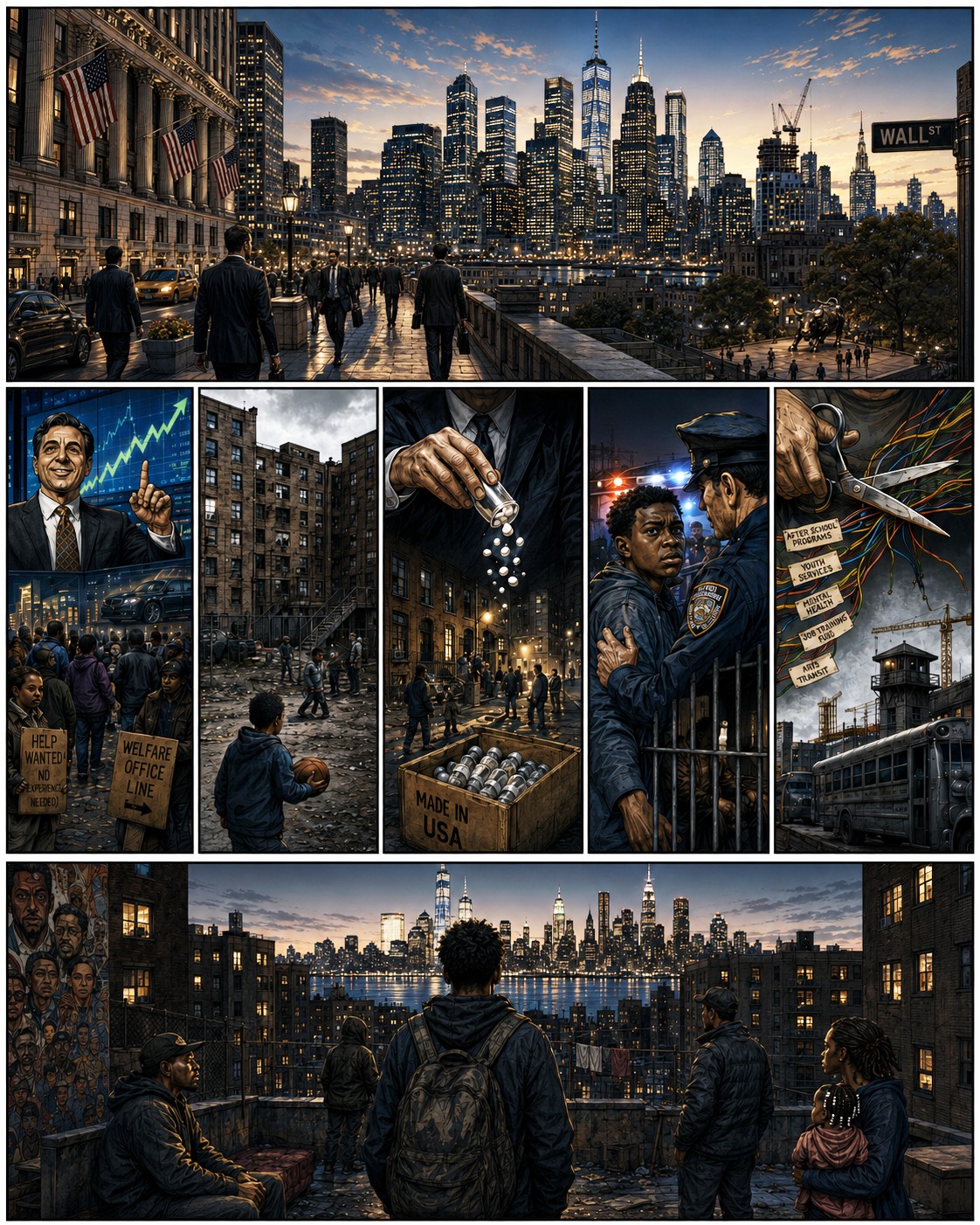
The USA was experiencing an economic resurgence. However, neoliberal ideals focused on individual responsibility as a driver of economic success.
While areas like Manhattan experienced economic booms and gentrification, neighbourhoods like Bedford-Stuyvesant, home to Marcy Projects, had deteriorated since the 1940s. By the time Reagan’s C.I.A. had helped flood American ghettos with crack cocaine in the Iran-Contra Affair of 1985–87, the crack epidemic had devastated communities. Residents grappled with poverty, high crime, drug activity, crumbling infrastructure, limited opportunities, and the constant threat of violence from both residents and police.
In accordance with neoliberal attitudes, mental illnesses, social inequalities, poverty and systemic factors underlying drug use were downplayed. Drug use and crime were framed as personal choices rather than symptoms of broader social issues. Social programmes were cut, and a war on drugs fuelled the criminal economy. Private prisons and drug enforcement industries flourished, benefiting from harsh laws, harsh penalties, and increased incarceration rates among young black men, further destabilising communities.
The peace dividend was not evenly distributed and exacerbated wealth gaps. This created an environment in New York City projects that was difficult to thrive in or even survive, but from which great opportunity and wealth were visible, and just out of reach.
The Low Price of One American Dream
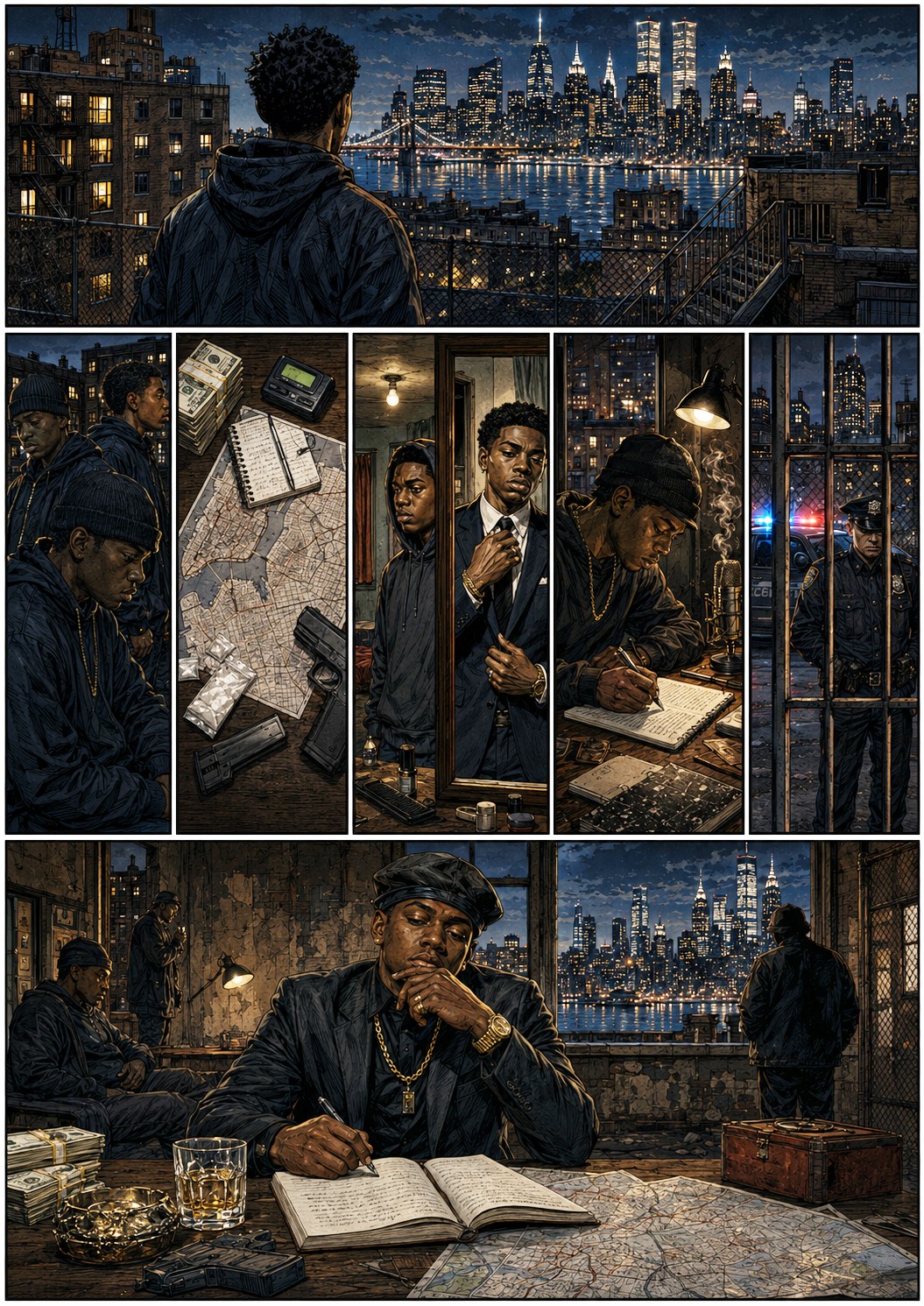
The paradox of national economic optimism alongside inner-city poverty helped shape the themes of Mafioso rap, which emerged from those areas. Consider the following, taken from D’Evils, a record from Jay-Z’s debut album, Reasonable Doubt:
None of my friends speak, we're all tryna win
But then again, maybe it's for the best, though
Cause when they're seein' too much
You know they're tryna get you touched
Whoever said illegal was the easy way out
Couldn't understand the mechanics
And the workings of the underworld
It reflects neoliberal themes of wealth, power, self-reliance and individualism. It conveys the inherent dangers of his lifestyle and speaks to the misconception that engaging in illegal activities is an easy or simple route to wealth. It reflects a mindset born from a hyper-competitive environment. Mafioso rap exposed the corruption, inequalities, suffering, economic disparity, poverty and criminalisation of poverty that push people into illegal activities and are perpetuated by neoliberalism.
Rappers like Jay-Z adopted the roles of drug lords and Mafia dons in an attempt to manifest the opulent lifestyles that seemed just out of reach due to systemic inequalities. The gritty innovation and realism of Mafioso rap emerged from the need to survive in an increasingly punitive environment by mastering the arts of both conflict and communication.
Market-Era Testimony
The collapse of the Soviet Union, the resulting economic shifts and the introduction of neoliberal policies, fuelled the harsh conditions in New York City projects that fostered the emergence of Mafioso rap.
The genre is not just a reflection of street life, but a commentary on broader socio-economic disparities. Its success can be attributed to how well it captured the situation on the ground.
Birth of Roc-A-Fella
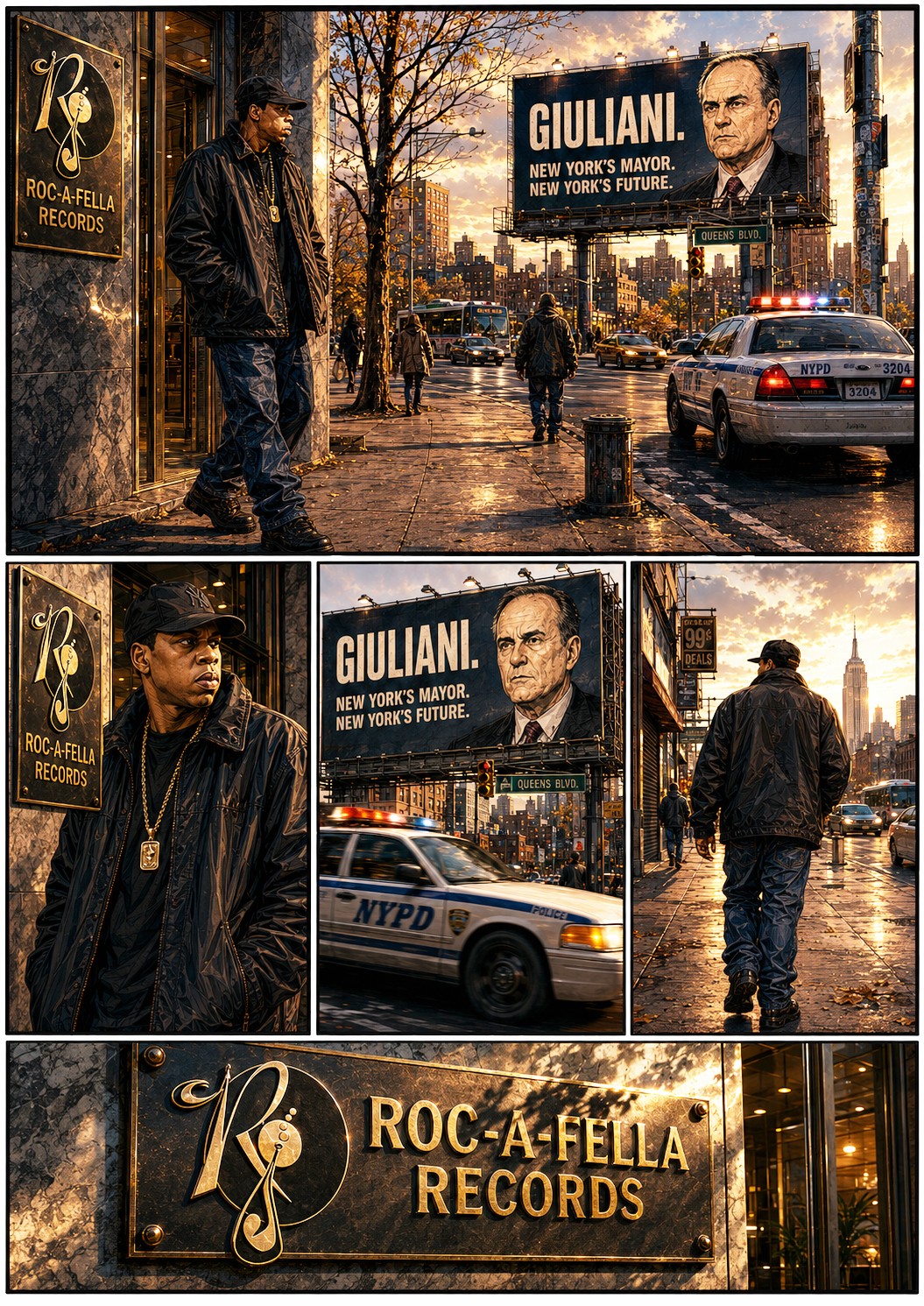
Outside Shawn’s building, his eyes settle on a billboard of Mayor Rudolph Giuliani, the face of New York’s tough-on-crime era. The streets are changing, crime rates are falling, and hip-hop is entering the mainstream. It might be a great day to exit the illicit drug trade. It is a good thing, then, that the building behind Shawn is the headquarters of his new independent label, a soon-to-be heavy-hitter in Mafioso rap: Roc-A-Fella Records.