Drake is the Ronaldo of Rap
Ronaldo was never the easiest genius to love. Too polished, too hungry, too aware of the scoreboard. Yet season after season, he kept arriving where it mattered. Drake has built a rap career with the same uncomfortable force. You may admire it. You may resent it. Either way, the numbers are still there.
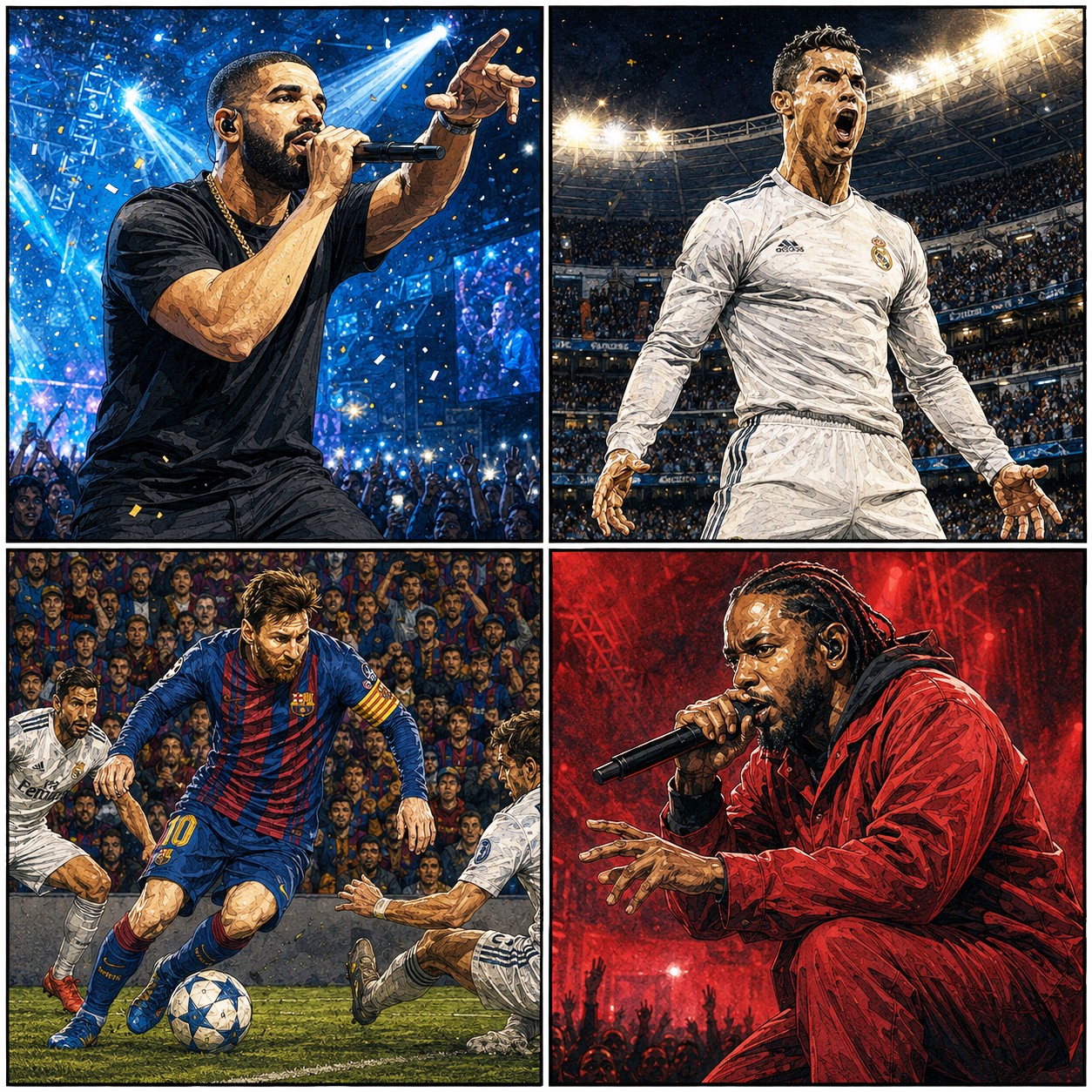
It's another Friday.
Millions of people wake up to discover that Drake has released another project.
Within hours, social media has already decided how to feel.
"It sounds the same."
"He isn't saying anything."
"Kendrick could never make this."
"Drake isn't even a rapper."
Yet by Monday morning, the numbers tell a different story.
The album sits comfortably at the top of the charts. Individual songs occupy streaming playlists across the world. Another tour sells out. Another generation memorises another chorus.
People insist Drake has lost.
The scoreboard insists otherwise.
The Wrong Question
Modern rap debates revolve around one question: Who's the greatest?
The problem is that people rarely mean the same thing.
Sometimes they mean lyrical ability.
Sometimes they mean influence.
Sometimes they mean storytelling.
Sometimes they mean cultural impact.
Sometimes they simply mean who they enjoy listening to.
Those are all legitimate measures.
But they are not the same measure.
Football solved this problem years ago.
The Messi-Ronaldo Trap
For almost twenty years, football revolved around two men. Lionel Messi and Cristiano Ronaldo.
Messi arrived like football had remembered how to dream.
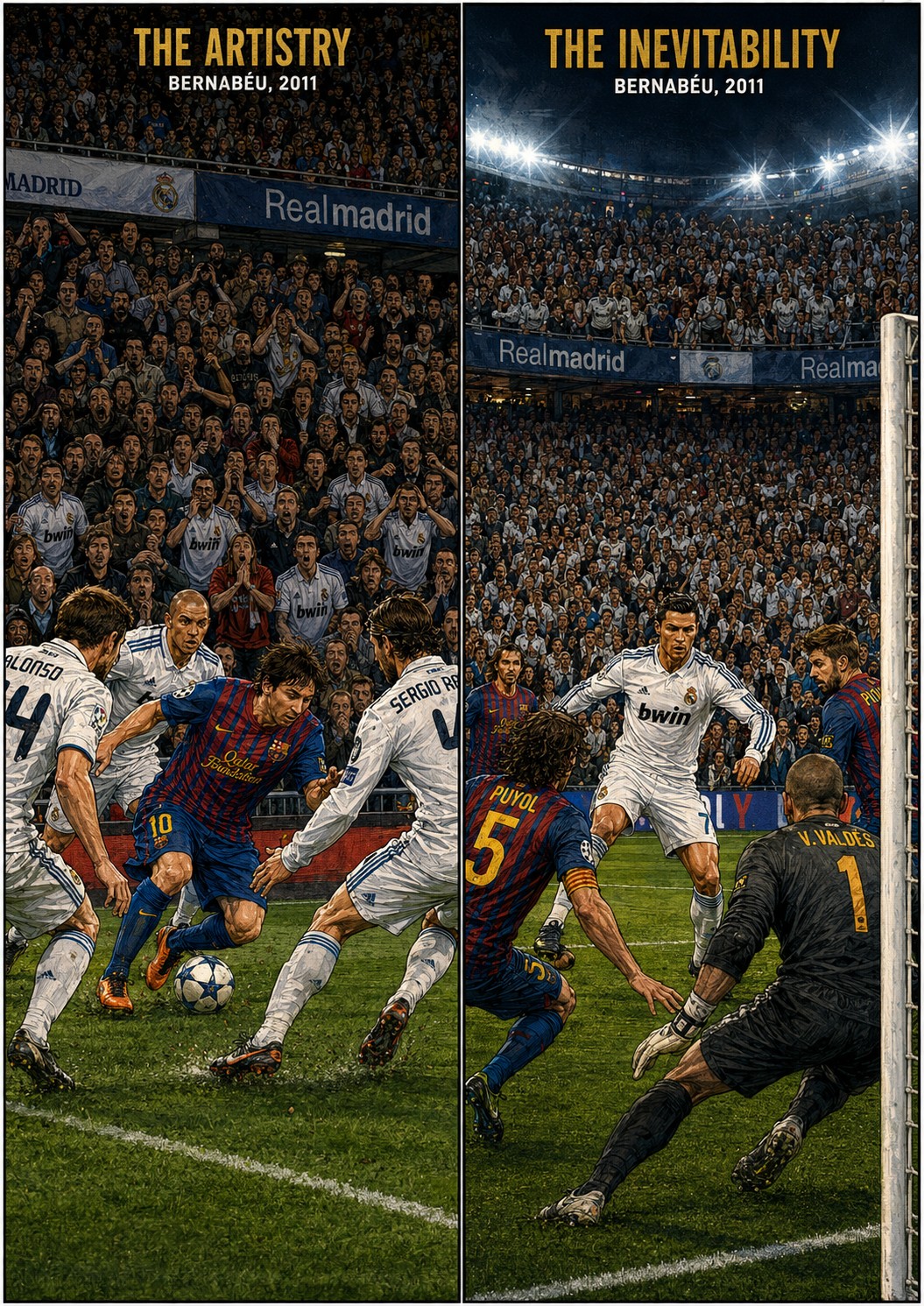
Picture the Bernabéu in 2011. Real Madrid against Barcelona. A Champions League semi-final. The game is tense, bitter and crowded with pressure. Madrid are at home, but they are not comfortable. Their players have chased Barcelona’s passing patterns all night. Their supporters have roared, whistled and complained, trying to drag their team back into control.
Then Messi receives the ball.
At first, nothing looks dramatic. He is still far from goal. There are white shirts ahead of him, defenders behind him, noise all around him.
But the stadium feels the shift before the move has fully begun.
A murmur rises.
Not a cheer.
Not yet.
More like recognition.
The kind of sound a crowd makes when it senses danger before the players can stop it.
Messi nudges the ball forward. One defender steps in. The crowd tightens. Messi slips past him. Another comes across.
The noise changes again, from warning to disbelief. Every touch feels too small to matter, yet each one removes another opponent from the scene. He is not sprinting through space. He is creating it. He is finding little doors inside bodies, angles inside pressure, routes that seem to appear only because he has arrived.
For Madrid’s defenders, it must feel like trying to close a curtain around water. They know the whole stadium is watching them fail in real time.
For Barcelona’s supporters, the moment becomes musical. Every touch pulls a new sound from them. A gasp. A lift. A rising cry. Messi is not only playing the game. He is playing the crowd, pressing emotion out of thousands of people with the outside of his boot.
By the time he reaches the box, the audience already knows. So do the defenders. So does the goalkeeper. The finish only confirms what the stadium has been feeling for several seconds.
Watching Messi felt effortless because his genius often looked like inevitability. The ball stayed close to him, as if it had chosen him. The game bent around him. Even people who wanted his team to lose could recognise the beauty of what they were seeing.
Ronaldo inspired a different kind of feeling.
Watching Ronaldo’s career was not always about being enchanted. It was about knowing that, sooner or later, he would arrive.
A cross would hang in the air for a fraction too long. A defender would lose concentration at the back post. A knockout tie would drift towards panic. Then Ronaldo would appear in the frame.
Manchester United. Real Madrid. Juventus. Portugal.
League season. Champions League night. International tournament.
Again and again, the pattern repeated.
Other teams could mock the stepovers, complain about the ego, question the body language, or insist that someone else was more naturally gifted. But their managers still had to plan for him. Their defenders still had to track him. Their fans still felt that quiet dread when the ball entered the box.
That was Ronaldo’s power. Not that everyone loved watching him most. That everyone knew what he could do to the scoreboard.
Season after season, he made reliability feel theatrical. Competition after competition, he turned expectation into production. Goal after goal, he built a career that became almost impossible to argue with.
People sometimes criticised his style. Few criticised his results.
Eventually, the debate stopped being about football. It became a debate about what greatness actually means.
Rap Recreated the Same Argument
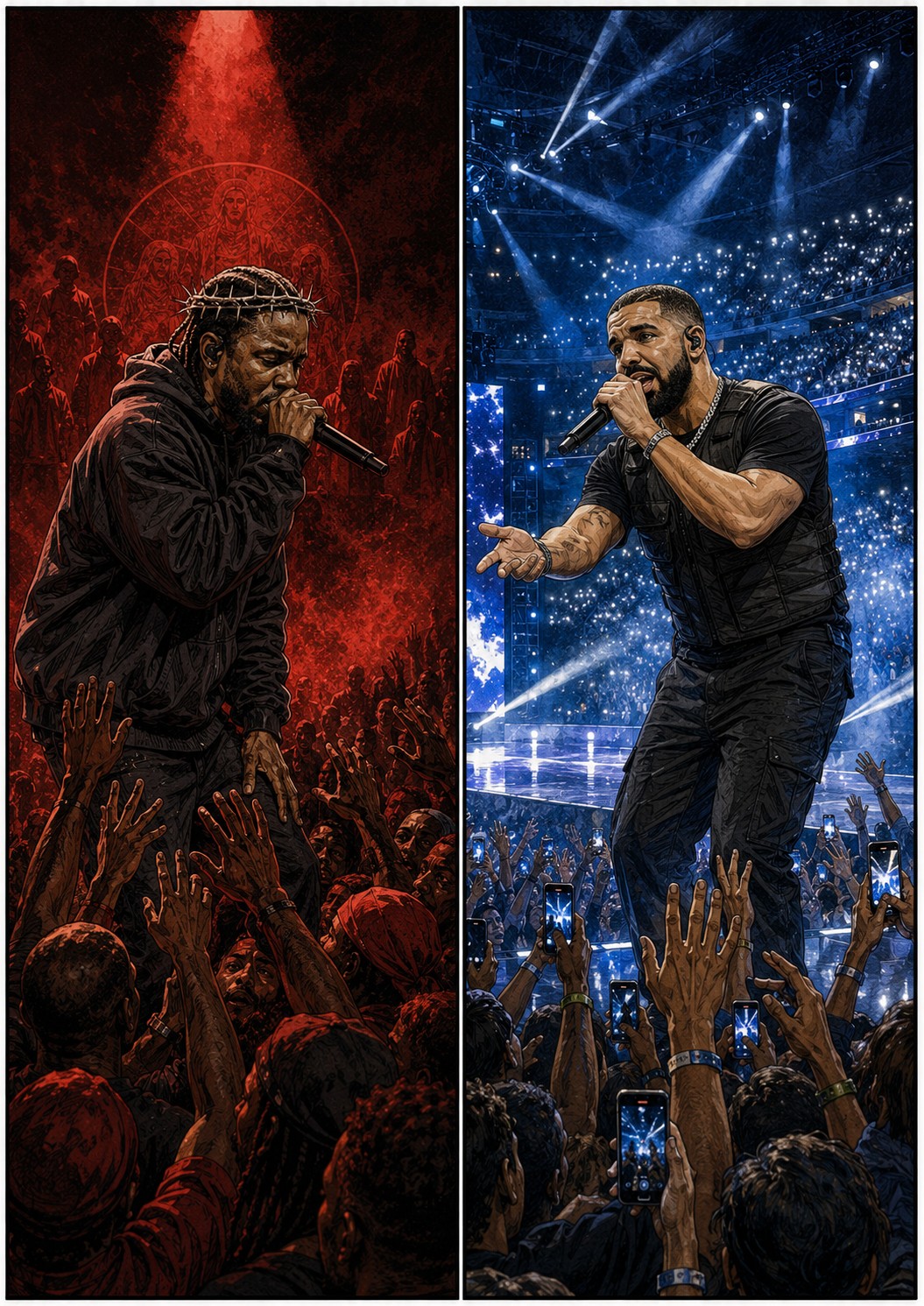
Rap has quietly recreated football's greatest rivalry.
For many listeners, Kendrick Lamar represents artistic excellence. Albums feel carefully sculpted. Concepts unfold patiently. Verses reward repeated listening. His work invites study.
Drake represents something else entirely.
Consistency. Longevity. Adaptability. Scale.
He has dominated streaming through multiple eras. He has survived changing tastes, changing sounds, changing platforms and changing generations. He keeps scoring.
People often acknowledge Kendrick's albums before returning to Drake's playlists. That distinction matters. Admiration and usage are not identical.
Why This Bothers People
Humans like stories where the most beautiful performer also wins the statistics. Reality rarely works that way.
Some people optimise for perfection. Others optimise for production. One creates masterpieces. The other creates industries.
Neither achievement invalidates the other. But modern culture increasingly struggles to separate them.
When people dislike Drake, they often expect the numbers eventually to reflect that judgment. Instead, the opposite happens. The more criticism accumulates, the more records he seems to break.
The scoreboard refuses to cooperate.
Greatness Depends on the Game
Imagine judging Ronaldo entirely by dribbling. Or judging Messi entirely by headed goals. Each metric misses what made them exceptional.
The same mistake happens in rap.
If your metric is conceptual albums, Kendrick dominates. If your metric is sustained commercial performance across fifteen years, Drake occupies territory almost nobody else has reached.
Changing the metric changes the winner.
The debate often sounds like disagreement. More often, it is simply people playing different games without realising it.
The Unset
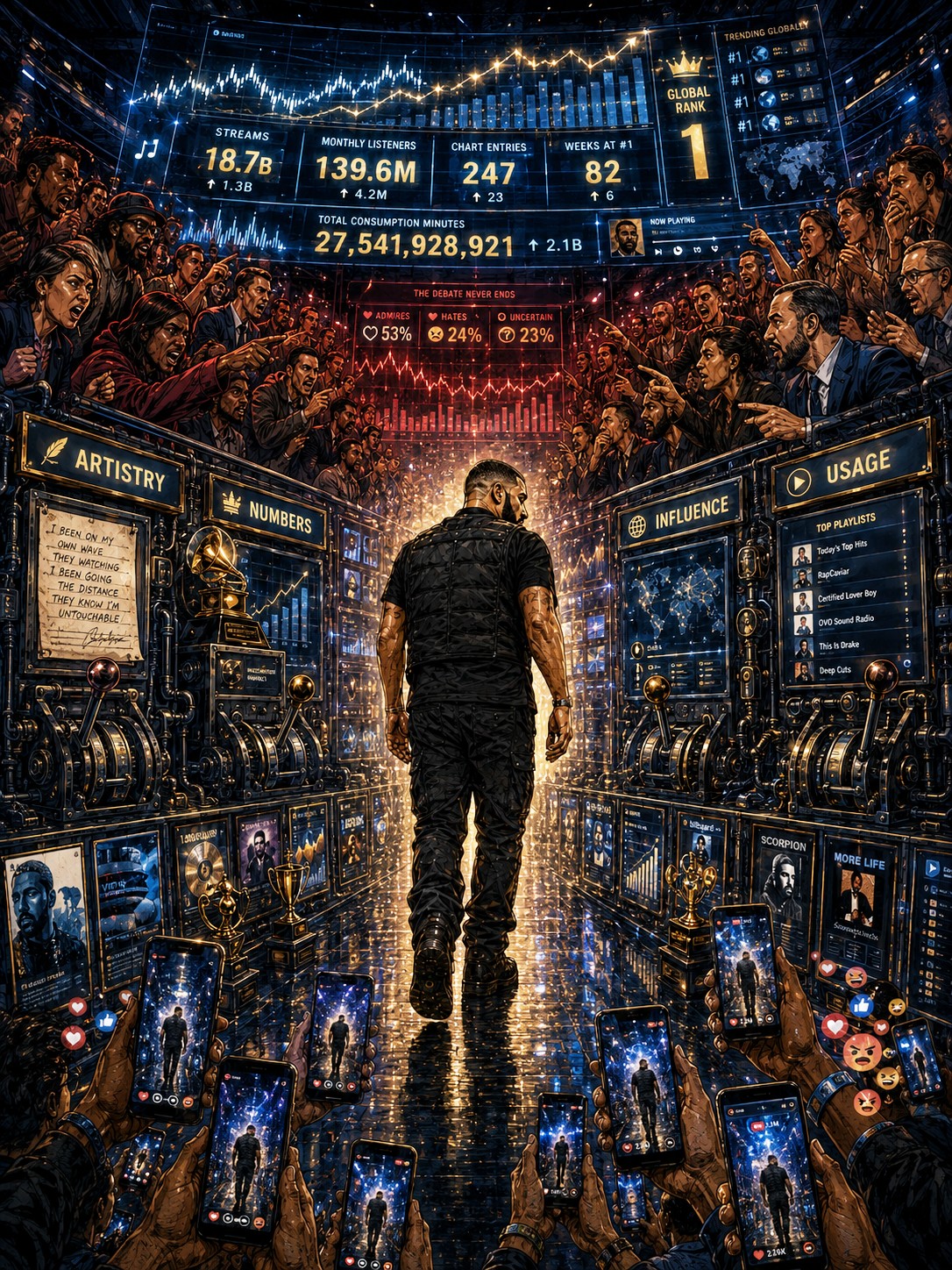
Perhaps Drake is not trying to be rap’s Messi. Perhaps he never was. Perhaps he is rap’s Ronaldo.
Not the figure everyone agrees is the most beautiful to watch. Not the artist people point to when they want to talk about purity, form, genius or transcendence.
But the one who keeps appearing where the numbers are kept. The one who turns consistency into spectacle. The one whose greatness becomes hardest to dismiss precisely because so many people have tried.
That is the uncomfortable part of the argument: Kendrick might be who you really want, but deep in your heart, you know...
Drake will always be there for you.
On the commute.
At the gym.
In the Uber.
At the function.
Waiting patiently in your playlist like a toxic ex with excellent streaming numbers. That is not the same as being loved most. That is being unavoidable.
Art decides who we admire. Numbers decide who we cannot ignore. Confusing those two conversations has fuelled one of rap’s longest-running debates. Drake’s career sits in the gap between those two truths.