Atomic Nucleus
What is the new compact structure made from familiar protons and neutrons, and how can we identify and compare different nuclei?
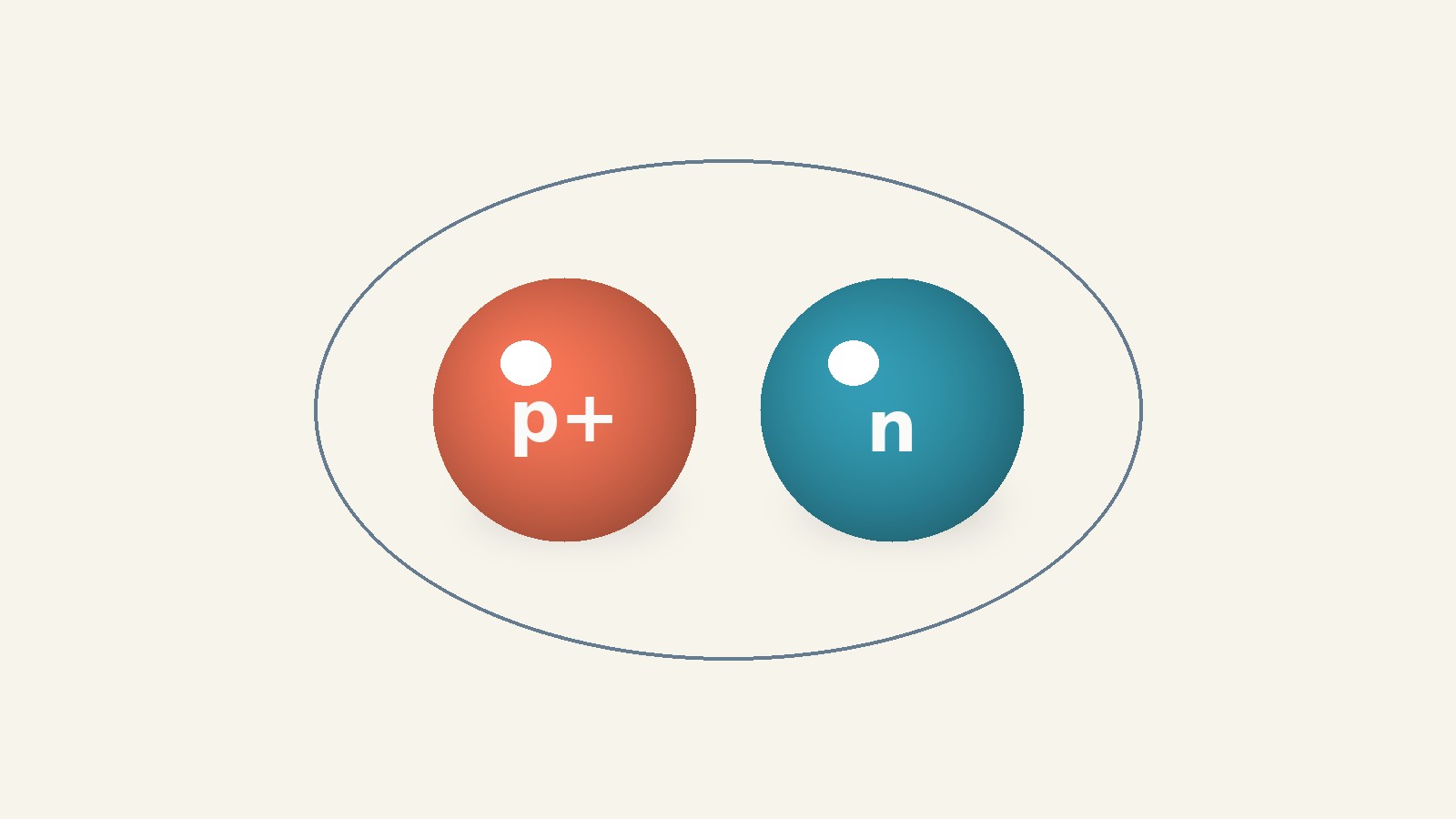
Entropy — the next structure
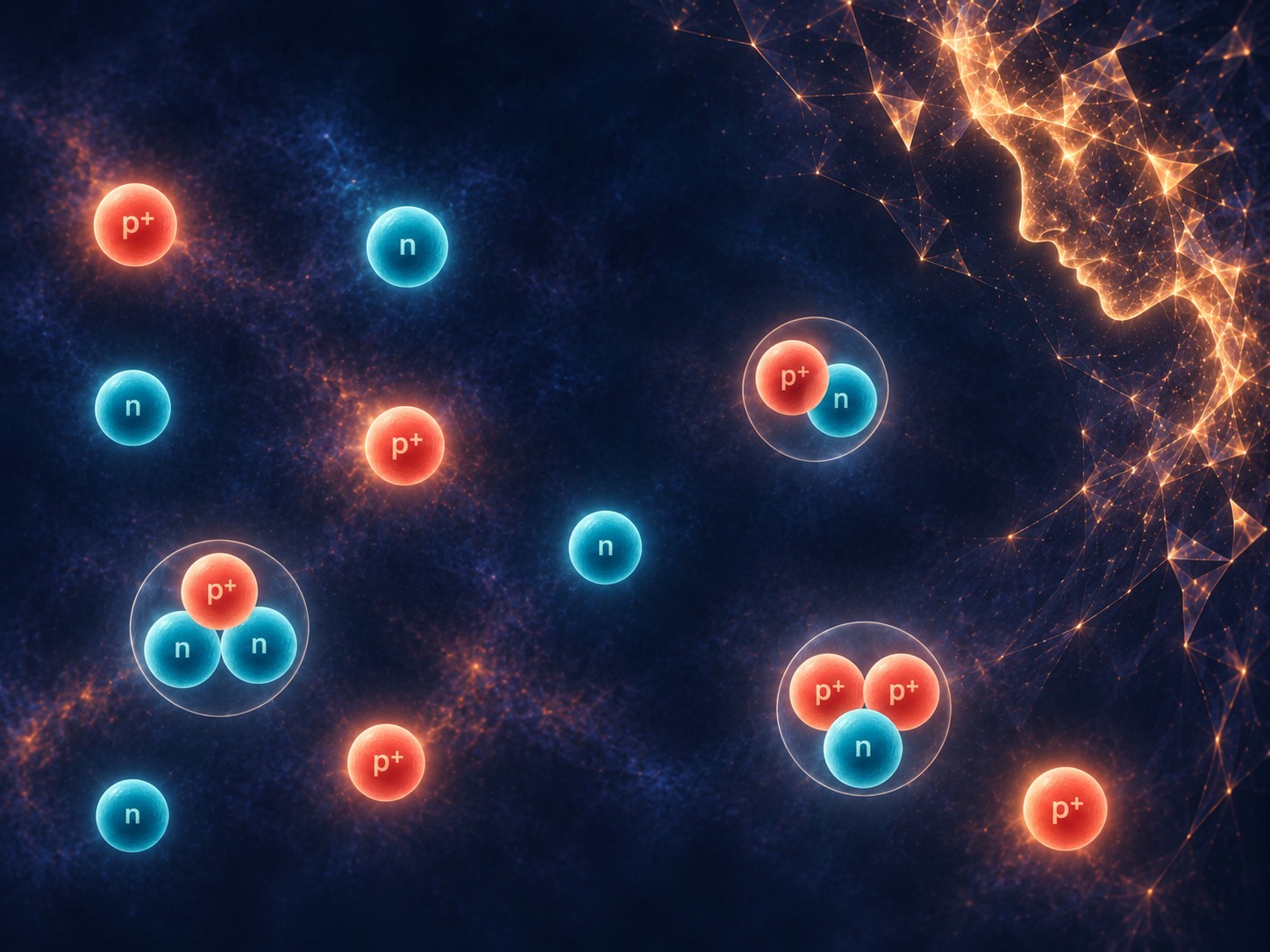
I knew protons and neutrons when they travelled apart.
A single proton was already the nucleus of ordinary hydrogen. Now, in some places, protons and neutrons can stay bound together in larger nuclei.
These tiny structures are not yet complete atoms. They are the parts that later atoms will have at their centres.
What has come together?
1 of 2
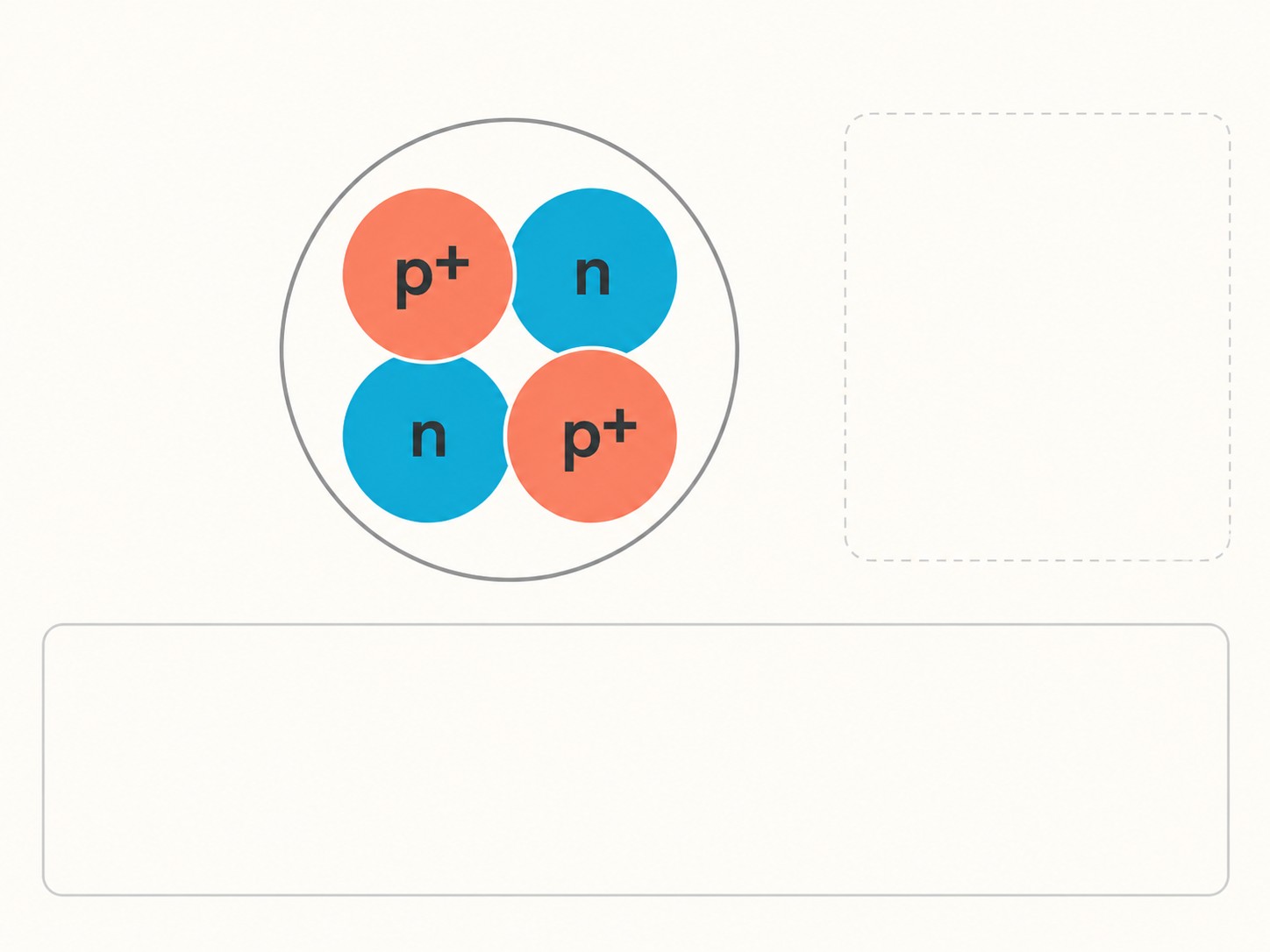
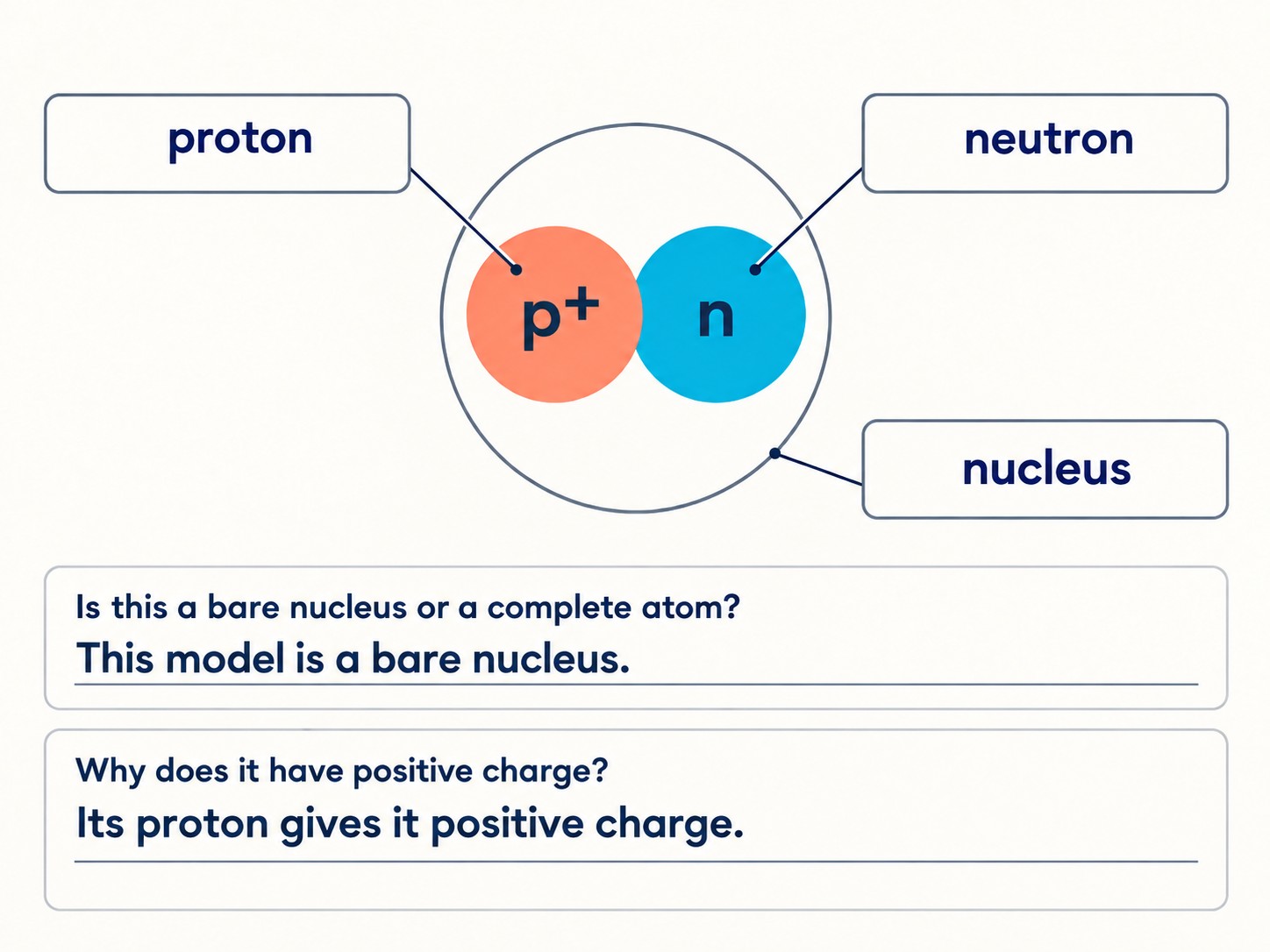
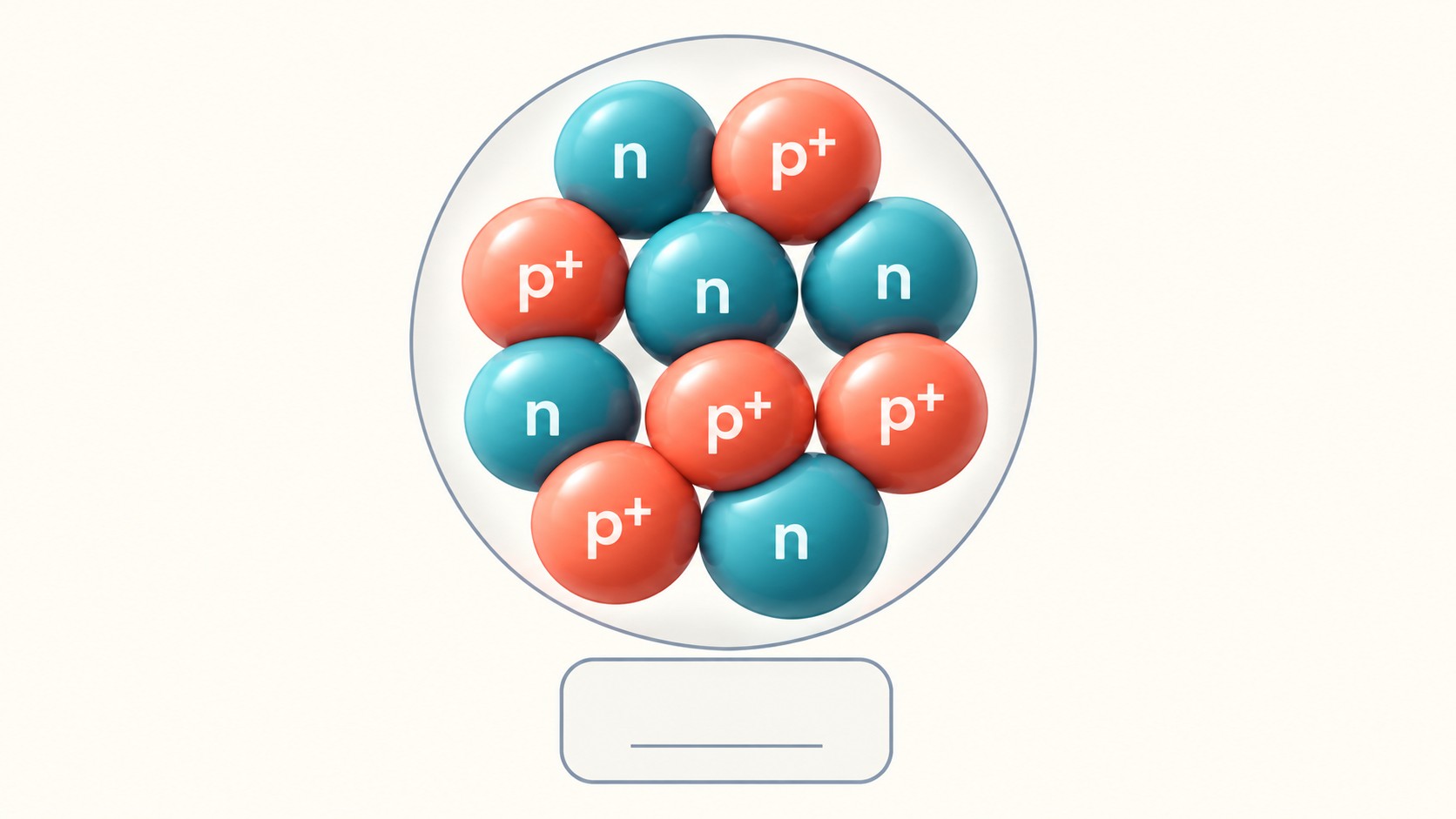
Look at the model. You have already met both kinds of particle shown here. Name each kind, then describe what is different about the way they are represented now compared with when you first met them.
Do not worry yet about counting how many of each an unfamiliar element has. First ask: what have these familiar particles become part of?
What a nucleus is
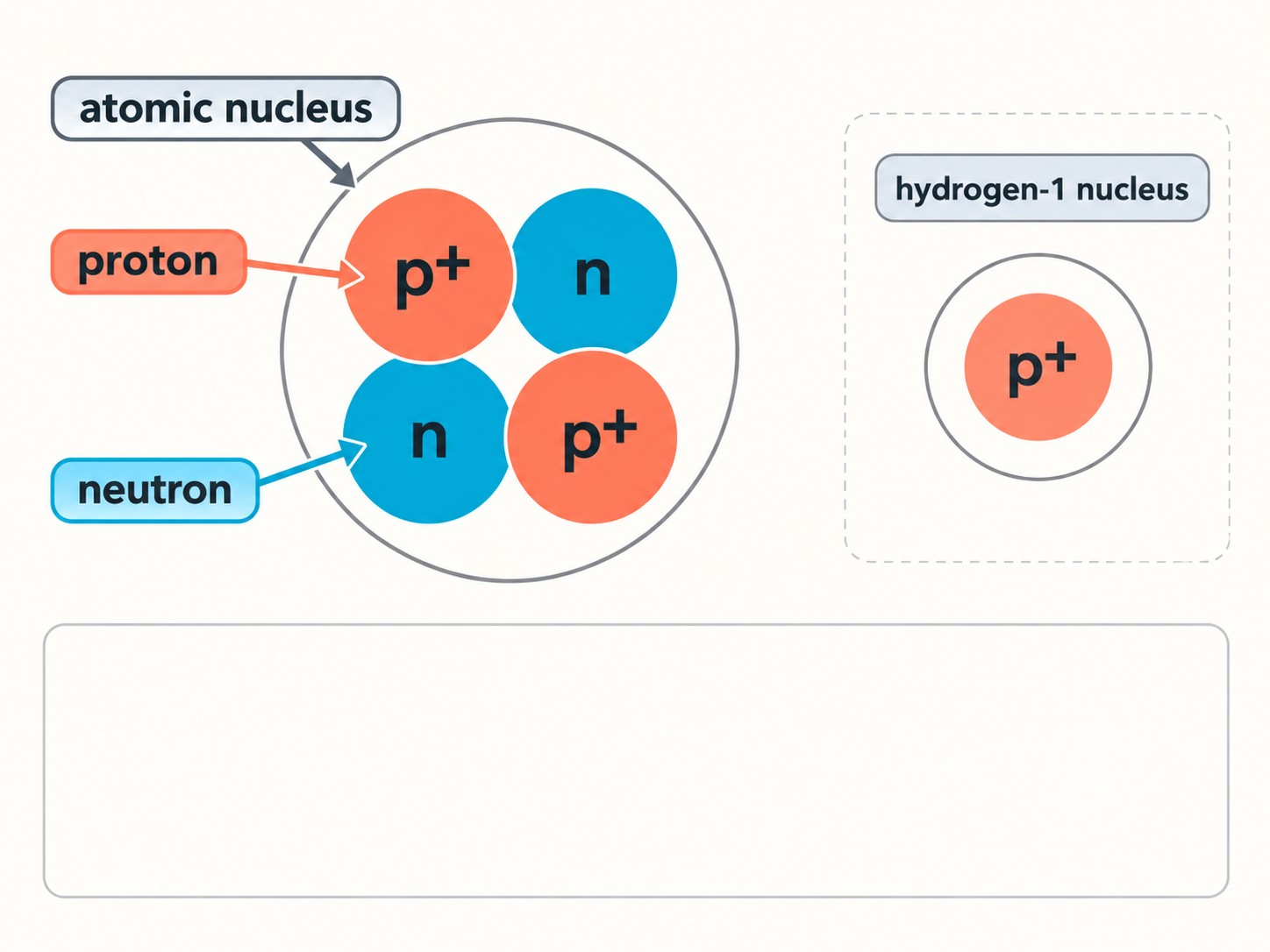
The cluster in the first model represents an atomic nucleus. A nucleus is a tiny structure that can contain protons and neutrons bound together. Protons and neutrons are called nucleons when we are discussing the particles that make up nuclei.
Many nuclei contain both kinds of nucleon, but they do not all have to. A single proton is itself the nucleus of ordinary hydrogen, often called hydrogen-1. It contains no neutron.
A nucleus carries positive electric charge because protons are positively charged and neutrons are neutral. The positive charge comes from the protons. On the next page, you will investigate how counting them identifies the element.
The pictures show a scientific model: colours and drawn outlines help you tell the particles apart. They are not photographs of tiny coloured balls, and they do not describe exactly how the particles move or bind.
The centre of a later atom
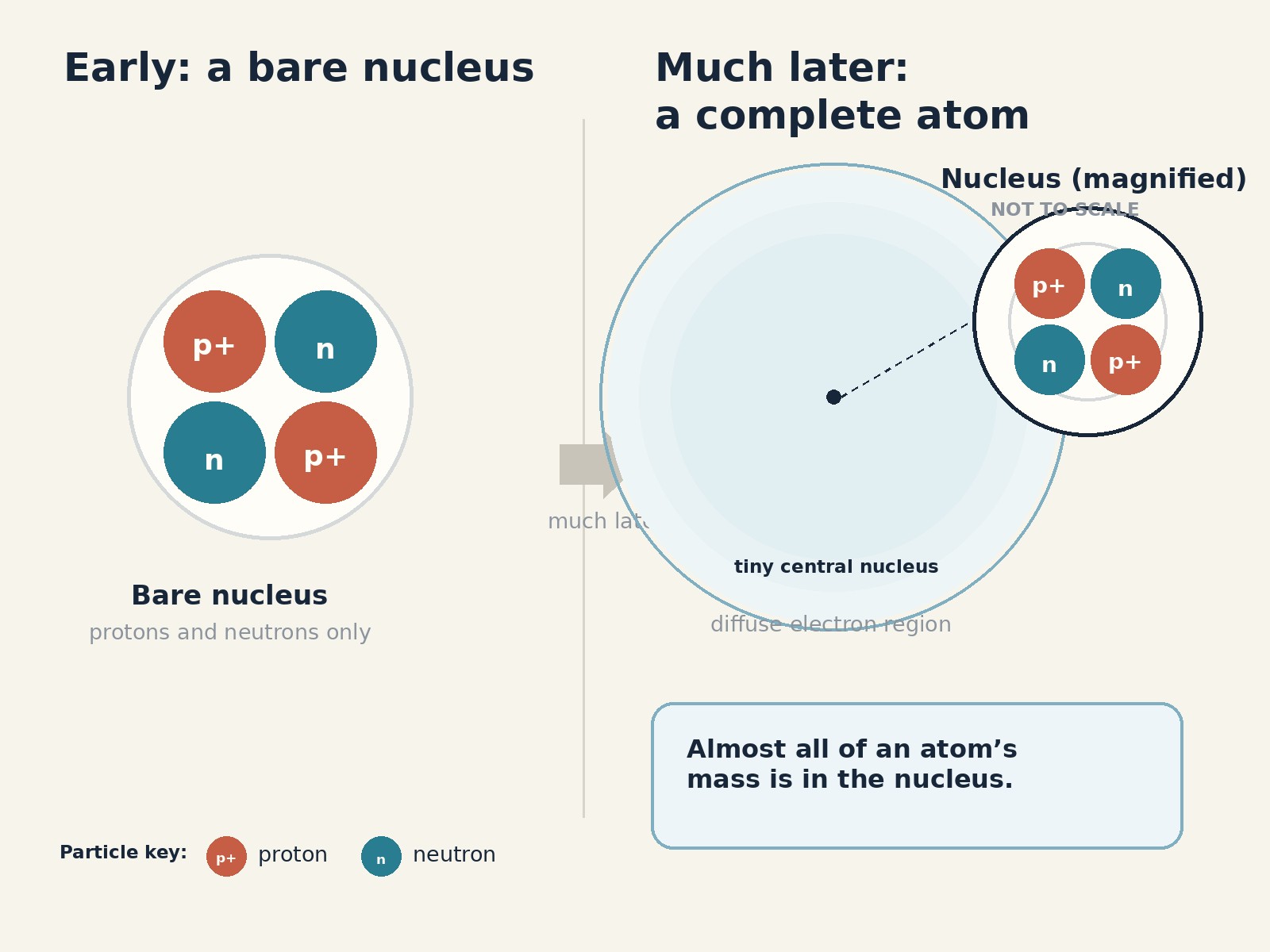
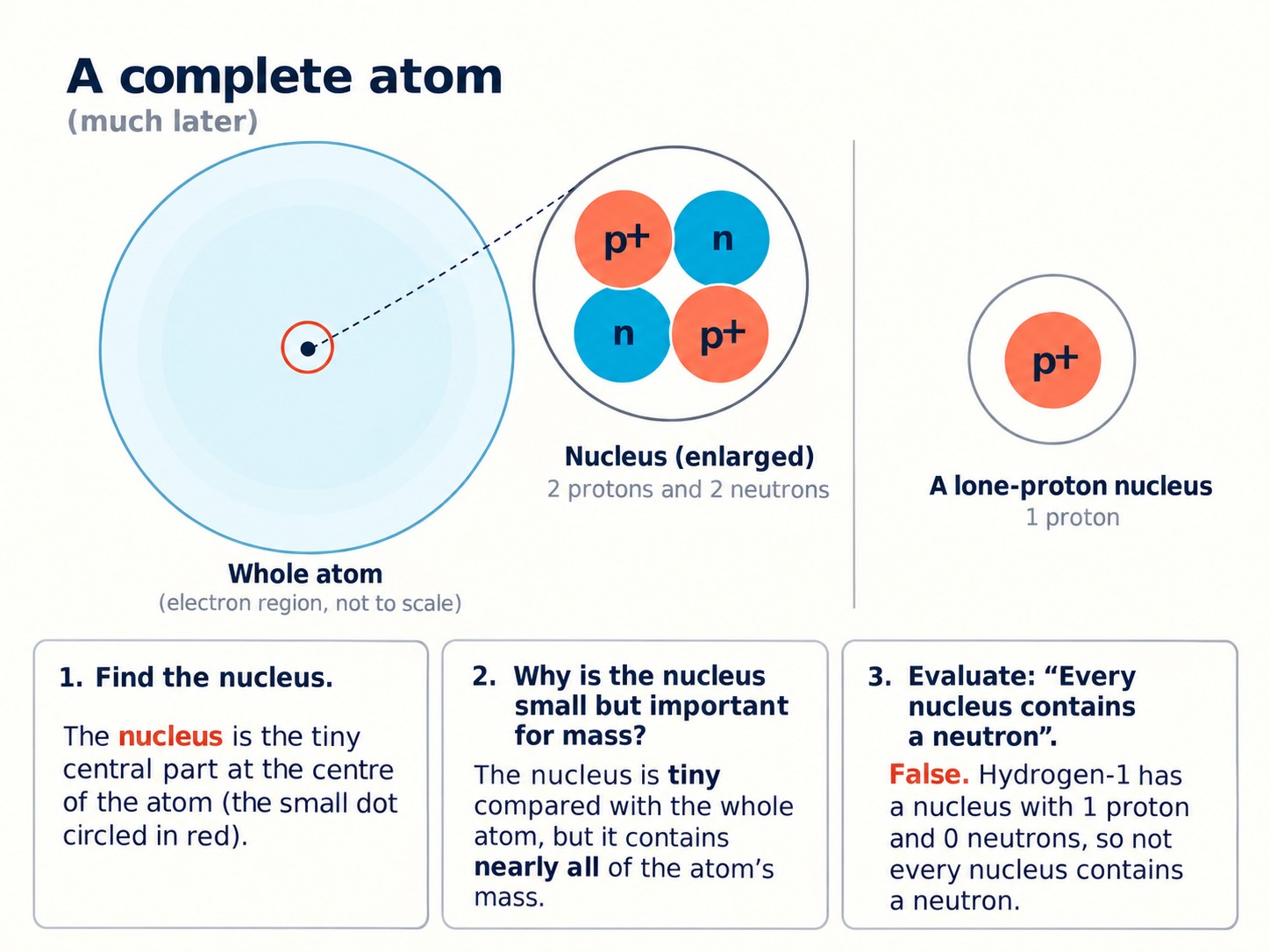
A nucleus can exist by itself. Later, when an atom is able to keep electrons around its nucleus, the nucleus is the small central part of that complete atom.
In a full atom the nucleus takes up an extremely small part of the space occupied by the atom. The diagram enlarges it so you can see what it contains; a real nucleus is much smaller relative to the atom than this drawing can show.
The nucleus contains nearly all the atom's mass. A proton and a neutron each have a relative mass of about 1, while an electron has a much smaller mass. That is why the mass is concentrated in the nucleus even though the electron region extends much farther.
These two diagrams belong to different points in our timeline. During primordial nucleosynthesis, a bare nucleus may exist without a complete neutral atom. The full-atom diagram shows the later structure we will study in detail during Recombination; it is here to help you understand the nucleus's size and mass, not to teach electron-shell arrangements in advance.
Atomic Nucleus — Deeper page — Atomic Number (Proton Number)
Several nuclei may differ. What tells you which chemical element each one belongs to? Open Atomic Number (Proton Number) to investigate.
Identity is not the whole inventory
You can now identify an element by its proton number. But two nuclei of the same element can still contain different numbers of particles altogether.
What could you count to describe the nucleus's complete collection of nucleons?
Atomic Nucleus — Deeper page — Mass Number
You can identify the element, but that is not the whole nuclear inventory. Open Mass Number to find a way to count all the protons and neutrons in one nucleus.
Same element, different nucleus
You have counted the nucleons. Now compare two nuclei of the same element: must the number of neutrons always be identical?
There is a name for this kind of nuclear difference. Explore it on the next page.
Atomic Nucleus — Deeper page — Isotopes
If proton number keeps the element identity fixed, must two nuclei of that element contain the same number of neutrons? Open Isotopes to investigate.
Return to the centre
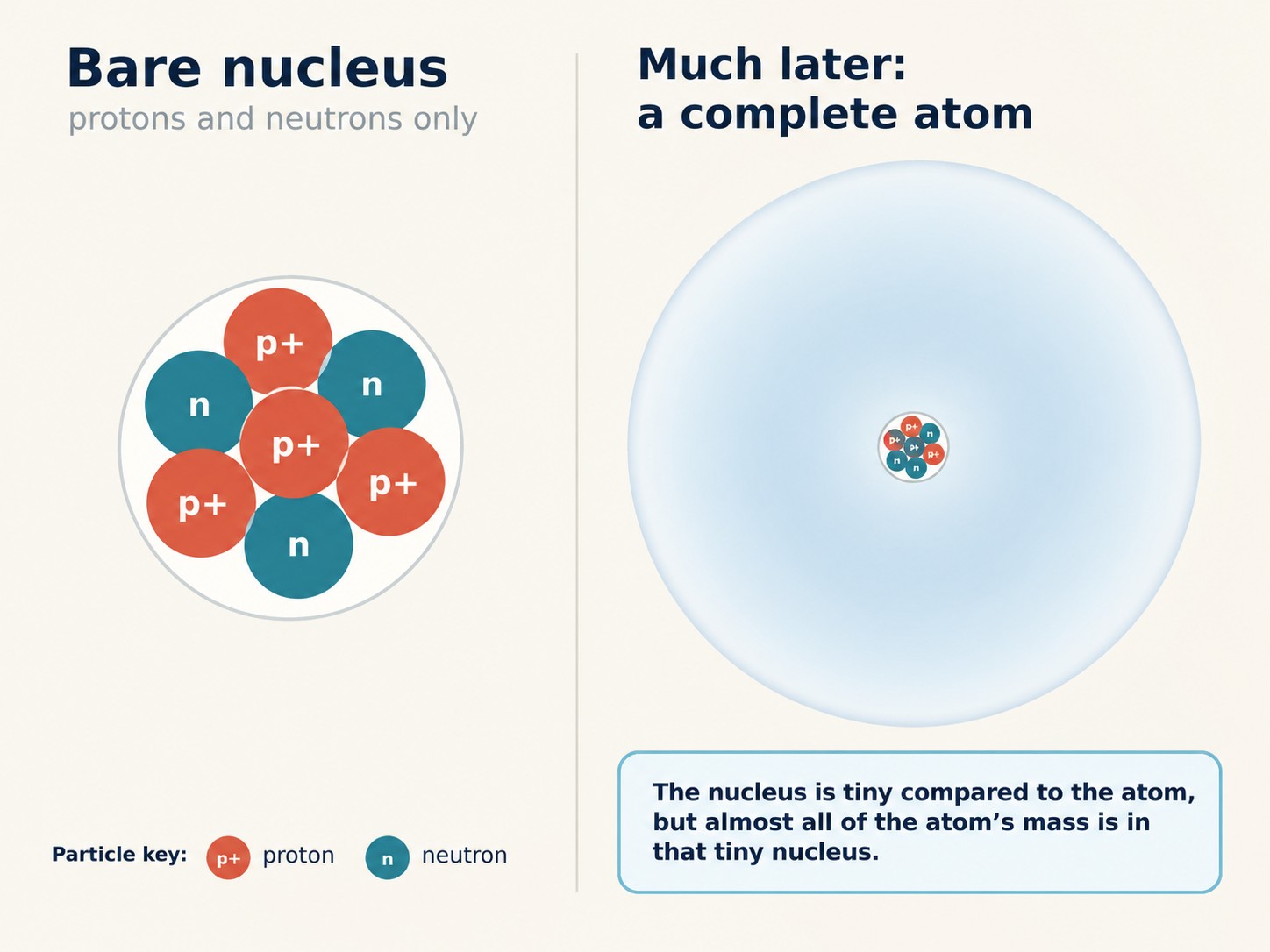
You have investigated how nuclei can be identified and compared. Return to the structure we began with: an atomic nucleus is the small central part of a later atom, and a bare nucleus can already exist before a complete atom forms.
Nuclear protons give the nucleus its positive electric charge. Neutrons do not add electric charge. The nucleus can contain both kinds, although ordinary hydrogen's nucleus is just a proton.
An atom can be much larger than its nucleus while having nearly all of its mass concentrated in that nucleus. We can recognise these features without needing to treat the drawn particle colours or enlarged nucleus as literal photographs.
Remember this lesson
1 of 4
Remember this lesson
First, use the earlier science sections as often as you need. Then close them and try these two tasks from memory. Write or draw your answers before choosing 'Check your answers'.
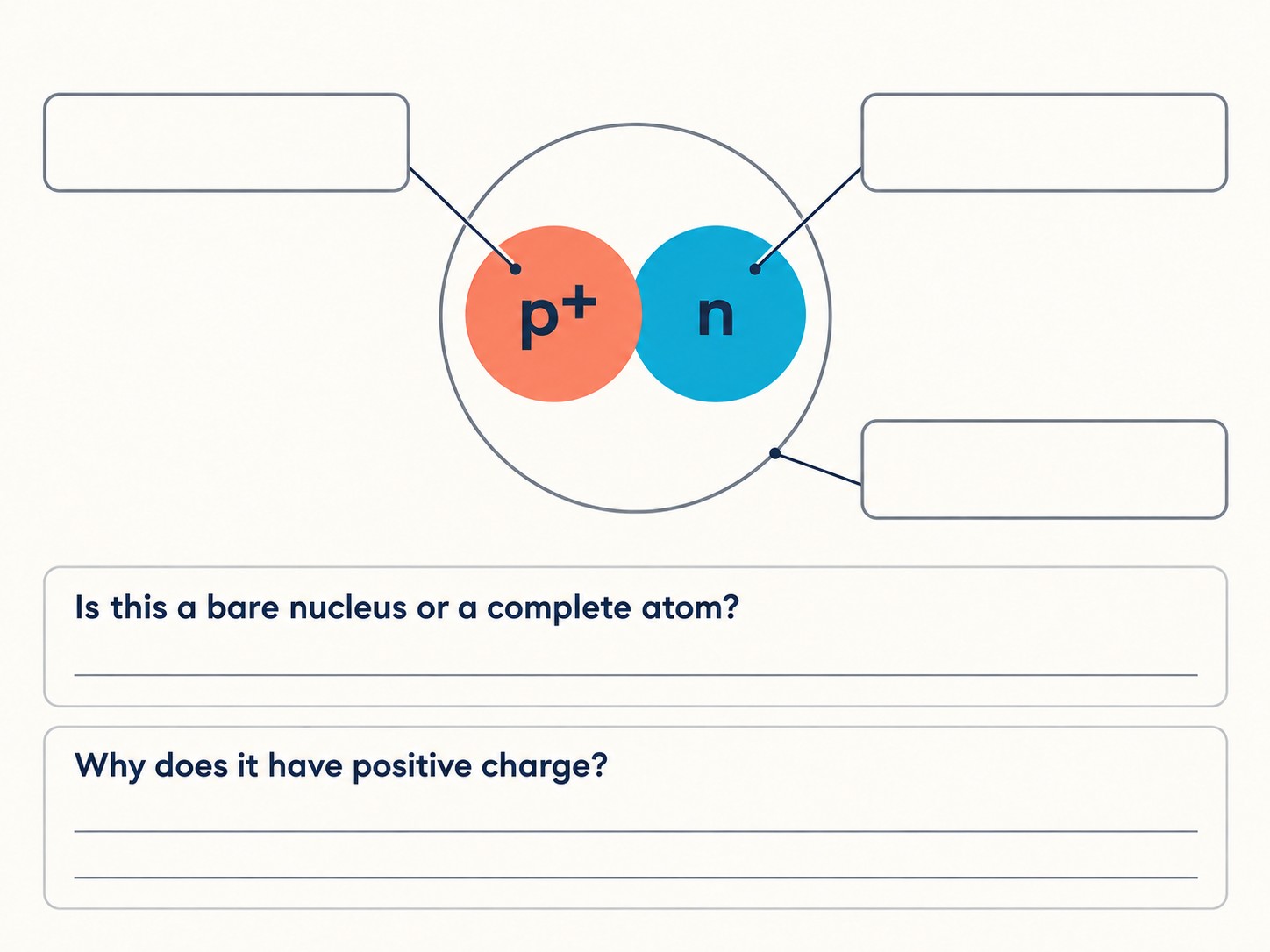
Task A — Label an unfamiliar model. On the new diagram, label the nucleus, one proton and one neutron. Write one sentence explaining whether this is a complete neutral atom or a bare nucleus, and identify the source of its positive electric charge.
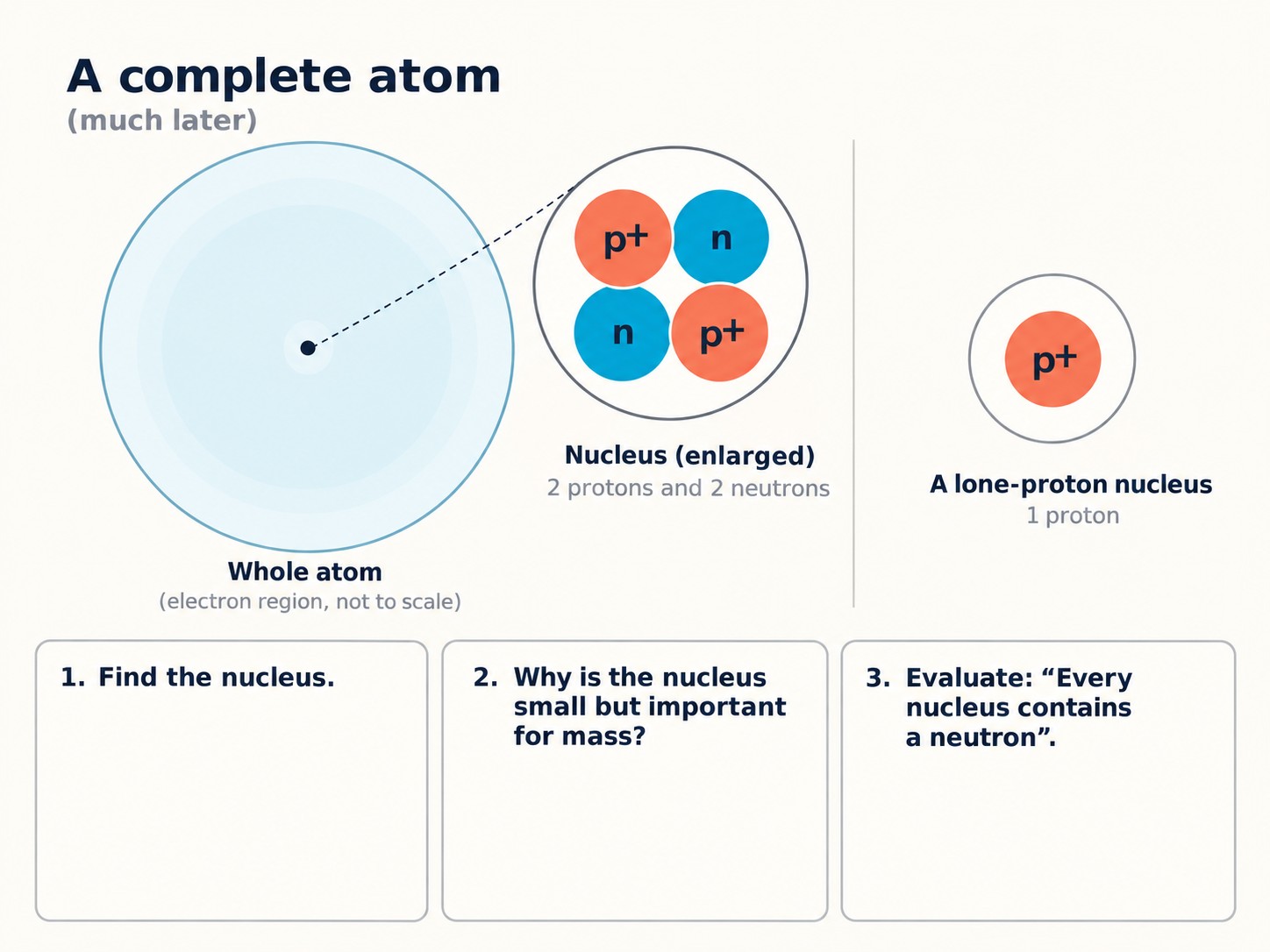
Task B — Compare two later structures. In the pair of diagrams, circle the nucleus in the complete atom and explain why it occupies so little of the atom's overall space but holds nearly all of its mass. Then examine a one-proton-only nucleus and explain why the sentence 'Every nucleus must contain a neutron' is false.
GCSE knowledge coverage
GCSE knowledge coverage
Atomic nucleus: a nucleus is the small central part of a complete atom and contains protons; many nuclei also contain neutrons. It is very small compared with the whole atom and contains nearly all of the atom's mass. The nucleus's positive electric charge comes from its protons, while neutrons have no charge.
You have practised recognising a nucleus and its particles, distinguishing a bare nucleus from a later complete atom, and explaining the nucleus's small size and concentration of mass. The one-proton hydrogen-1 nucleus is an important exception to the simplified statement that every nucleus contains both protons and neutrons.
Qualification coverage (partial where stated): Pearson Edexcel GCSE Combined Science Chemistry 1.5 and 1.6; separate GCSE Chemistry 1.5 and 1.6. Nuclear-model content contributes to Combined Science Chemistry 1.2 and Physics 6.1, and separate Chemistry 1.2 and Physics 6.1, but those broader atom-model requirements are completed later when the whole atom and its electrons are taught. Positive nuclear charge here supports the Physics 6.1/6.4 nuclear-model description; your earlier Protons and Neutrons page owns particle relative charge and mass. The Atomic Number, Mass Number and Isotopes child pages own their own counts and comparisons.
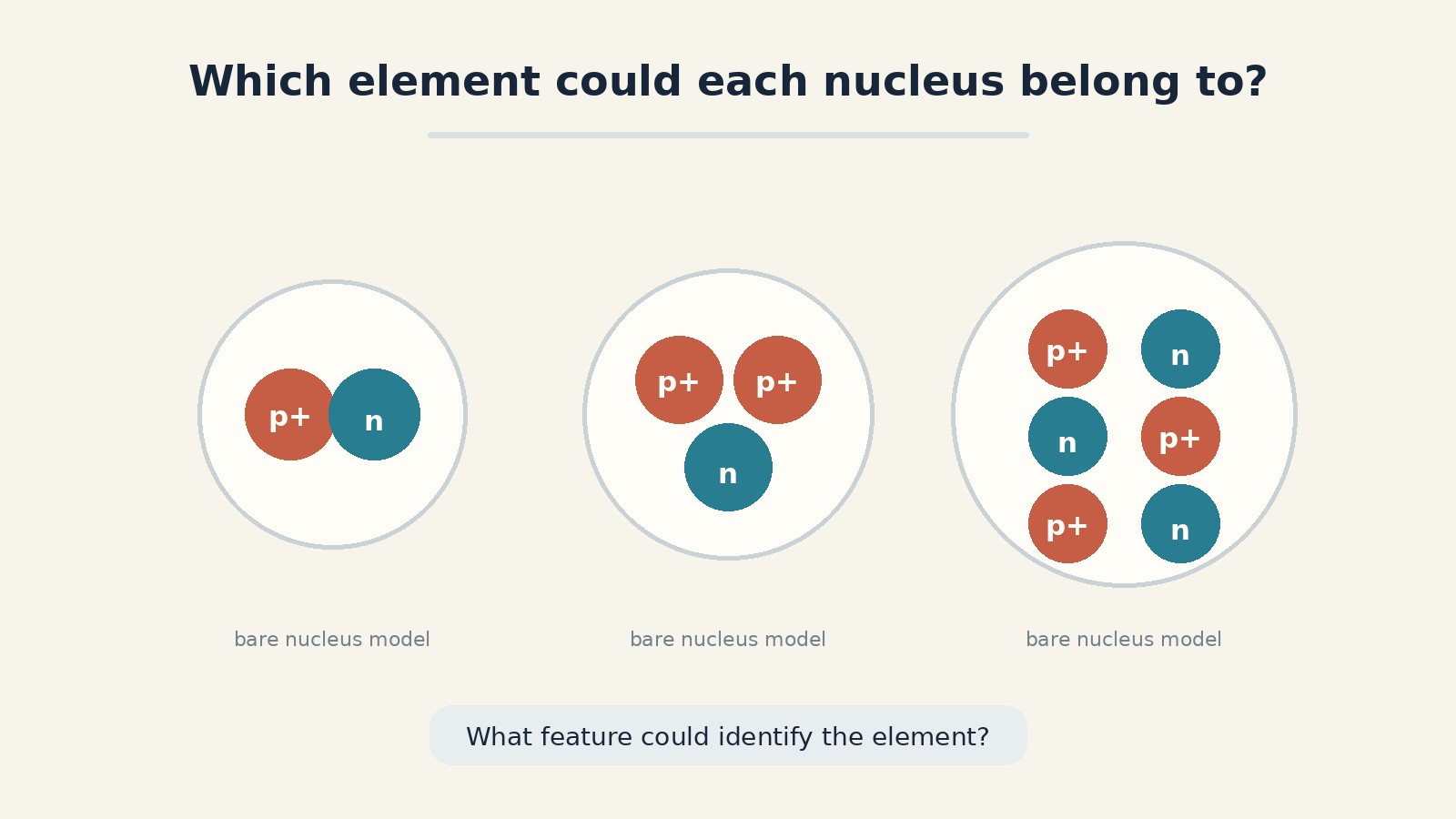
Atomic Number (Proton Number)
Investigate what identifies which chemical element a nucleus belongs to.
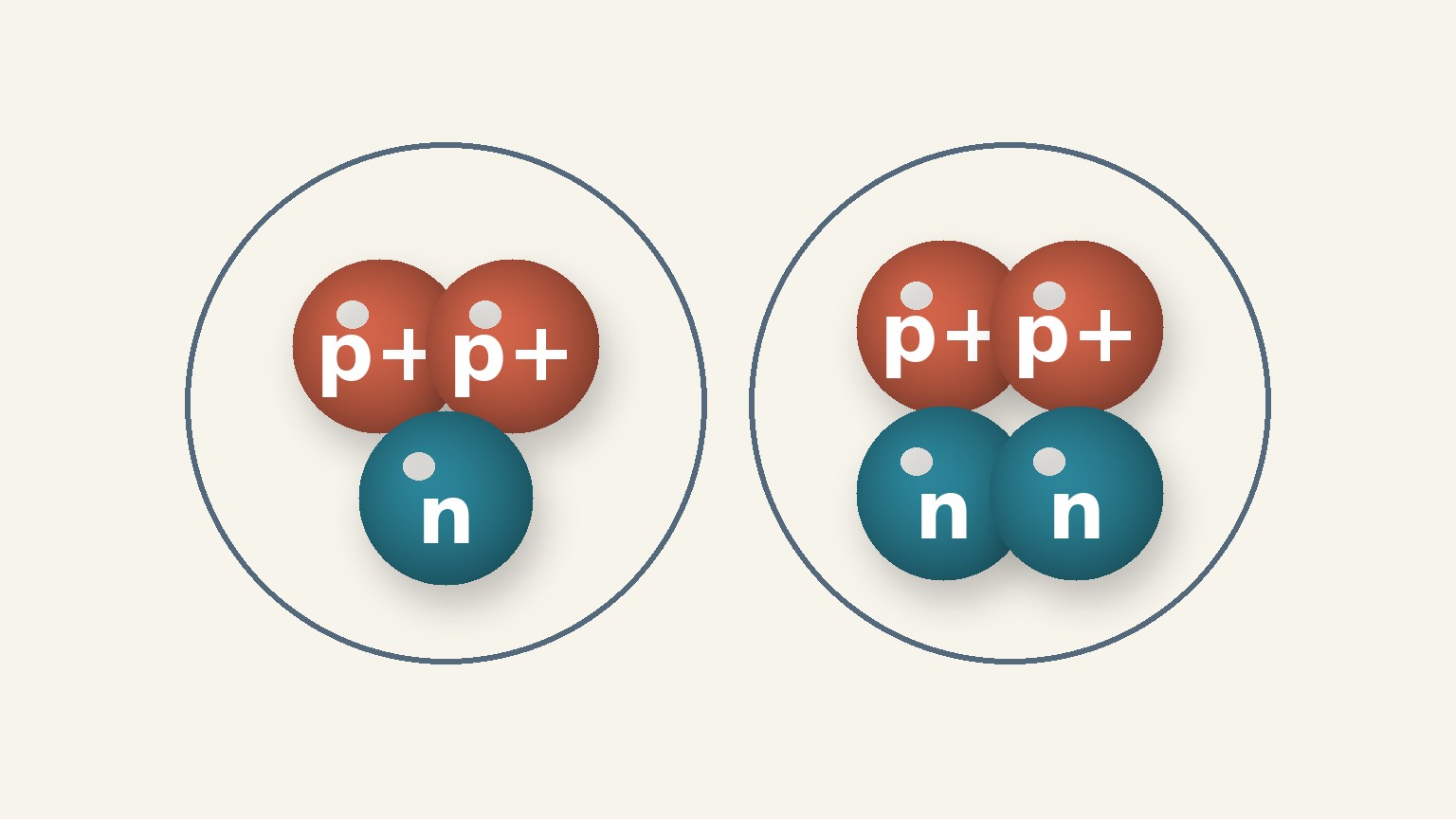
Isotopes
Compare nuclei of the same element and investigate how their neutron numbers can differ.
Mass Number
Explore how the total number of protons and neutrons describes a nucleus, and work out missing neutron counts.