Isotopes
How can nuclei be the same element while containing different numbers of neutrons?
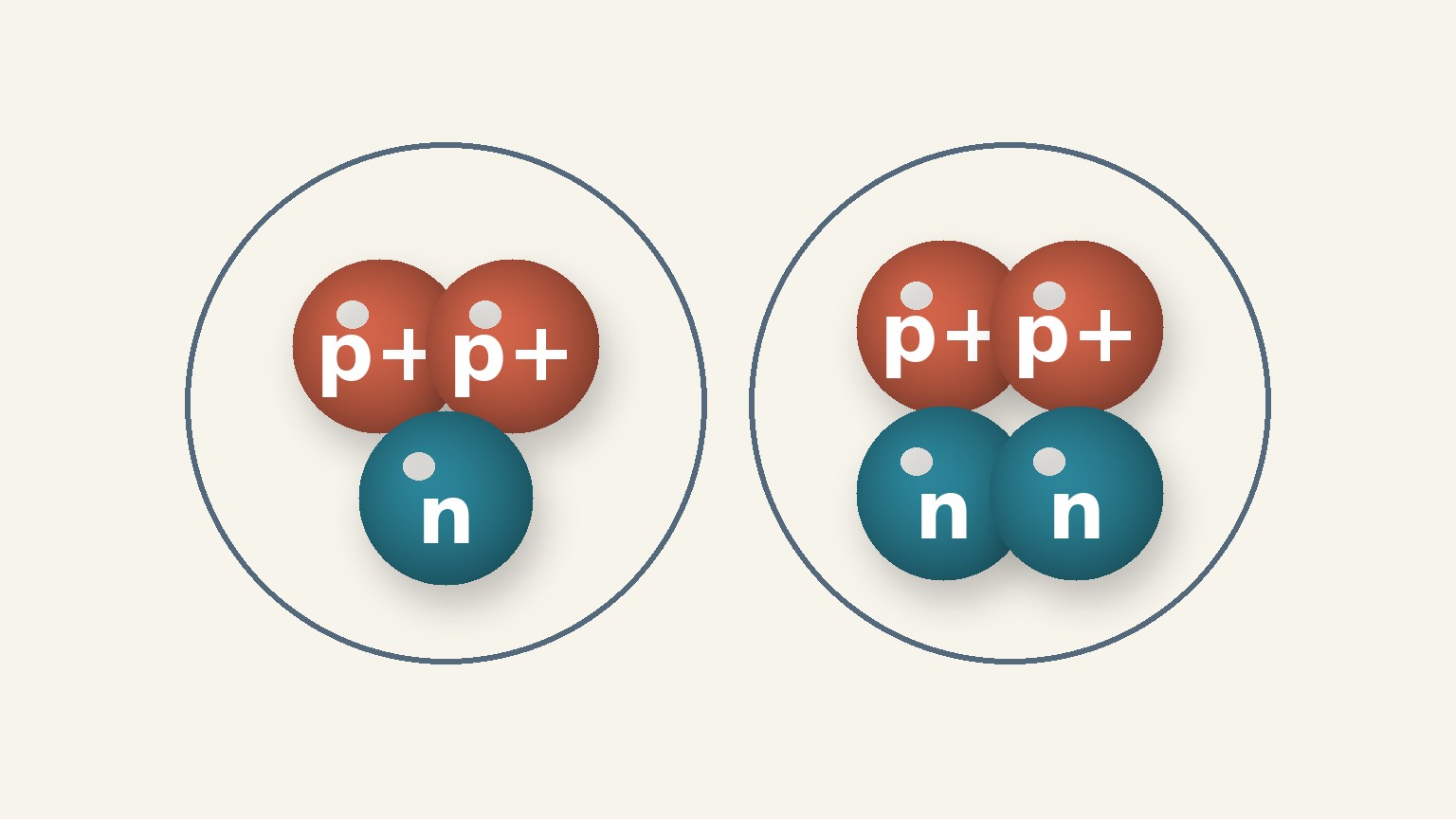
Can two nuclei belong to the same element?
You have learned two ways to describe a nucleus. Its atomic number Z tells you how many protons it has and which element it belongs to. Its mass number A tells you the total number of protons and neutrons.
Now a puzzle: can two nuclei belong to the same element even though their mass numbers are different? And can two nuclei have the same mass number but belong to DIFFERENT elements?
Do not decide by the total number of particles alone. Compare what each nucleus actually contains.
Which nuclei match?
1 of 2
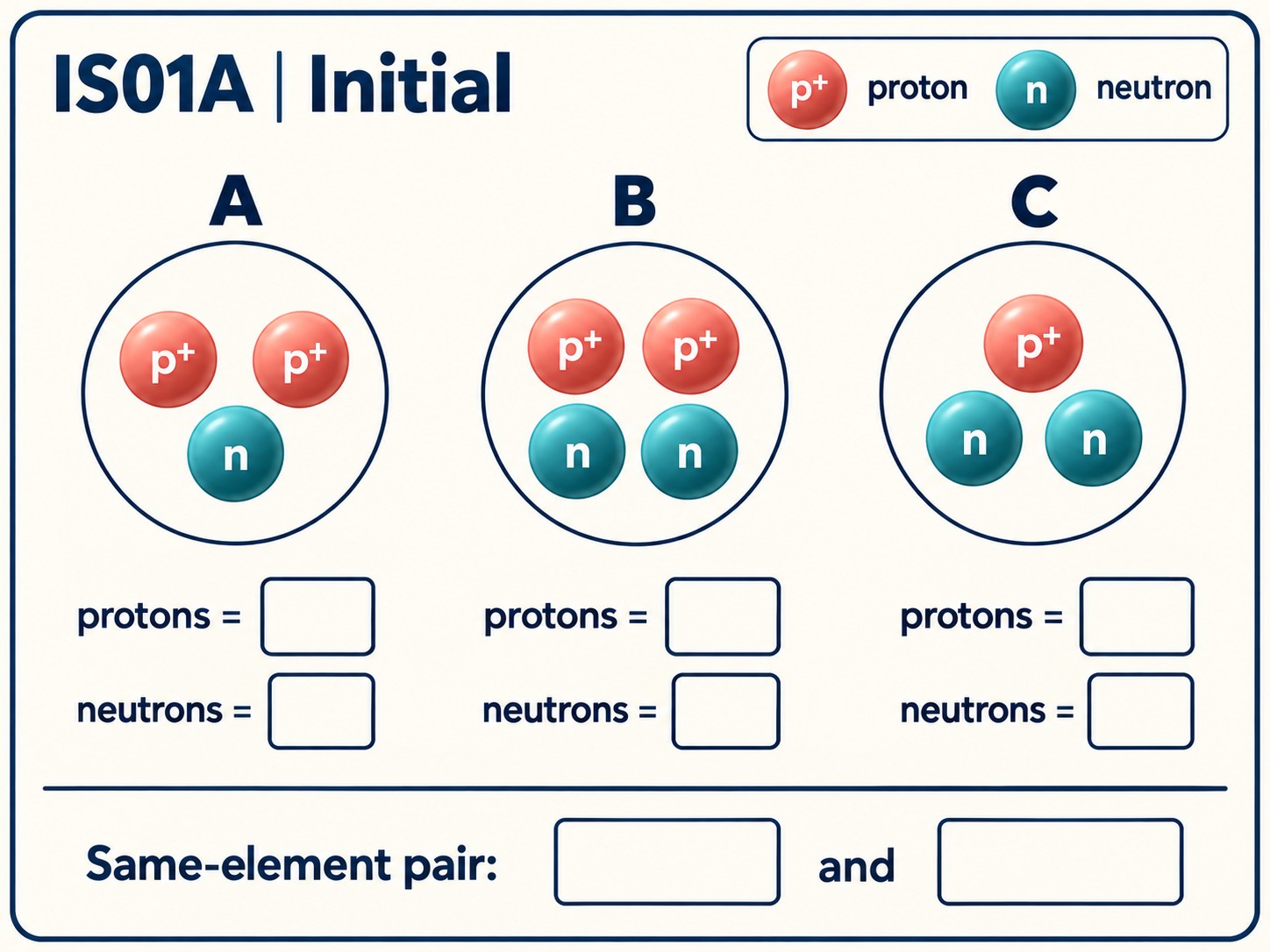
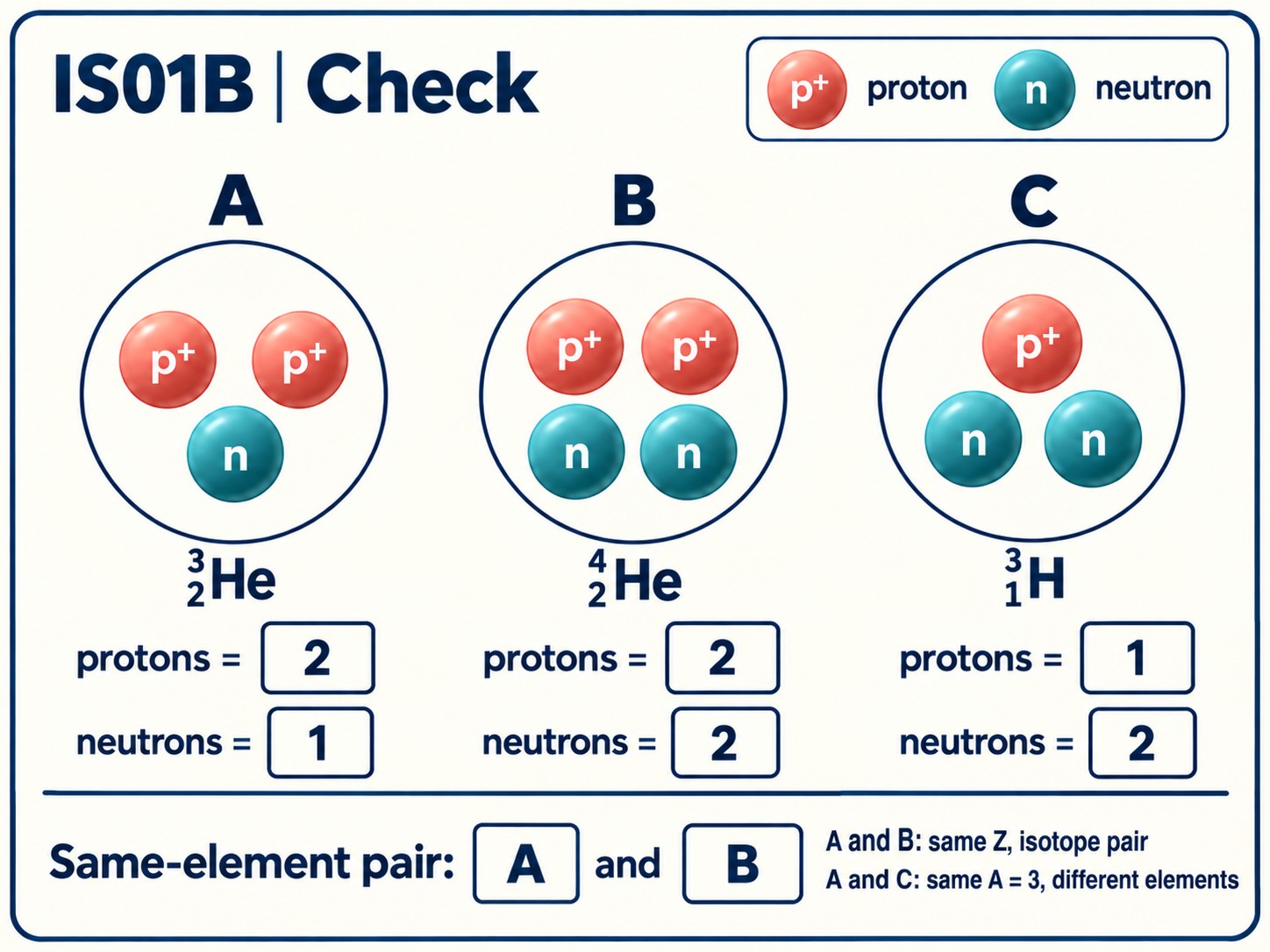
Study three nuclear models called A, B and C. Only the particle models and their letters are shown at first. The completed element names and nuclear symbols appear when you check your answer.
Record the number of protons and neutrons in each model. Then choose the two cards that represent the same element. Write a reason that uses BOTH the proton count and the neutron count. Finally, decide whether any two DIFFERENT elements could have the same total number of nucleons.
Try to solve the comparison before turning to the answer.
The isotope rule
A and B both contain two protons, so they are helium nuclei. A contains one neutron and B contains two. They have the same atomic number but different mass numbers.
These are different ISOTOPES of helium. Isotopes belong to the same element and have the SAME number of protons but DIFFERENT numbers of neutrons. Changing the neutron number changes the mass number, but not the element's identity.
C has one proton and two neutrons. It is hydrogen-3, not helium, even though its mass number 3 equals the mass number of A. The total particle count alone cannot tell you which element a nucleus belongs to.
At this point in the early-universe story, we are comparing nuclei. Much later, when they can be part of complete atoms, atoms with the same proton number but different neutron numbers are called isotopes of the same element too.
A new element
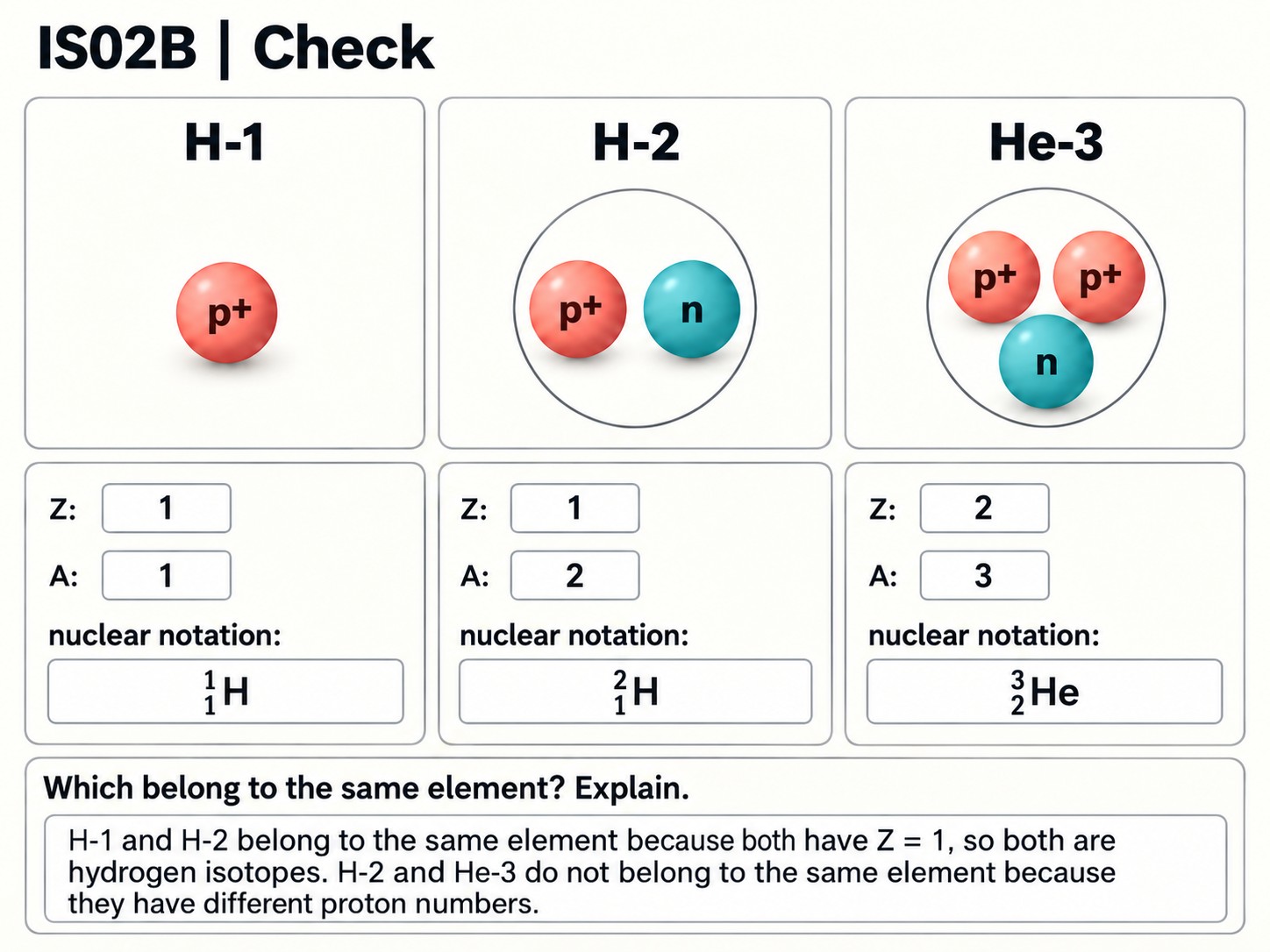
1 of 2
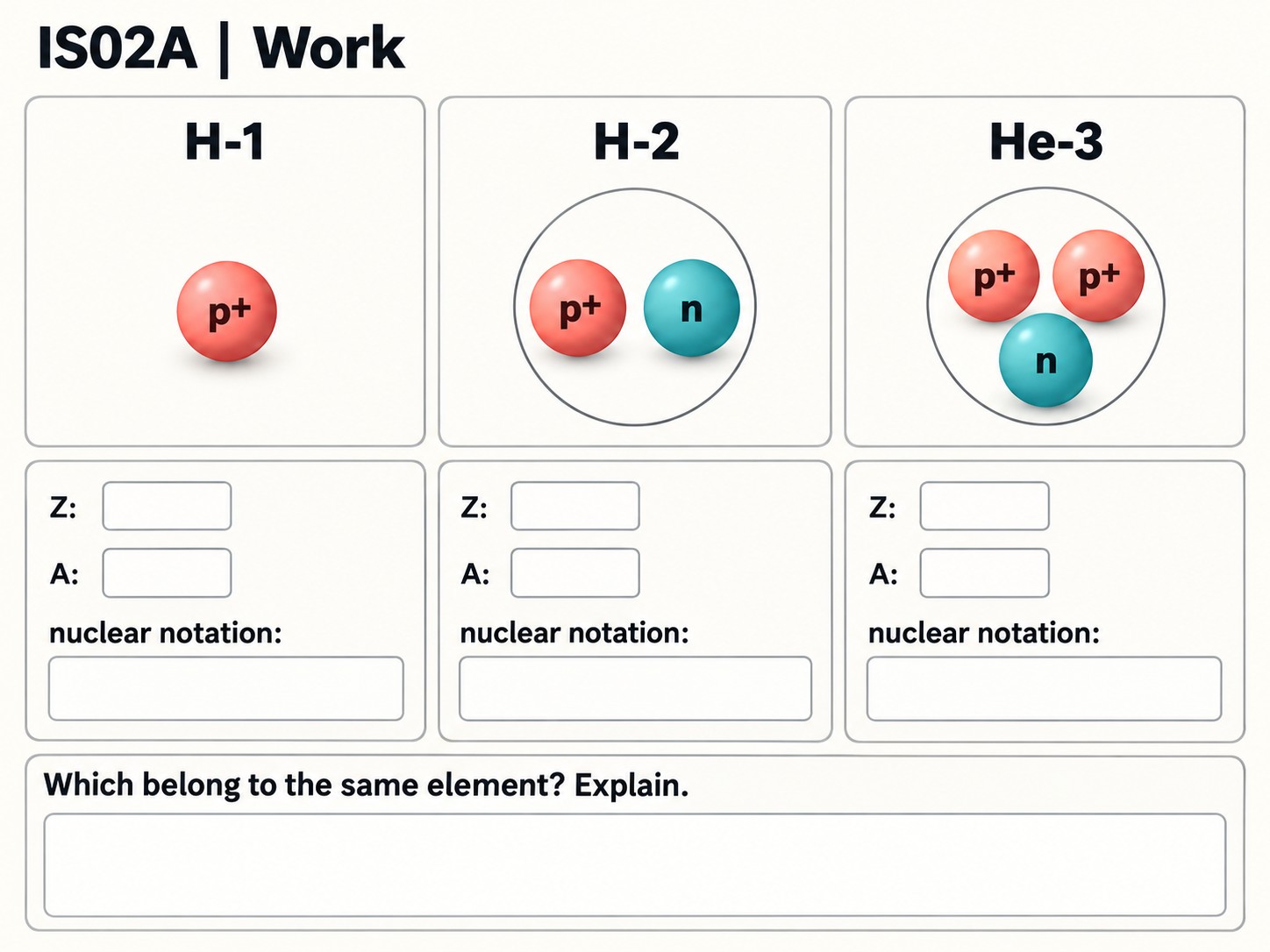
Hydrogen-1 has one proton and no neutrons. Hydrogen-2 has one proton and one neutron.
Write the atomic number and mass number of each nucleus. Are they different elements, or are they different isotopes of one element? What is the same, and what is different?
Now compare hydrogen-2 (one proton and one neutron) with helium-3 (two protons and one neutron). Both contain a neutron; why are they not isotopes of the same element? Write the nuclear symbols for hydrogen-1, hydrogen-2 and helium-3 with mass number at the upper left and proton number at the lower left.
Try before checking.
Remember this lesson
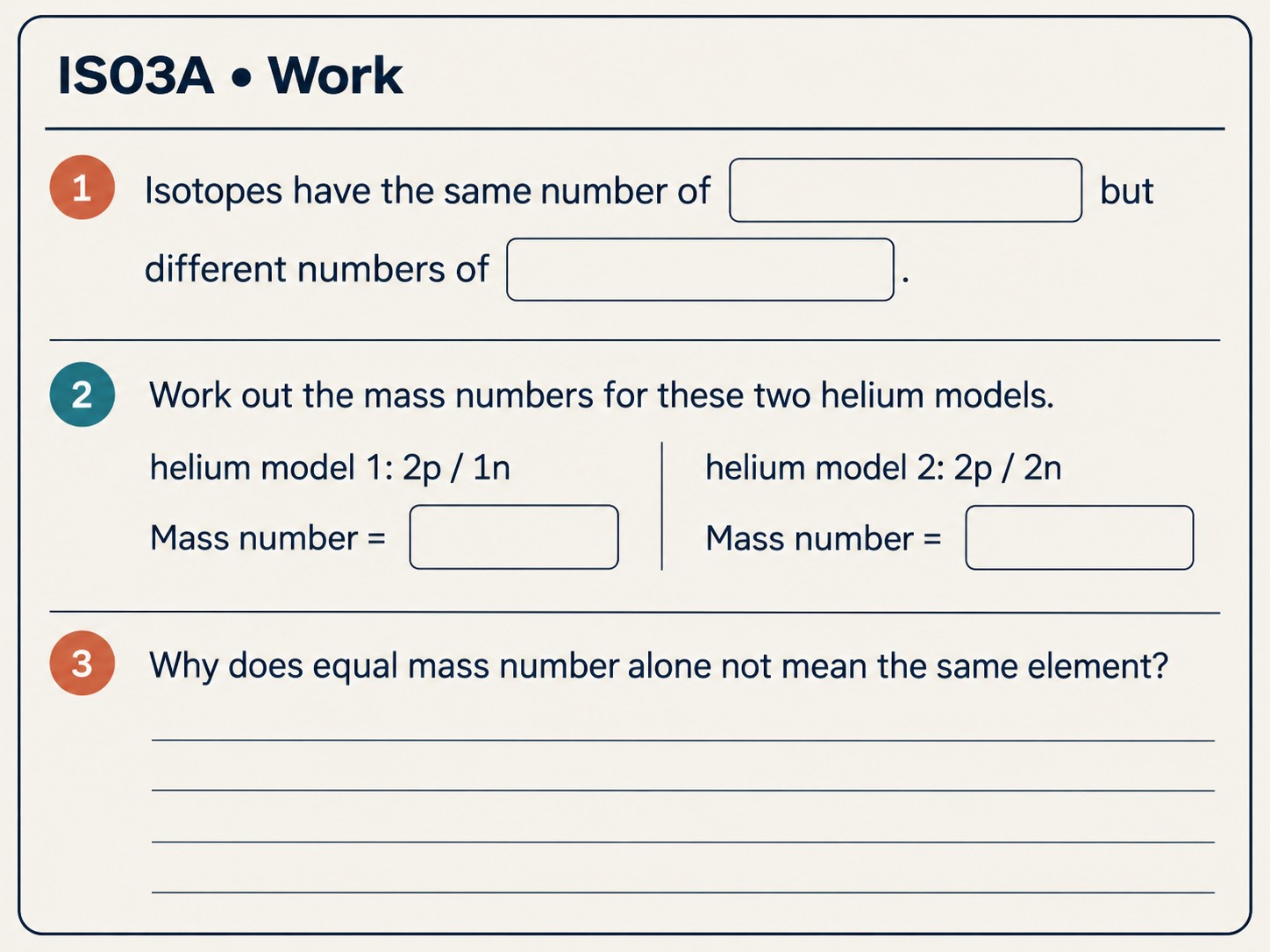
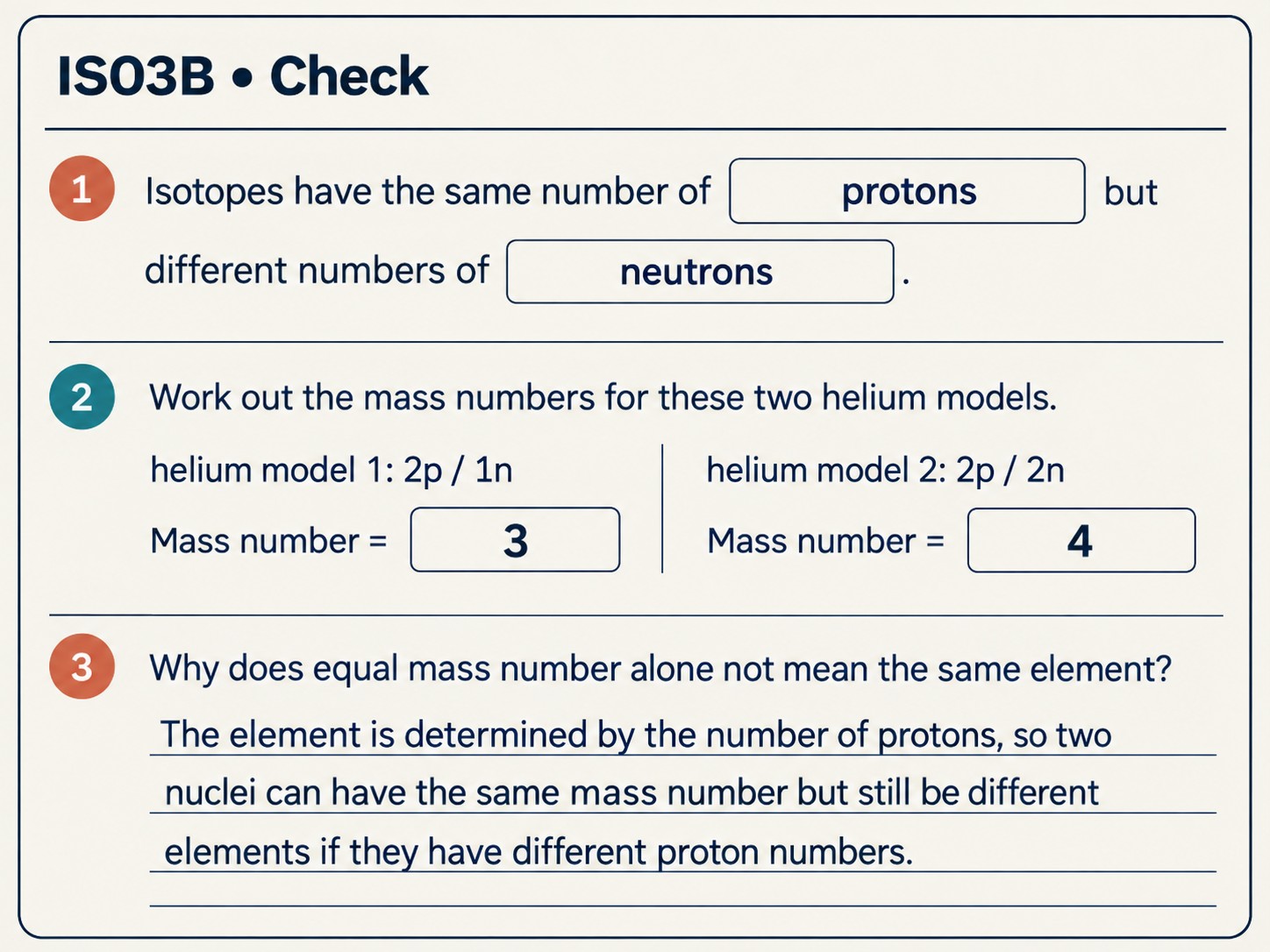
1 of 2
Without looking back, complete these sentences in your own words.
Two nuclei are isotopes of the same element when they contain the same number of ______ but different numbers of ______.
A helium nucleus has two protons and one neutron; another helium nucleus has two protons and two neutrons. Explain why they are isotopes, and write both their mass numbers.
Finally, imagine two nuclei with equal mass number but different proton numbers. Explain why their matching mass numbers do not make them isotopes of one element.
Write your reasons, then check.
GCSE knowledge coverage
You have practised comparing nuclei of one element that have the same number of protons but different numbers of neutrons. You can identify the nuclear isotope pair from the atomic numbers, mass numbers and particle counts, and explain why equal mass numbers alone do not prove equal element identity.
For Pearson Edexcel Combined Science, this develops the isotope-nucleus comparisons and notation required by Physics 6.3 and the neutron-difference relationship in Physics 6.4. It establishes the nuclear foundation for Chemistry 1.9; the specification's wording about different complete atoms will be completed later in Atomic Structure. Relative atomic mass and isotope-abundance calculations are also separate later work. Your final qualification footer will show the course route actually being studied.