Primordial nucleosynthesis
A brief early-universe window in which light atomic nuclei form before complete neutral atoms can exist.
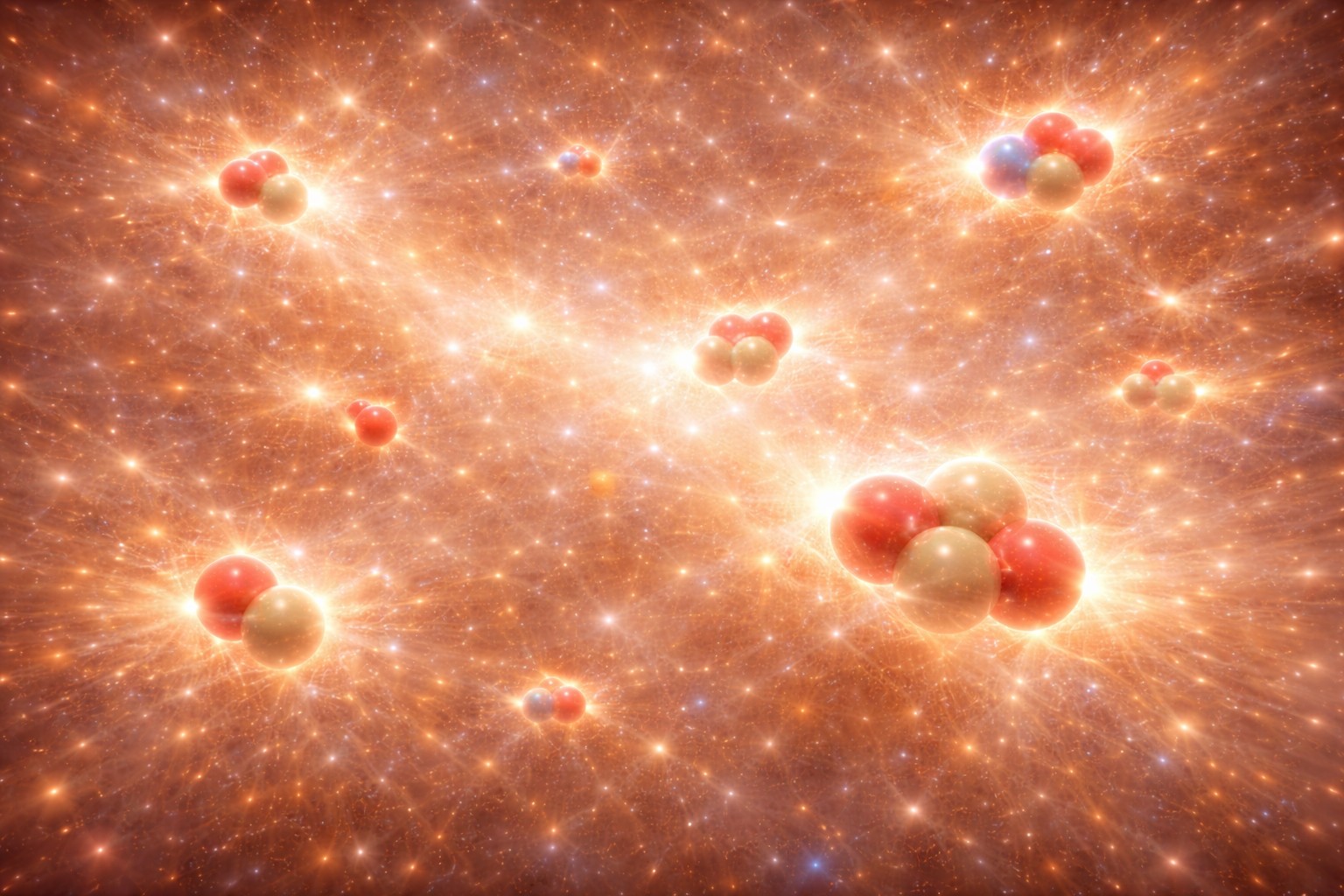
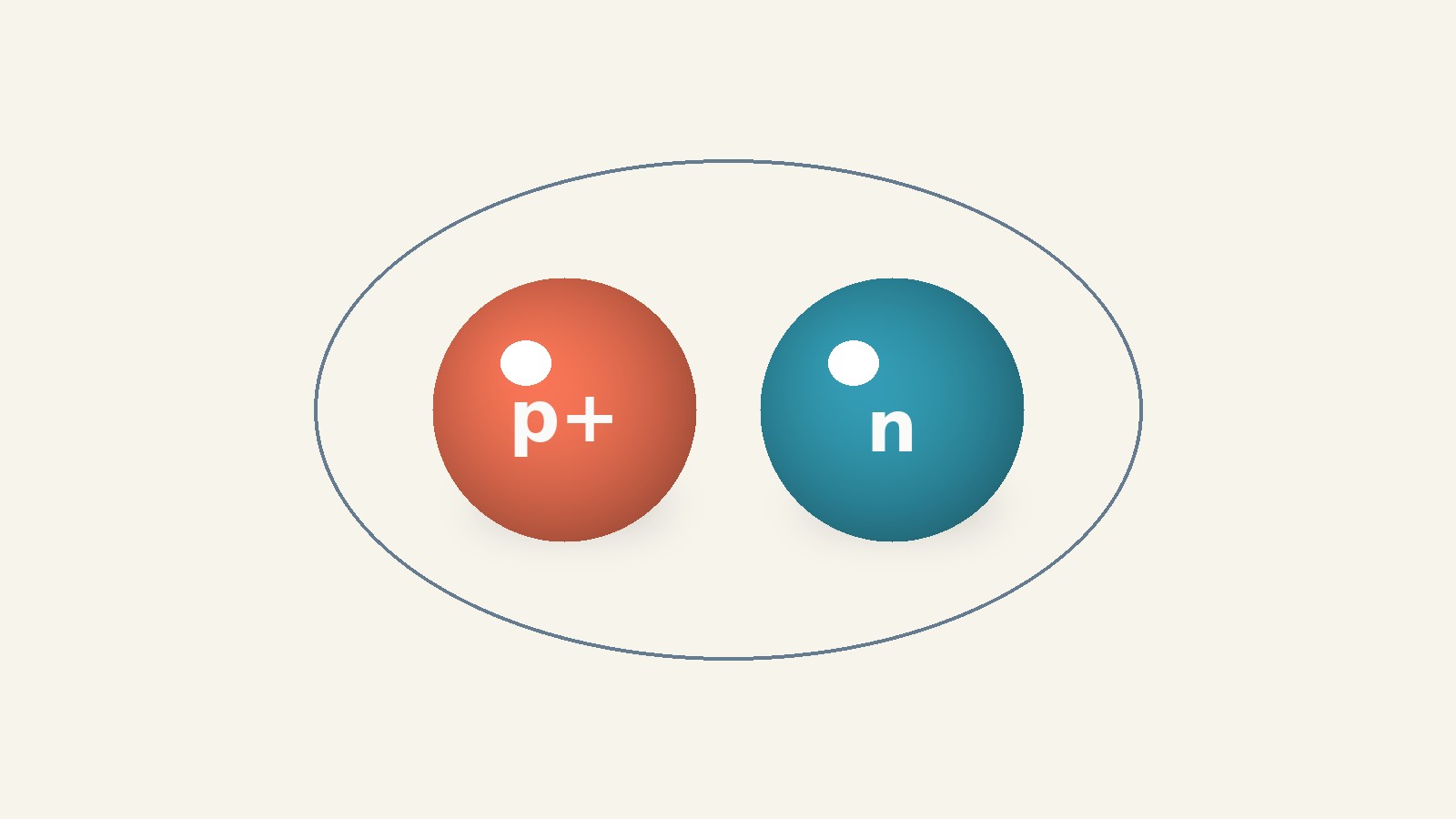
Primordial nucleosynthesis is the brief early-universe period when already-existing protons and neutrons could begin forming light atomic nuclei. The universe was cooling and expanding rapidly, so this nuclear-reaction window lasted only a few minutes.
These were nuclei, not yet complete neutral atoms. The learning sequence below first examines the structure of a nucleus, then follows the formation of the light-element nuclei before the reaction window closes. Electrons remain free until recombination much later.
Entropy — opening
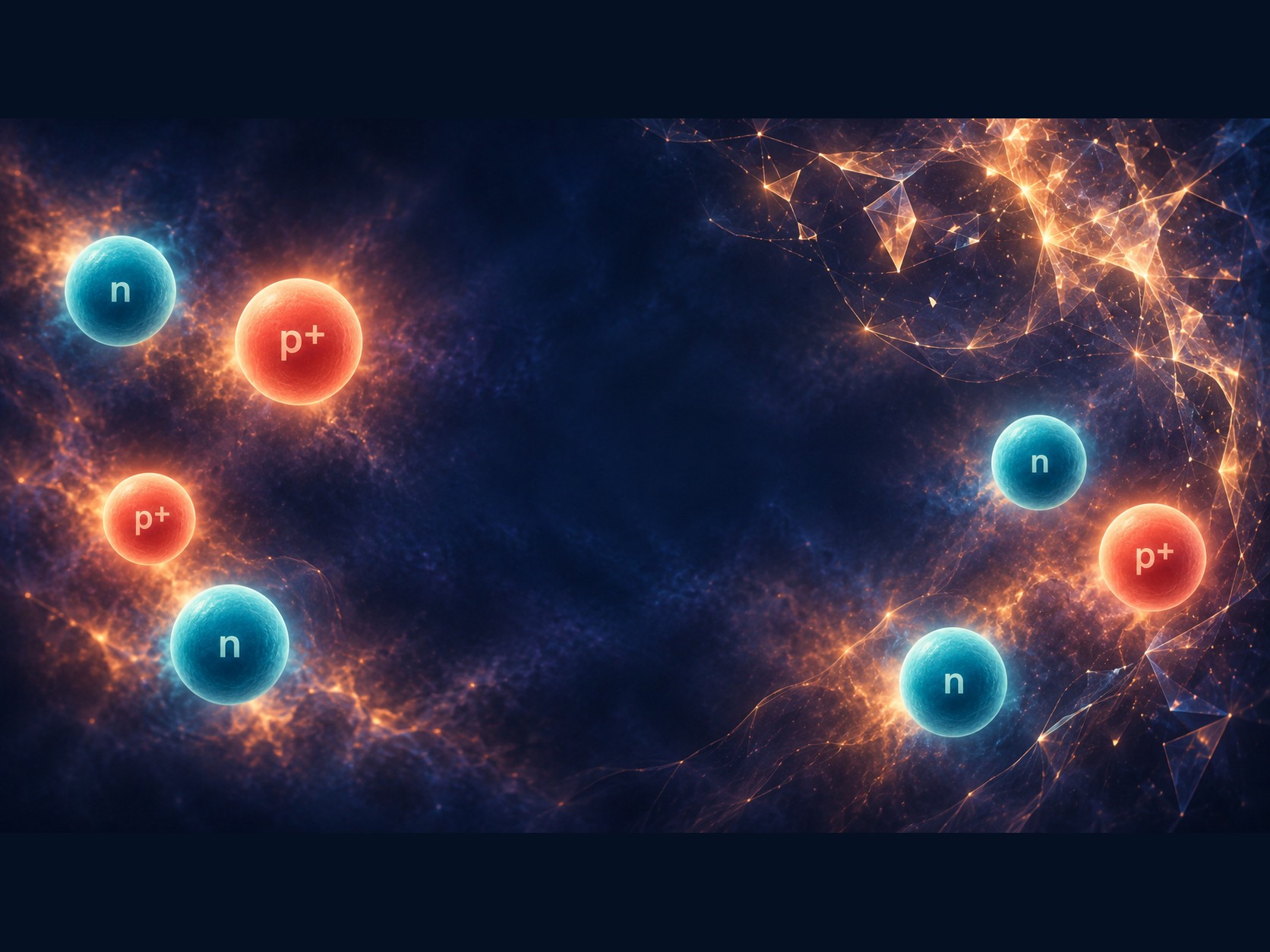
There was a time when almost nothing could stay together.
Now there are protons and neutrons. They have lasted long enough for something else to become possible.
I watch the space between them. I watch the conditions change.
What could exist next?
A window for light nuclei
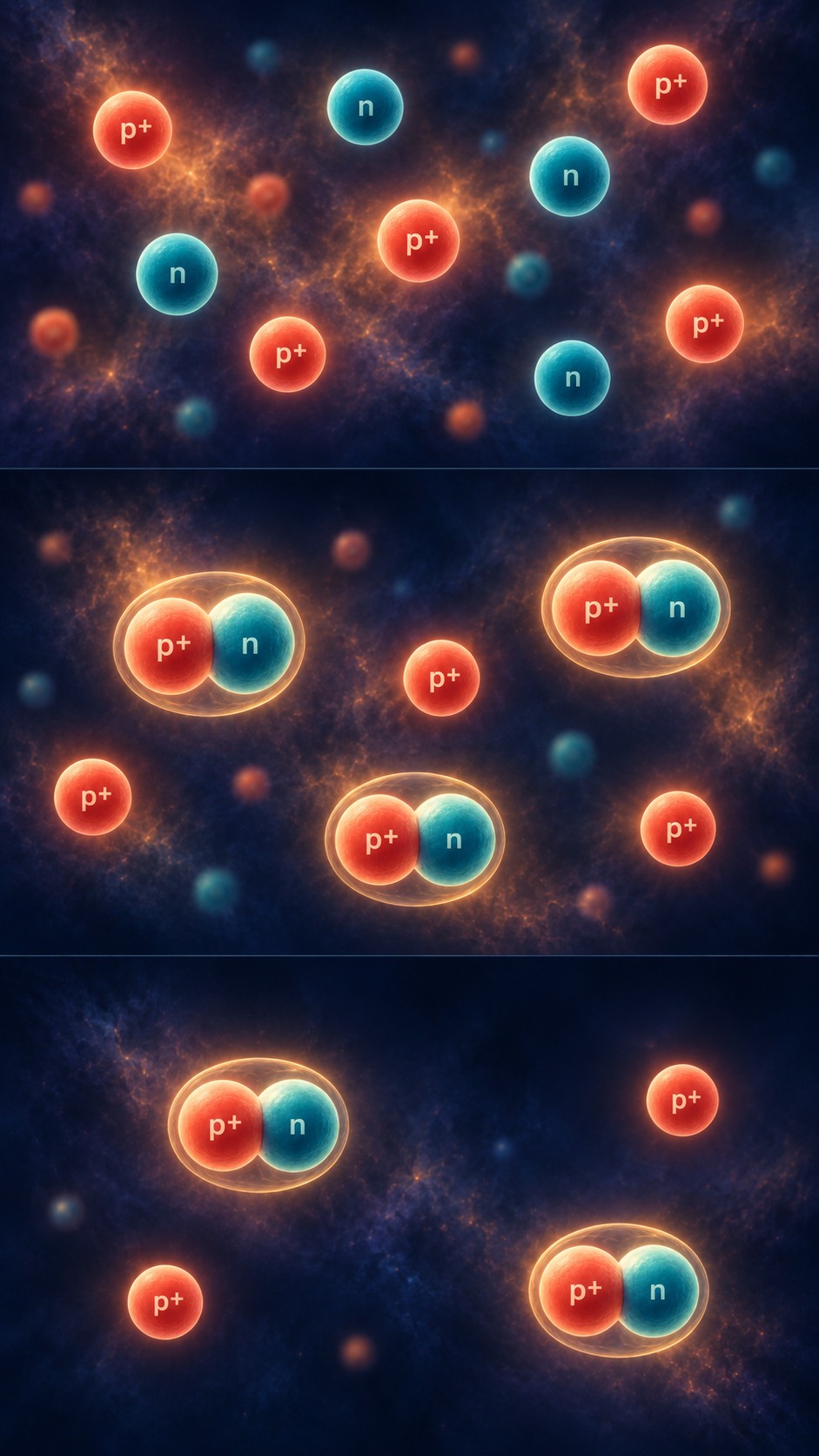
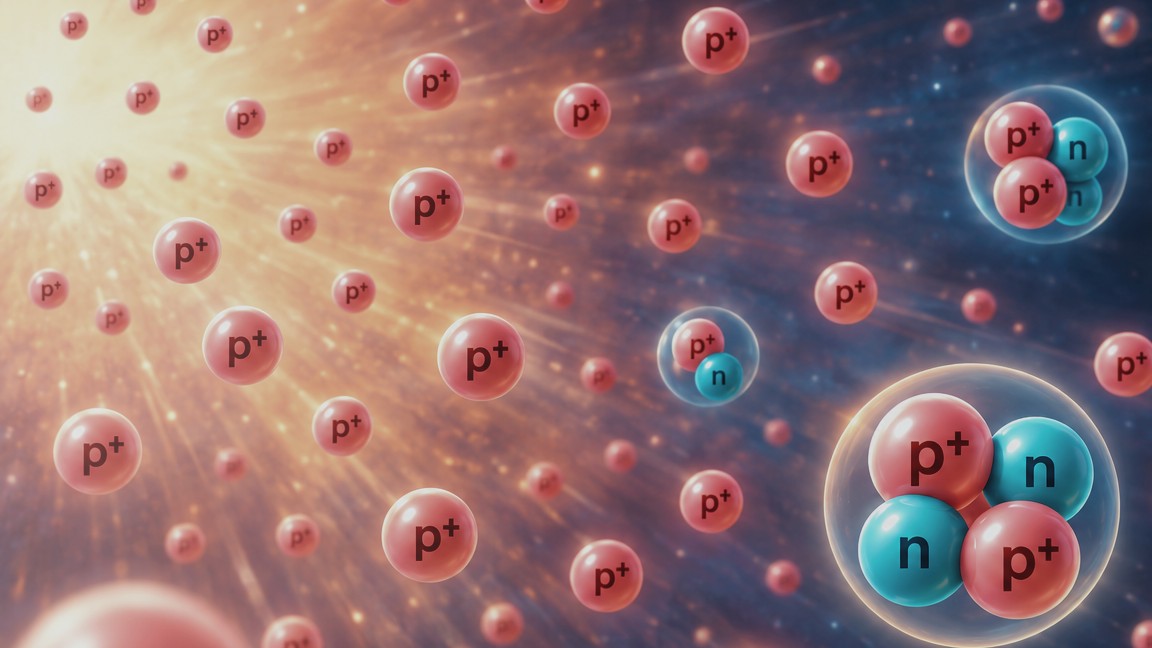
The early universe has been expanding and cooling. Protons and neutrons already exist. Some protons are alone; a lone proton is already the nucleus of ordinary hydrogen, although a complete hydrogen atom has not formed.
Earlier, energetic radiation would readily break apart many newly joined light nuclei. As the universe cools, some of these combinations can survive. Protons and neutrons can now take part in reactions that produce light nuclei, including nuclei containing more than one nucleon.
This period is called primordial nucleosynthesis. 'Nucleosynthesis' means making atomic nuclei. It does not mean that the first complete atoms already exist, and it does not mean that every proton joins another particle.
The next question is what a nucleus is and what it contains.
Primordial nucleosynthesis — Deeper page — Atomic Nucleus
The next question is what a nucleus is and what it contains. Open Atomic Nucleus to investigate this new structure.
A nucleus is not an atom
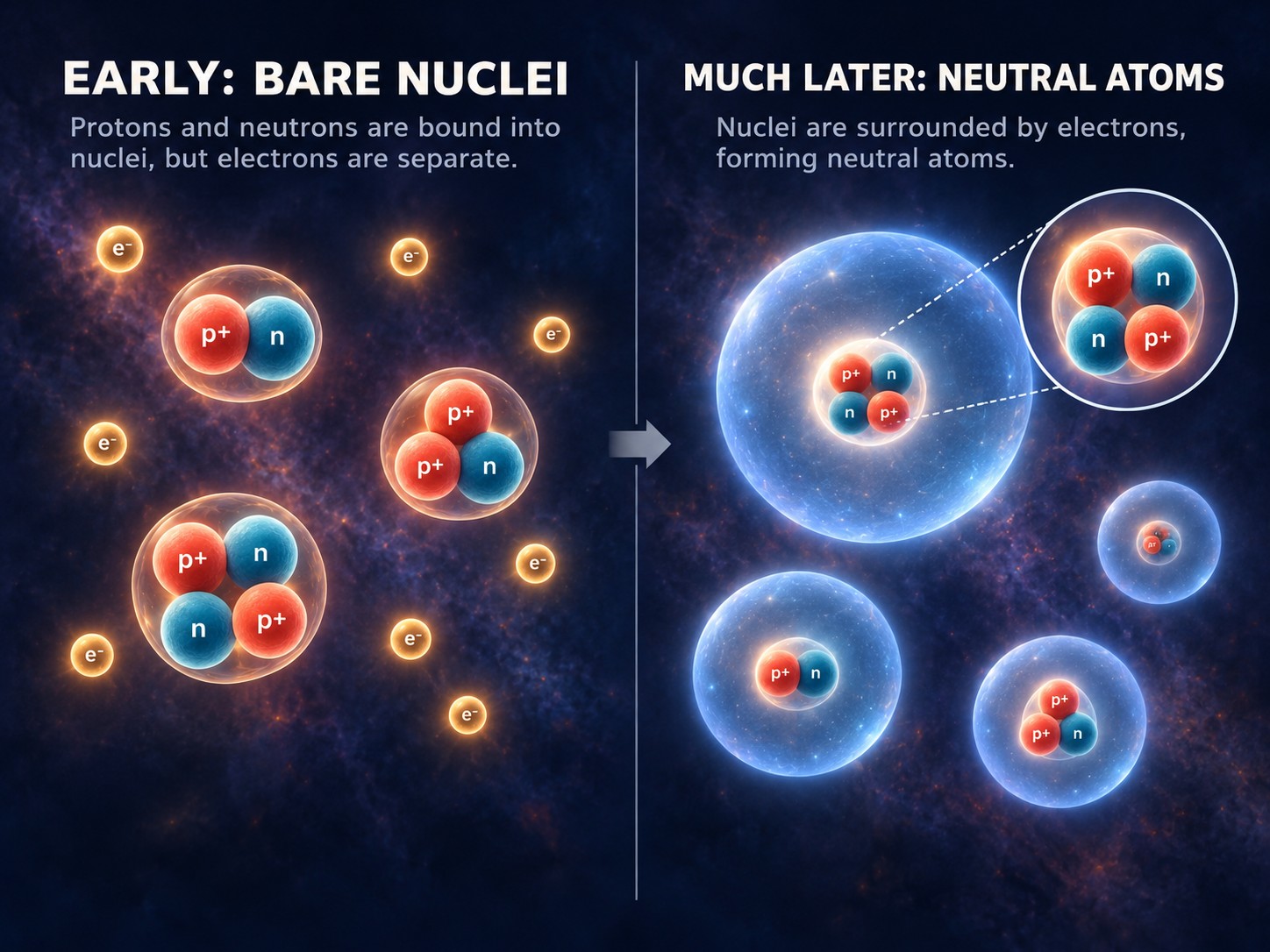
You have met the nucleus as a structure. The same structure can exist before a complete neutral atom.
Electrons are tiny particles with negative electric charge. At this point in the early universe, they cannot yet remain bound to nuclei as part of complete neutral atoms. Neutral atoms form much later.
We can ask another question first: if light nuclei can exist, which kinds were present?
Primordial nucleosynthesis — Deeper page — Formation of Primordial Element Nuclei
If light nuclei can exist, which kinds were present? Open Formation of Primordial Element Nuclei to follow the early light-nucleus outcomes.
The window closes
Most protons remain uncombined. Some light nuclei have formed, especially helium nuclei; other outcomes are much rarer. Making a nucleus does not guarantee that it will remain unchanged forever.
Expansion continues. As the universe becomes less dense and cooler, the conditions that allowed these early nuclear reactions do not last. The main period of primordial nucleosynthesis ends after the first few minutes.
This is a change in what nuclei exist, not yet the arrival of complete neutral atoms. The next major change in the story will involve electrons remaining bound to nuclei much later.
Put three states in order
1 of 2
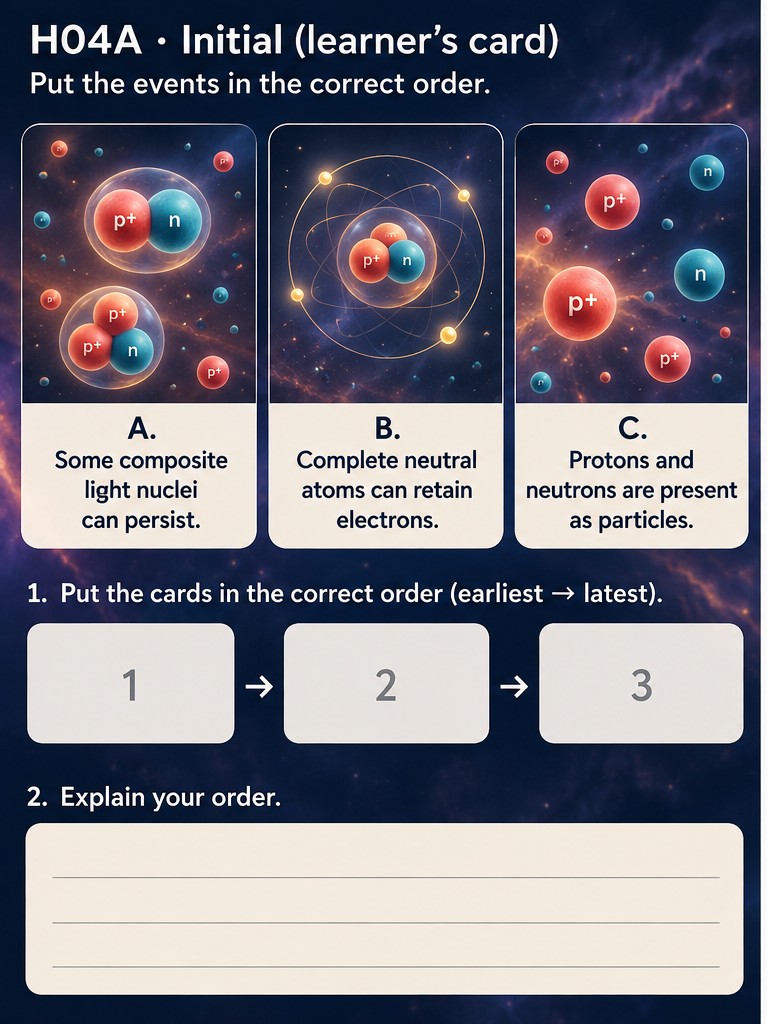
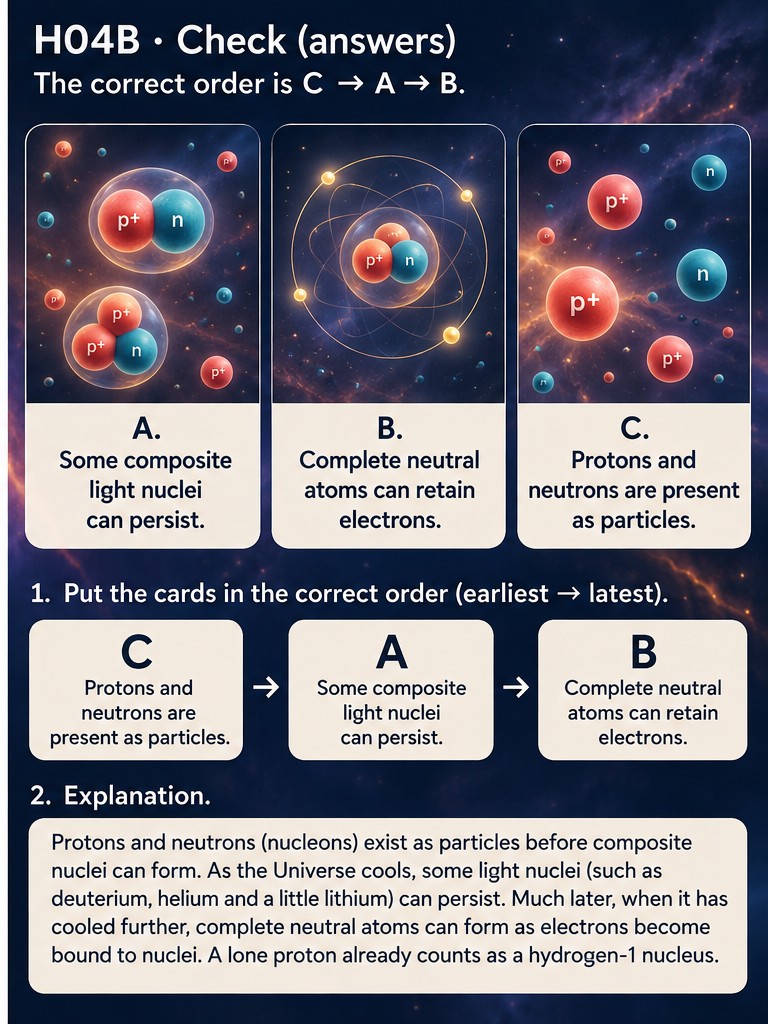
Put these three descriptions into the order in which they became possible. Write one sentence explaining why the final state did not already exist during primordial nucleosynthesis.
A. Some light nuclei containing more than one nucleon can persist.
B. Complete neutral atoms can retain electrons.
C. Protons and neutrons are present as particles.
Use the earlier science Sections and your linked pages if you need to. Attempt your order and explanation before opening 'Check your answer'.
Entropy — handoff
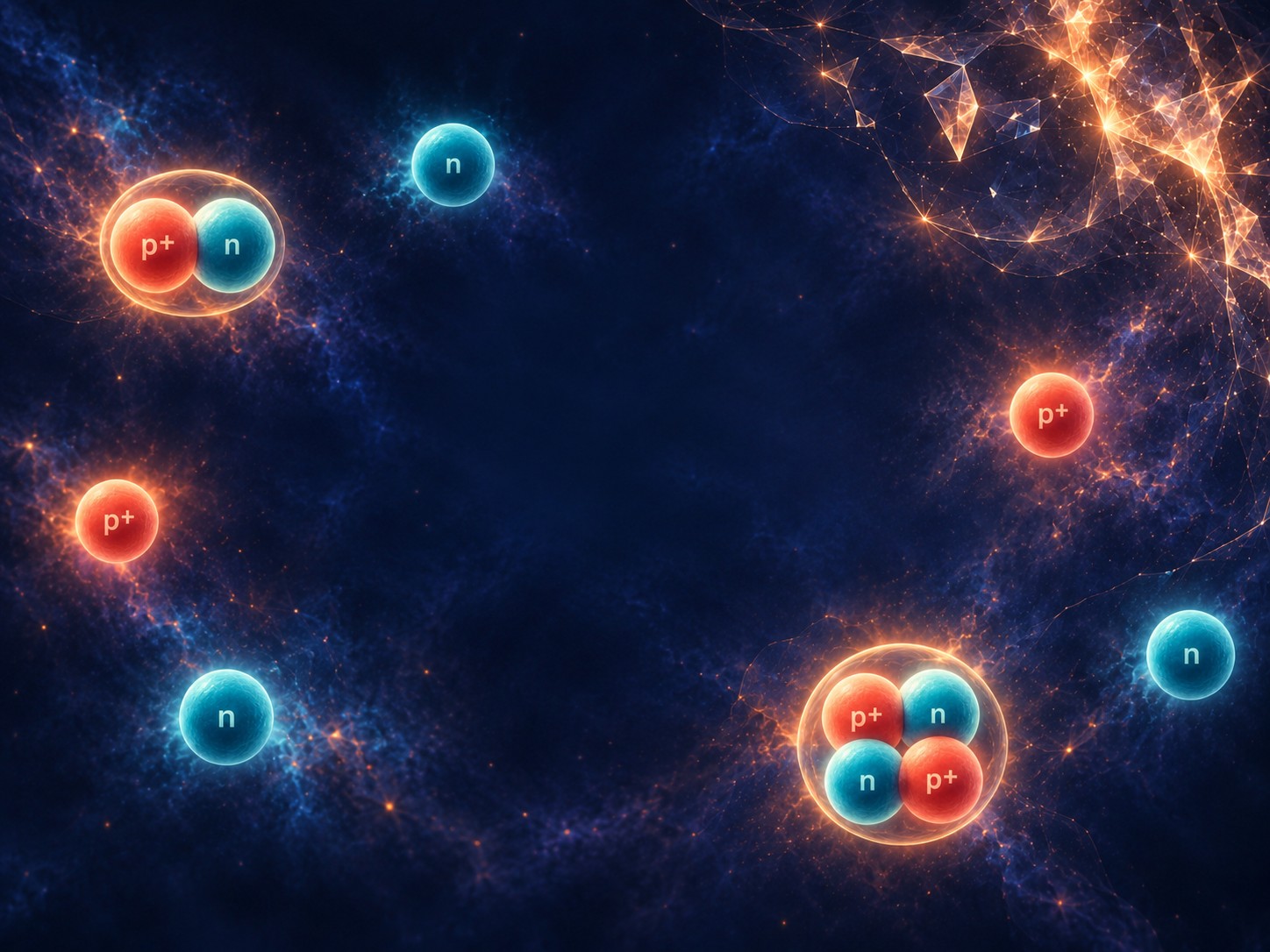
A few minutes. So much has changed.
The pieces can belong to something larger now. Some do. Many remain as they were.
The electrons have their own part to play—but not yet.
GCSE knowledge coverage
GCSE knowledge coverage
This page follows the early-universe history of the formation of light nuclei. It introduces no new, independently assessed GCSE knowledge beyond what is taught on the linked nuclear-structure pages.
The chronology activity helps you connect previously learned facts: nuclei can exist without complete neutral atoms, and complete atoms form later when electrons can remain bound. For the actual GCSE nuclear model, particle numbers and isotopes, use the linked lessons and their own GCSE knowledge coverage sections.