Human-History Holocene
The phase of the Holocene in which humans become a dominant geological and planetary force.
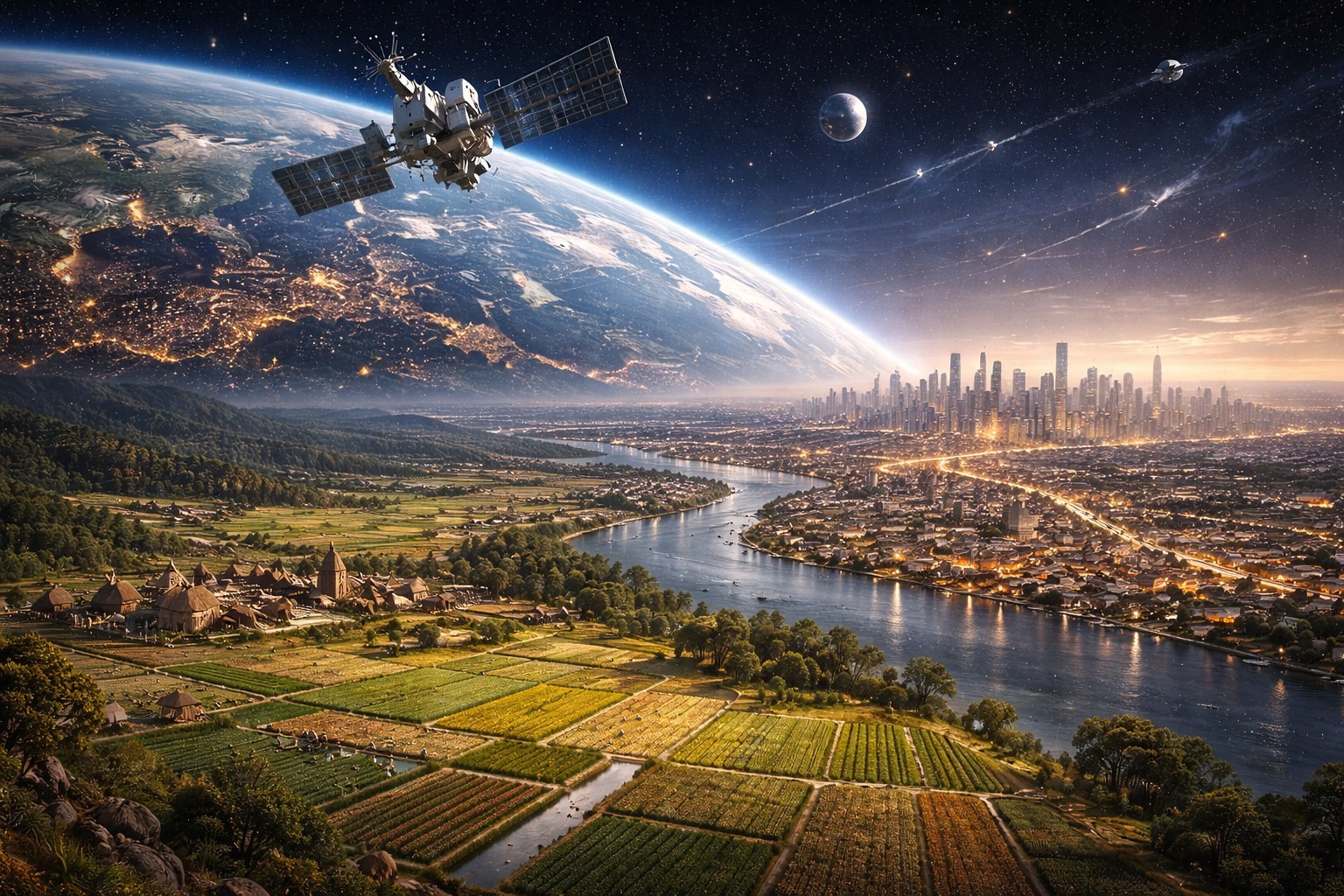
The Human Holocene begins when human activity crosses a threshold from local influence to persistent planetary impact. The rise of agriculture marks this transition. Forests are cleared, species are domesticated, and landscapes are reorganised to support permanent settlement.
Villages grow into cities. Population expands. Writing, law, and institutions emerge, allowing memory and power to extend beyond individual lifetimes. Trade networks, states, and empires bind distant regions into shared systems.
In its later stages, change accelerates sharply. Industrialisation unlocks fossil energy, multiplying human influence. Atmospheres are altered, rivers redirected, and extinction rates increase. Technology compresses distance and time. Computers, satellites, and spaceflight extend human activity beyond Earth itself.
All recorded history exists within this interval. Every historical date, whether BCE or CE, belongs here. From a cosmic perspective, the Human Holocene occupies only the final moments of a universe nearly fourteen billion years old, yet its impact rivals major geological transitions.
The Human Holocene is ongoing. Whether it remains a brief episode or becomes the opening phase of a deeper planetary transformation is still undecided.

The Contemporary Age
The Contemporary Age emerges from the late Industrial world and is characterised by scale, speed, and reach. Human actions no longer remain local or regional. Decisions propagate globally through supply chains…
The Neolithic Period
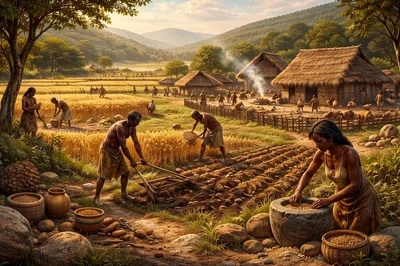
A change in how people lived For most of human history, people moved to survive. They followed animals, gathered plants, and adapted to seasons. Around 10,000 years ago, that pattern began to change. In several parts of…