The Contemporary Age
The Contemporary Age is the period in which human activity becomes the dominant force shaping Earth’s systems. It is defined by global interconnection, accelerating technological change, and unprecedented influence over climate, ecosystems, and information flows. This is the age of simultaneity, feedback, and consequence.
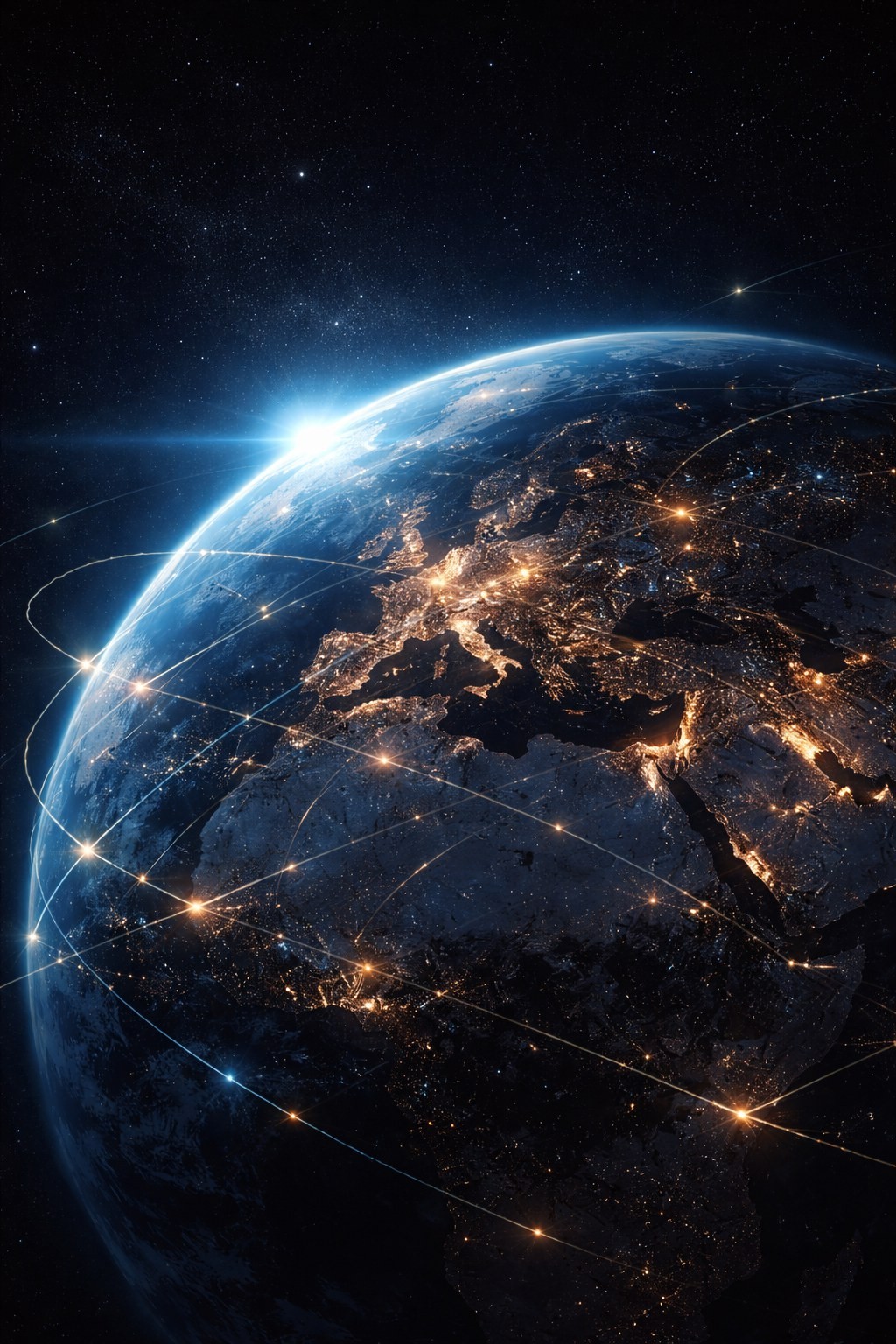
The Contemporary Age emerges from the late Industrial world and is characterised by scale, speed, and reach. Human actions no longer remain local or regional. Decisions propagate globally through supply chains, communication networks, financial systems, and atmospheric processes.
Technological systems mediate daily life. Electricity, computation, satellites, and digital networks compress distance and time. Information moves faster than institutions can adapt, reshaping politics, identity, labour, and culture. Knowledge accumulates rapidly, but so do errors, distortions, and unintended effects.
Biologically and geologically, this age is distinct. Human land use, fossil fuel combustion, industrial agriculture, and material extraction alter climate patterns, biodiversity, and biogeochemical cycles. Extinction rates accelerate. Atmospheric composition shifts. These changes leave signatures that will persist far beyond human lifespans.
Culturally, the Contemporary Age is marked by reflexivity. Humanity becomes aware of its planetary impact and its place in deep time. Science, history, and cosmology coexist with uncertainty about the future. The age is not defined by a single invention or empire, but by entanglement: systems affecting systems at every scale.
The Contemporary Age is ongoing. Its defining feature is not completion, but instability. Outcomes remain open, shaped by choices that are still being made.