The Neolithic Period
The Neolithic Period marks a major shift in human life, from hunting and gathering to farming and settled communities. This change reshaped food, society, and the human relationship with the land.
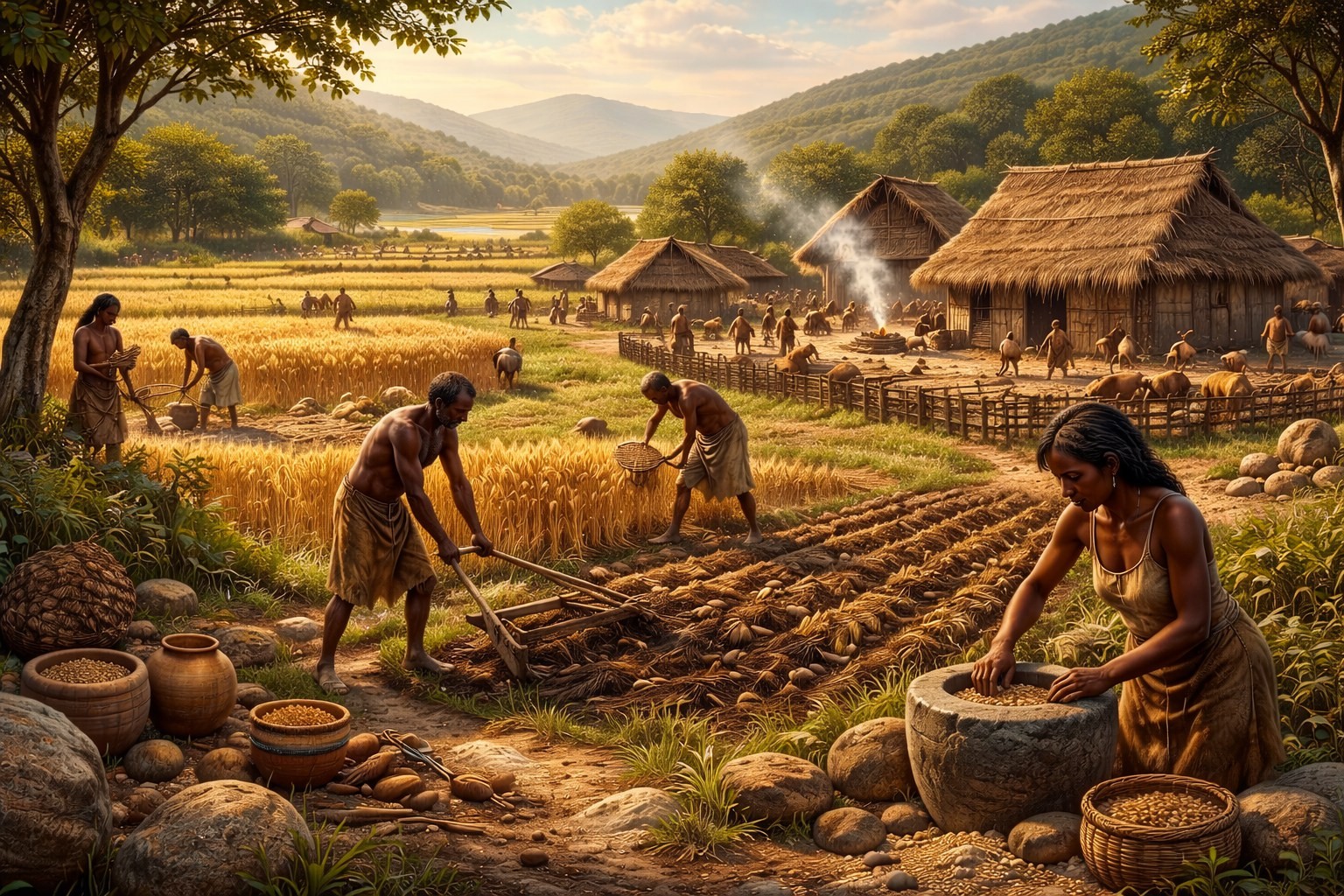
A change in how people lived
For most of human history, people moved to survive. They followed animals, gathered plants, and adapted to seasons. Around 10,000 years ago, that pattern began to change. In several parts of the world, groups started to grow crops and keep animals. This shift marks the start of the Neolithic Period.
Farming altered daily life. People stayed longer in one place. They built stronger shelters and stored food. Tools changed as well. Stone blades became sharper and more specialised. Pots appeared to hold grain and water.
This was not a sudden switch. Hunting and gathering continued alongside farming for a long time. The key change was direction. Humans began to shape their environment instead of only responding to it. That decision set new limits and new possibilities.
Farming, settlement, and consequence
Growing food created surplus. Extra grain fed more people. Populations grew. Villages expanded into permanent settlements. With settlement came new roles. Some people farmed. Others made tools, planned buildings, or organised shared work.
This brought structure, but also tension. Living close together increased disease. Farming tied survival to weather and seasons. Crops could fail. Land could run out. The Neolithic world offered stability, but demanded commitment.
Here the perspective shifts. Farming looks like progress from a distance. Up close, it introduced risk and inequality. Some people controlled land and food. Others depended on them. The Neolithic Period shows how systems solve problems while creating new ones.
Why the Neolithic still matters
The Neolithic Period changed what it meant to be human. Settled life allowed long-term planning. Buildings lasted across generations. Ideas, skills, and traditions accumulated. This made larger societies possible.
It also changed humanity’s relationship with nature. Farming required clearing land and managing animals. Humans became a major force shaping ecosystems. That influence still defines the modern world.
Later developments build directly on this shift. Cities, writing, trade, and states depend on settled food systems. None appear without the Neolithic foundation.
The period does not represent simple improvement. It represents commitment to a path. Once humans settled, returning to a fully mobile life became unlikely. The Neolithic marks a turning point where choice narrowed and history accelerated.