Pre-Human-History
A stable post–ice age Earth before humans become a dominant planetary force. Climate settles, ecosystems recover, and the conditions for civilisation assemble.
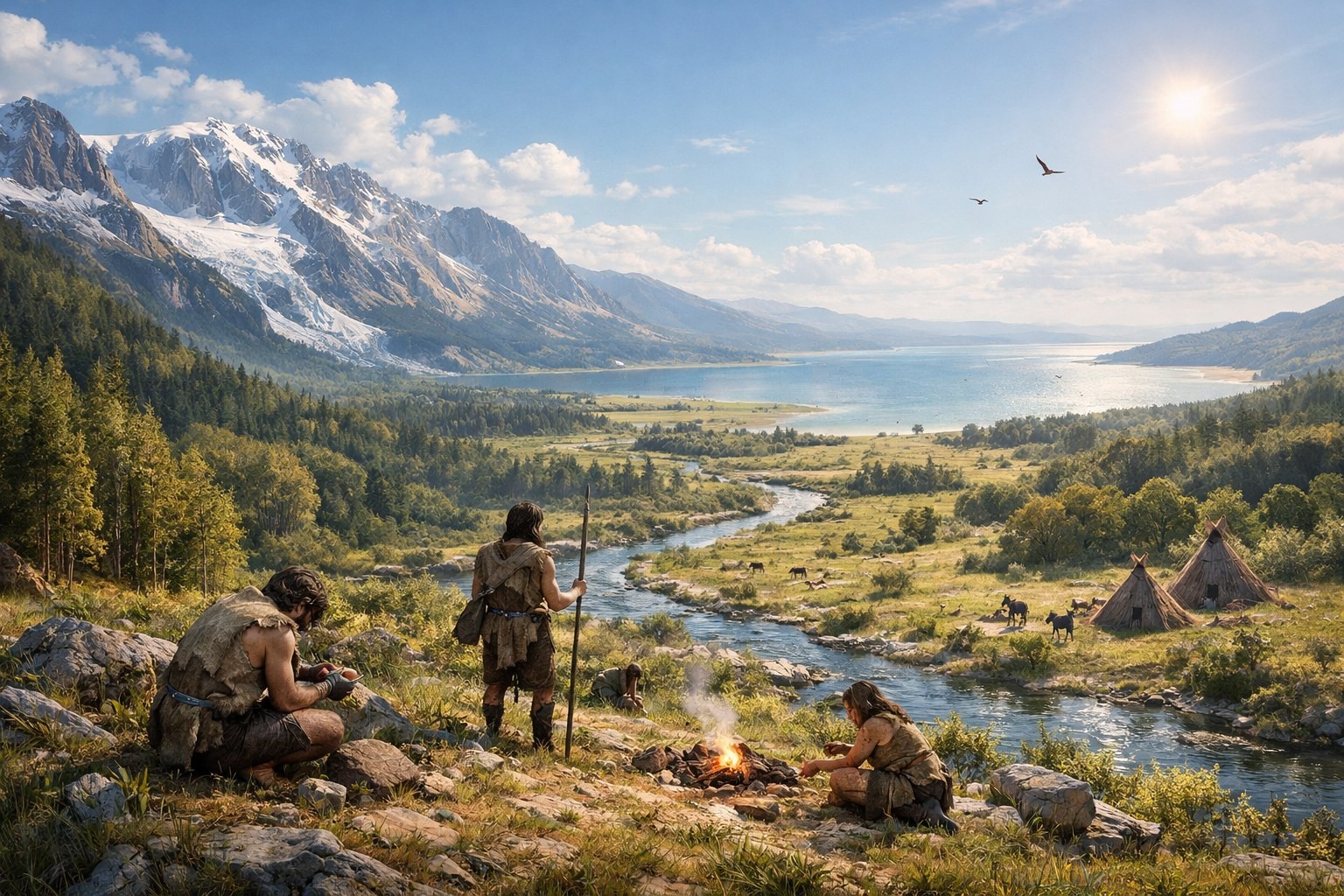
The Pre-Human Holocene begins with the end of the last major ice age, when Earth’s climate shifts into a warmer and more stable state. Glaciers retreat, sea levels rise toward modern positions, and ecosystems reorganise after long periods of climatic volatility.
During this interval, Earth becomes unusually stable by geological standards. Seasonal cycles regularise, coastlines settle, forests and grasslands expand, and soils mature. Rivers establish persistent courses, and ecological networks regain resilience.
Humans are present, but their influence remains limited. Populations are small and mobile, living primarily as hunter-gatherers. Their tools and numbers do not yet impose lasting, global changes on Earth’s systems.
This phase matters because it creates the environmental reliability required for agriculture and settlement. The Pre-Human Holocene is defined not by human history, but by planetary readiness.
It ends when human activity begins to permanently reshape landscapes and ecosystems.