Declining Star-Formation Epoch
Star birth slows as galaxies exhaust cold gas.
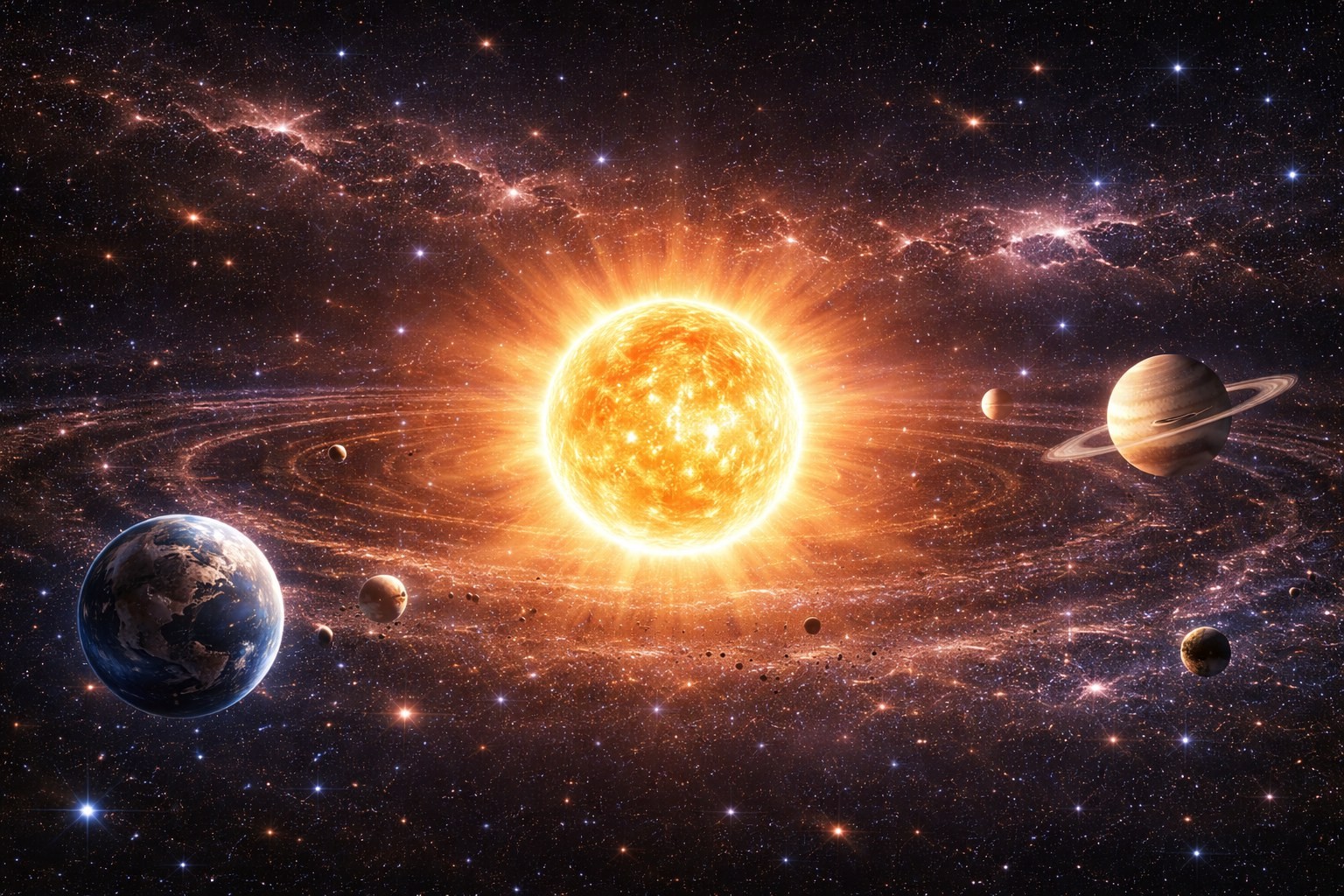
The declining star-formation Epoch is the era after the universe's peak star-forming period, when galaxies began producing new stars much more slowly. Their gas supplies were running low or being heated and blown away, making star birth less efficient. As a result, galaxies gradually shifted from being active and bright to more stable and quieter, forming far fewer new stars over time.
We are in the declining star-formation Epoch.
By Harleah Fonteyn 5/12/25
[frame]:
cosmic stella epochs
Post-Peak Cooling Phase
The post-peak cooling phase marks the immediate aftermath of the universe’s most intense period of star formation. Galaxies still contain large reserves of cold gas, but star birth slows sharply compared to earlier…
Gas-Depletion Phase
As time progresses, galaxies lose access to the cold gas required for efficient star formation. Existing gas is consumed, heated, or expelled, while fresh inflow from intergalactic space diminishes. Star formation…
Late Stelliferous Transition
In the late stelliferous transition, star formation has slowed to a steady but minimal pace. Most large galaxies are quiescent, forming few new stars, while smaller systems and isolated regions continue limited…