Gas-Depletion Phase
Cold gas reservoirs thin out, and star formation becomes inefficient and increasingly suppressed.
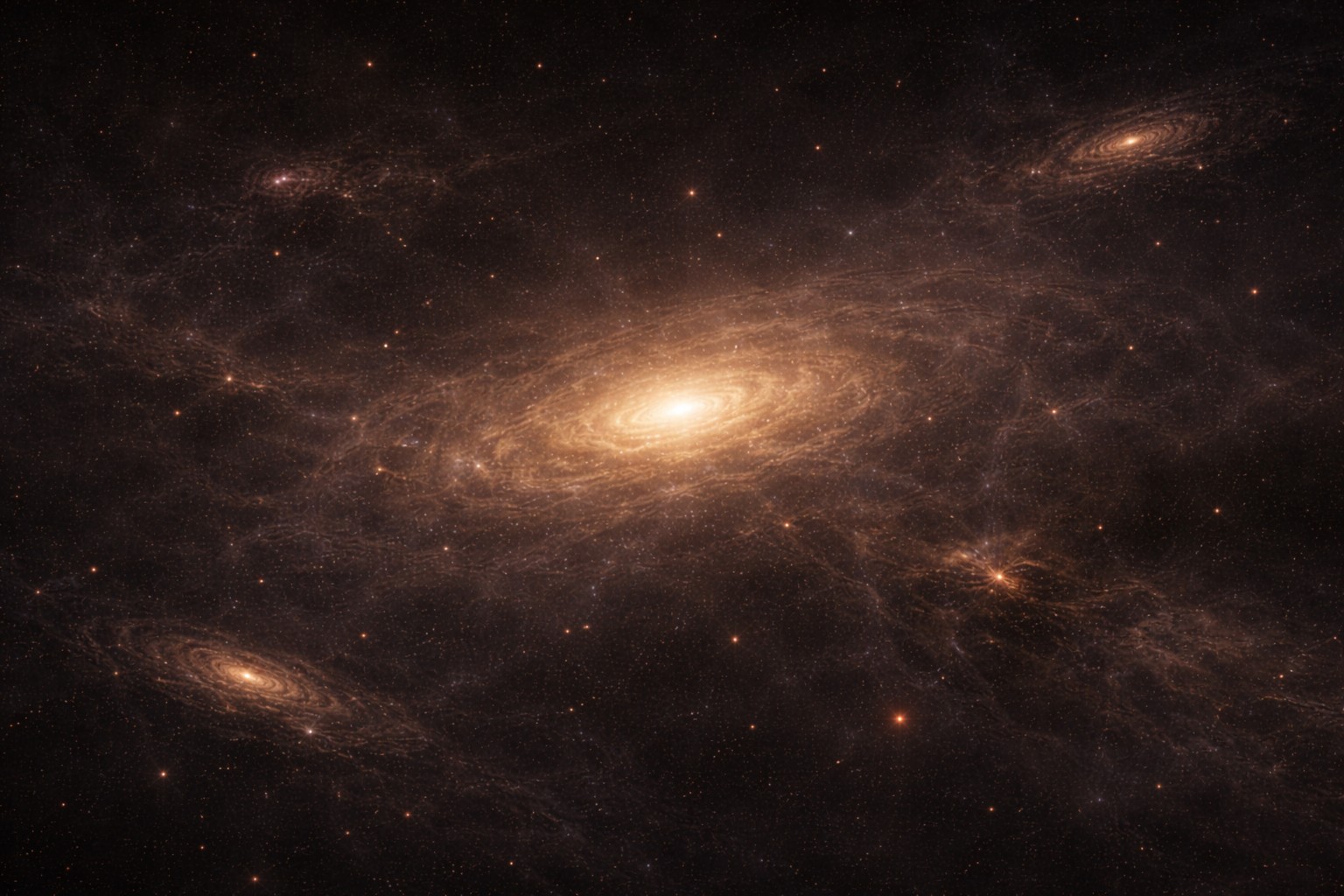
As time progresses, galaxies lose access to the cold gas required for efficient star formation. Existing gas is consumed, heated, or expelled, while fresh inflow from intergalactic space diminishes. Star formation continues, but only in regions where conditions remain favourable.
Feedback mechanisms now dominate galactic evolution. Supernovae, stellar winds, and active galactic nuclei heat surrounding gas and prevent it from collapsing. Many galaxies transition toward quiescence, and elliptical galaxies become more common.
This phase is defined by structural settling. The large-scale architecture of galaxies stabilises, and the universe shifts from growth driven by abundance to stability shaped by limitation.