Late Stelliferous Transition
Star formation persists at a low level as long-lived, low-mass stars become the dominant new products of the universe.
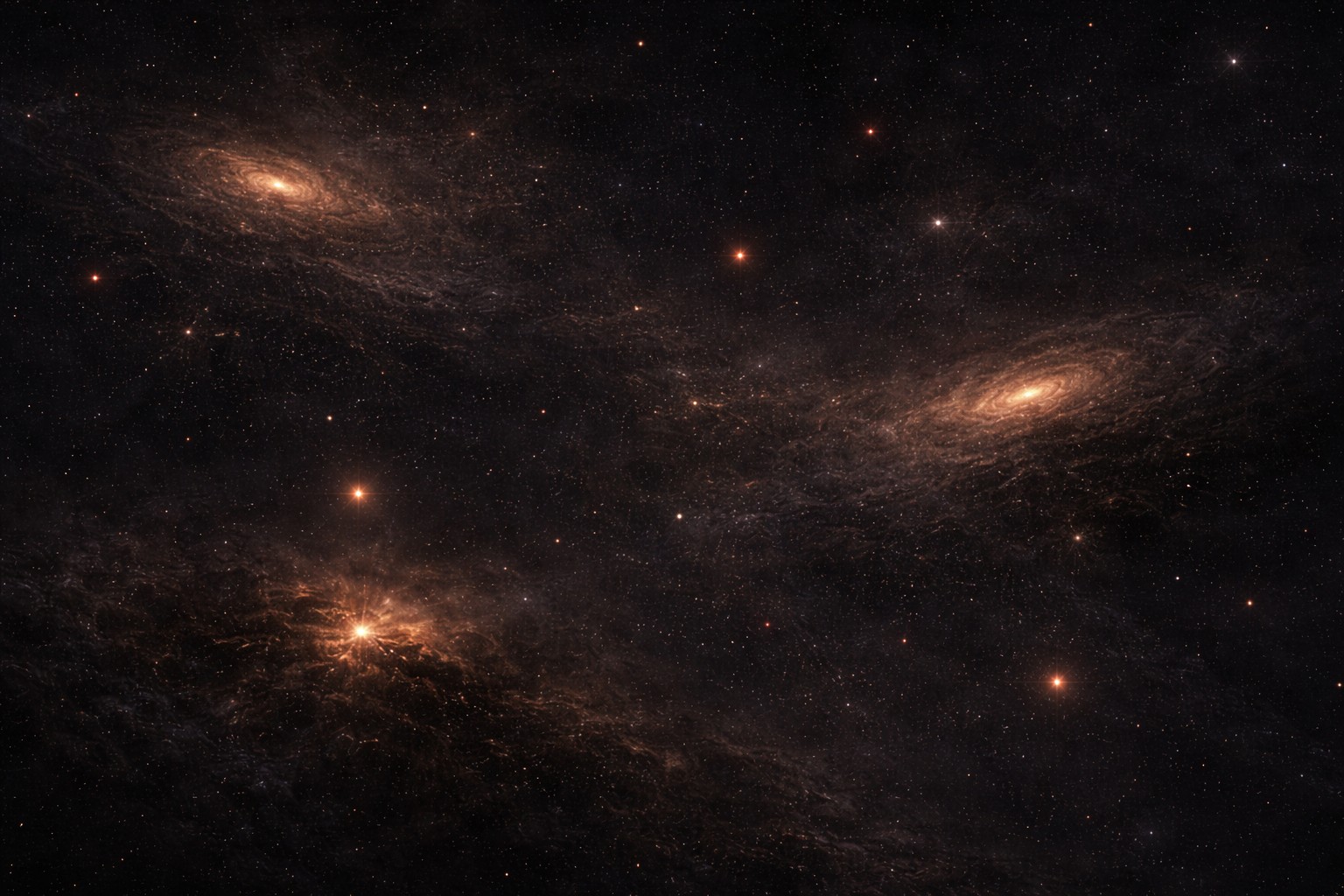
In the late stelliferous transition, star formation has slowed to a steady but minimal pace. Most large galaxies are quiescent, forming few new stars, while smaller systems and isolated regions continue limited activity. When stars do form, they are predominantly small and long-lived.
Red dwarfs increasingly dominate new stellar births. These stars burn fuel slowly and will shine for trillions of years, reshaping the future character of the universe. Light becomes less intense overall, but far more persistent.
This phase marks the hand-off from a universe defined by rapid change to one governed by endurance. It closes the declining star-formation epoch and opens the path toward red-dwarf dominance, where longevity replaces brilliance as the defining cosmic trait.