Population III Stellar Fusion
Population III stellar fusion describes how the first stars created new elements inside their cores. Formed from hydrogen and helium, these stars used nuclear fusion to make helium first, then carbon and oxygen. This process produced the universe’s first heavy elements and changed cosmic chemistry forever, laying the foundations for later stars, planets, and life.
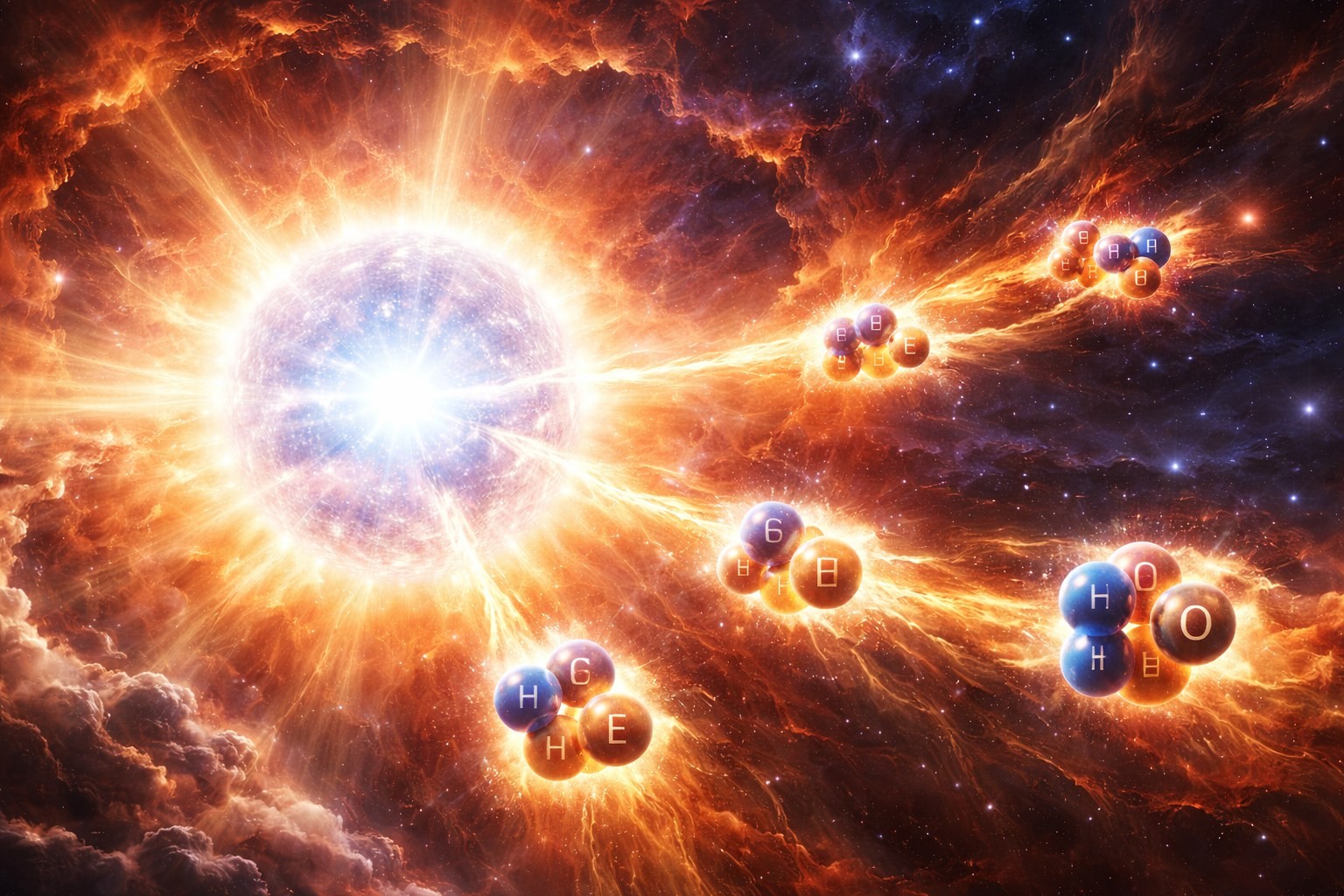
Population III stars were the first stars in the universe. They formed from clouds of hydrogen and helium left over from the Big Bang. No heavier elements existed when these stars were born.
Inside these stars, extreme heat and pressure caused nuclear fusion. Fusion is the process where small atoms join together to make larger ones, releasing energy as light and heat.
At first, hydrogen atoms fused to form helium. This reaction powered the star and made it shine. As hydrogen ran low, the star’s core became even hotter.
In the hottest Population III stars, helium atoms fused to form carbon. Carbon then combined with helium to form oxygen. These were the first new elements made inside stars anywhere in the universe.
Some Population III stars became hot enough to begin forming slightly heavier elements such as neon and magnesium, but fusion could not continue forever. Fusion inside stars can only produce elements up to a certain point.
This process changed the universe permanently. Before stellar fusion, the universe contained only very simple elements. After Population III stars, space contained the first building blocks needed for planets, chemistry, and life.
Population III stellar fusion marks the moment when the universe began creating its own materials, rather than relying only on what formed in the Big Bang.