Quaternary Period
The Quaternary Period is the age of ice cycles and humans. Marked by repeated glaciations and rapid climate shifts, it is the period in which modern ecosystems form and human societies emerge.
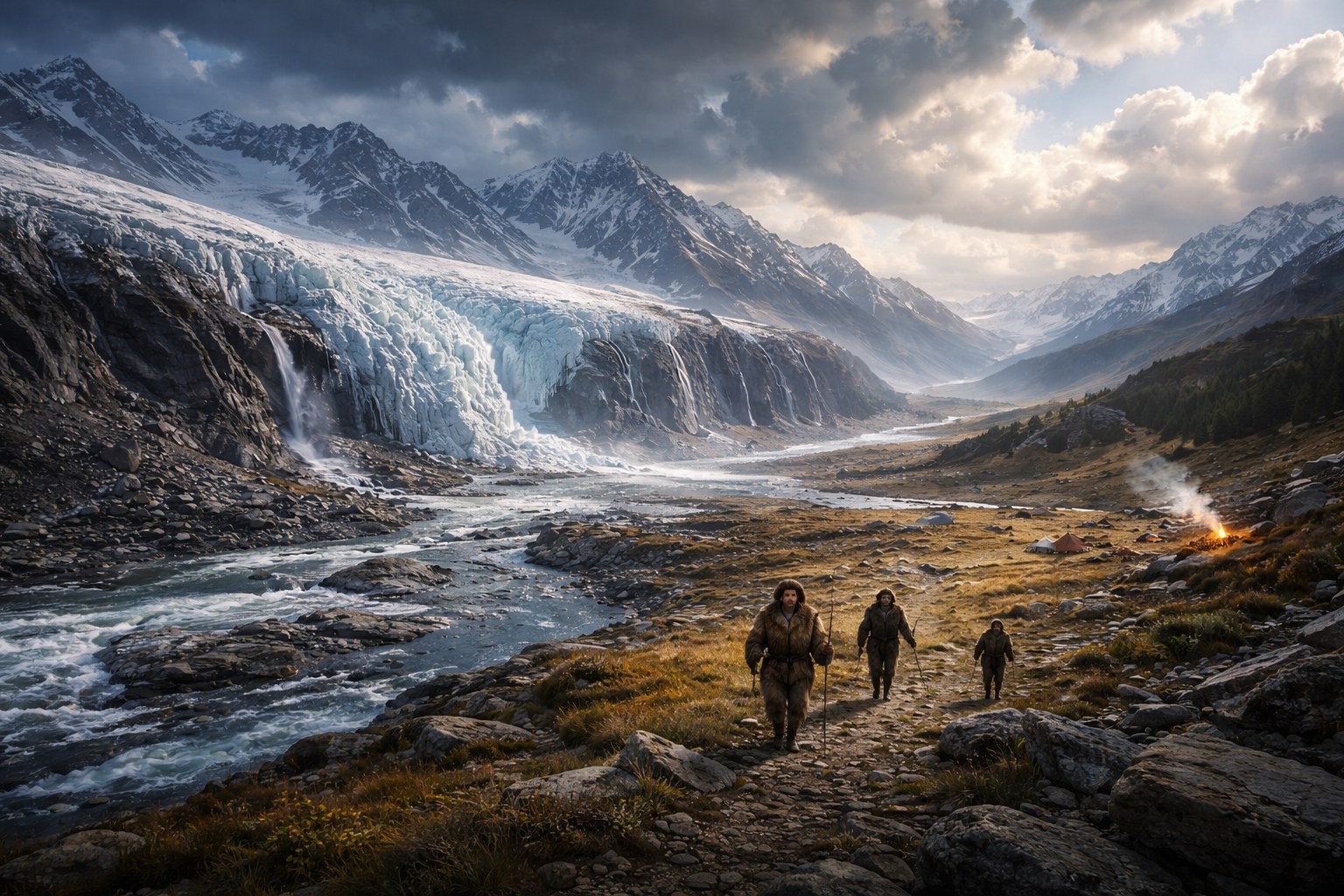
The Quaternary Period is the most recent period of the Earth’s geological history. It begins about 2.58 million years ago, following a long-term cooling trend that reshaped global climate and ecosystems. This period is defined by alternating glacial and interglacial cycles, during which massive ice sheets advanced and retreated across large portions of the planet.
These climate oscillations repeatedly reorganised landscapes, sea levels, and habitats. Species adapted, migrated, or went extinct in response to rapidly changing conditions. Grasslands expanded, coastlines shifted, and large mammals rose to prominence in many regions.
Crucially, the Quaternary is the period in which humans appear and spread. Early members of the genus Homo evolve, develop tools, master fire, and gradually disperse across continents. By the later Quaternary, anatomically modern humans emerge and begin shaping ecosystems through hunting, land use, and social organisation.
The Quaternary continues today. It is a period defined not by stability, but by sensitivity: small changes in climate produce large effects. Within this volatile setting, intelligence, culture, and long-term memory arise — transforming Earth into a planet aware of its own history.
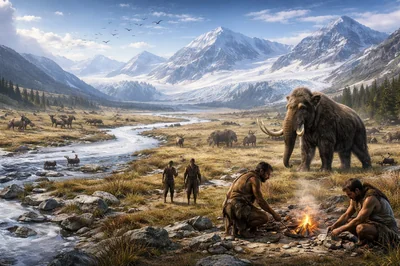
Pleistocene Epoch
The Pleistocene Epoch spans the most volatile phase of recent Earth history. It is defined by repeated glacial and interglacial cycles, during which massive ice sheets expand across continents and then retreat again…
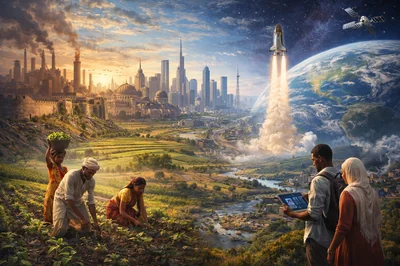
Holocene Epoch
The Holocene Epoch begins approximately 11,700 years ago, following the end of the last major glacial period. It marks a shift to a warmer and more stable climate compared to the extreme fluctuations that characterised…