Proterozoic Eon
The Proterozoic Eon is the age of planetary transformation. Oxygen rises, complex cells evolve, and Earth becomes visibly alive long before animals appear.
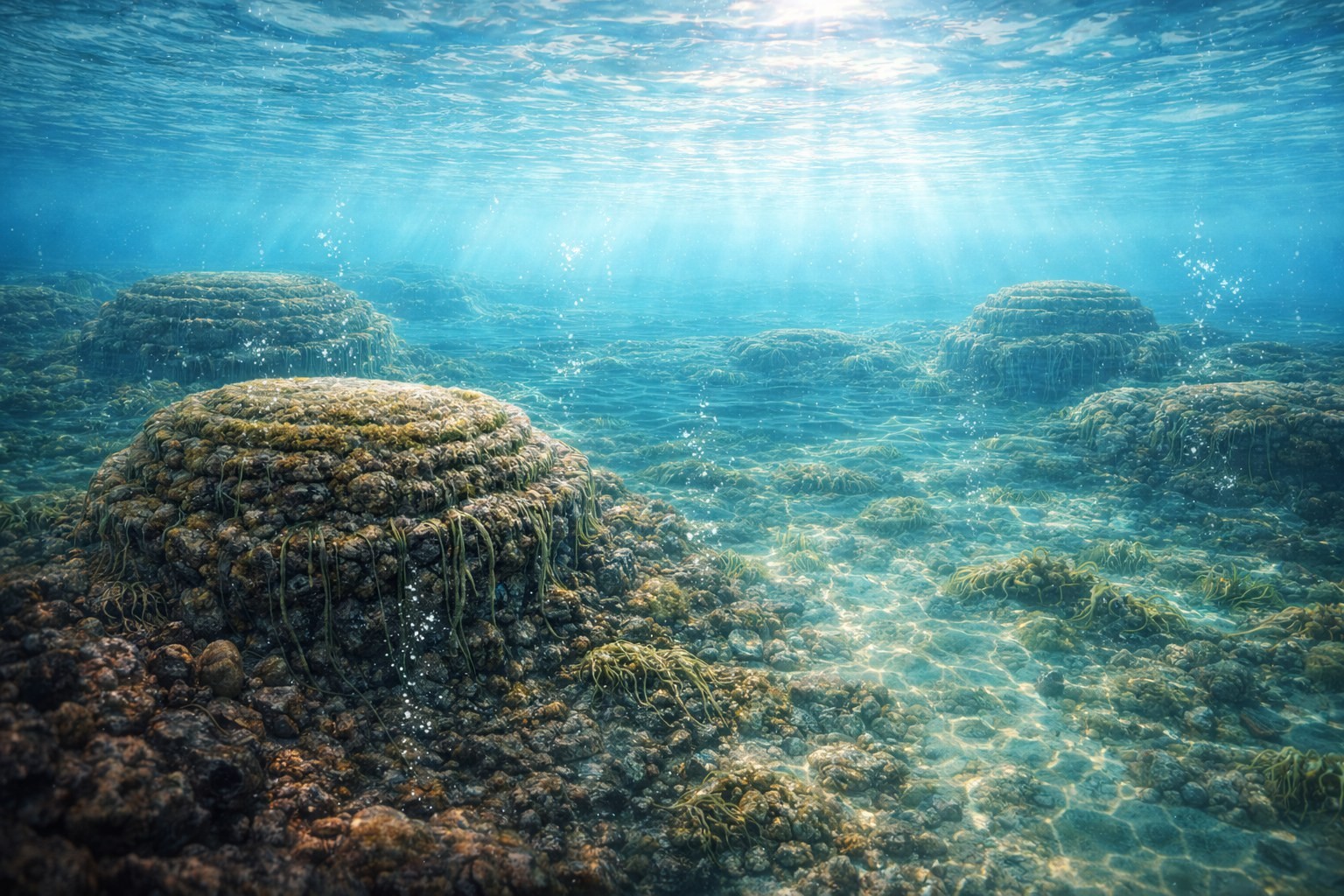
The Proterozoic Eon begins around 2.5 billion years ago, roughly 11.3 billion years after the Big Bang. Its defining feature is the gradual oxygenation of Earth.
Photosynthetic organisms produce oxygen faster than geological sinks can absorb it. Over time, oxygen accumulates in the atmosphere, triggering the Great Oxidation Event. This radically alters Earth’s chemistry and drives many early life forms to extinction while opening new evolutionary pathways.
Eukaryotic cells emerge during the Proterozoic. These complex cells, with internal structures and greater energy capacity, represent a major leap in biological organisation. Multicellular life appears later in the eon, though it remains relatively simple.
Earth experiences dramatic climate swings during this time, including global or near-global ice ages. Continents continue to assemble and break apart, shaping oceans and climate systems.
By the end of the Proterozoic, Earth is fully transformed. Oxygen is abundant. Complex life exists. The stage is set for the explosion of visible life that defines the next eon.