Phanerozoic Eon
The Phanerozoic Eon is the age of visible life on Earth. Complex organisms flourish, ecosystems diversify, and mass extinctions reshape life repeatedly. All plants, animals, and human history belong to this brief but transformative interval.
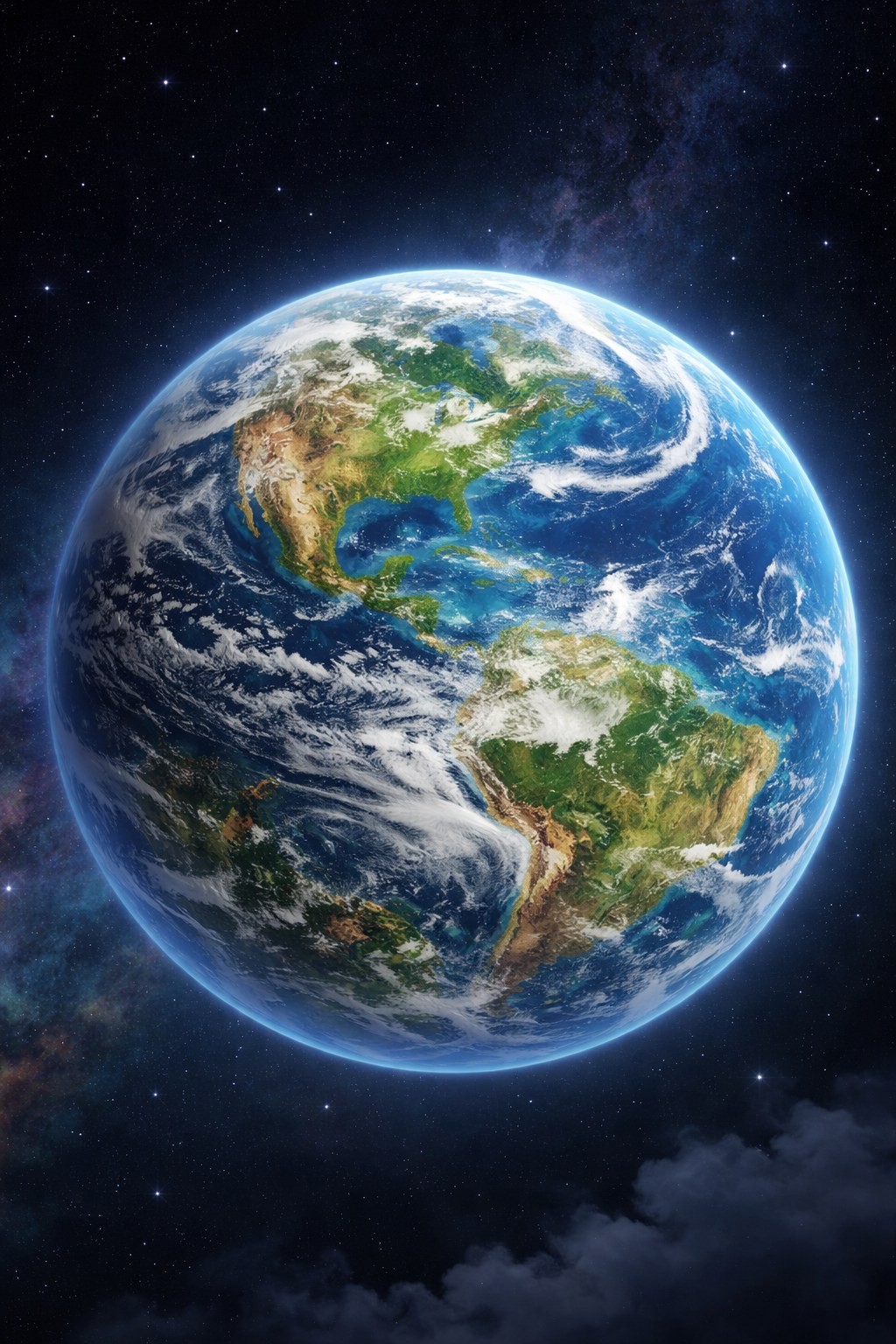
The Phanerozoic Eon marks the period when life on Earth becomes abundant, diverse, and visible in the fossil record. It begins around 541 million years ago, long after the planet itself formed, and occupies only a thin slice of cosmic time within the 13–14 billion years after the Big Bang.
During this eon, life undergoes rapid expansion and repeated reinvention. The early Phanerozoic opens with the Cambrian explosion, when complex body plans appear in a relatively short span of time. Over hundreds of millions of years, life spreads from oceans onto land, giving rise to forests, insects, reptiles, dinosaurs, birds, mammals, and flowering plants.
The Phanerozoic is shaped by cycles rather than steady growth. Long periods of diversification are punctuated by mass extinctions caused by volcanic activity, climate shifts, and asteroid impacts. Each collapse clears ecological space, allowing new forms of life to emerge and dominate. Evolution accelerates through loss as much as through creation.
Humans appear extremely late in this eon, occupying only the final moments of the Cenozoic Era. All recorded history, culture, and technology fit into a geological instant near the very end of the Phanerozoic. From a cosmic perspective, the entire age of animals and civilisation is brief, fragile, and contingent.
The Phanerozoic Eon represents a rare alignment of conditions: stable stars, a long-lived planet, abundant chemical complexity, and time. It is the chapter in which the universe becomes aware of itself through living systems — a moment of visibility within an otherwise vast and mostly silent cosmos.