Dark Ages
The universe contains matter but no light sources. Gravity quietly prepares the first stars.
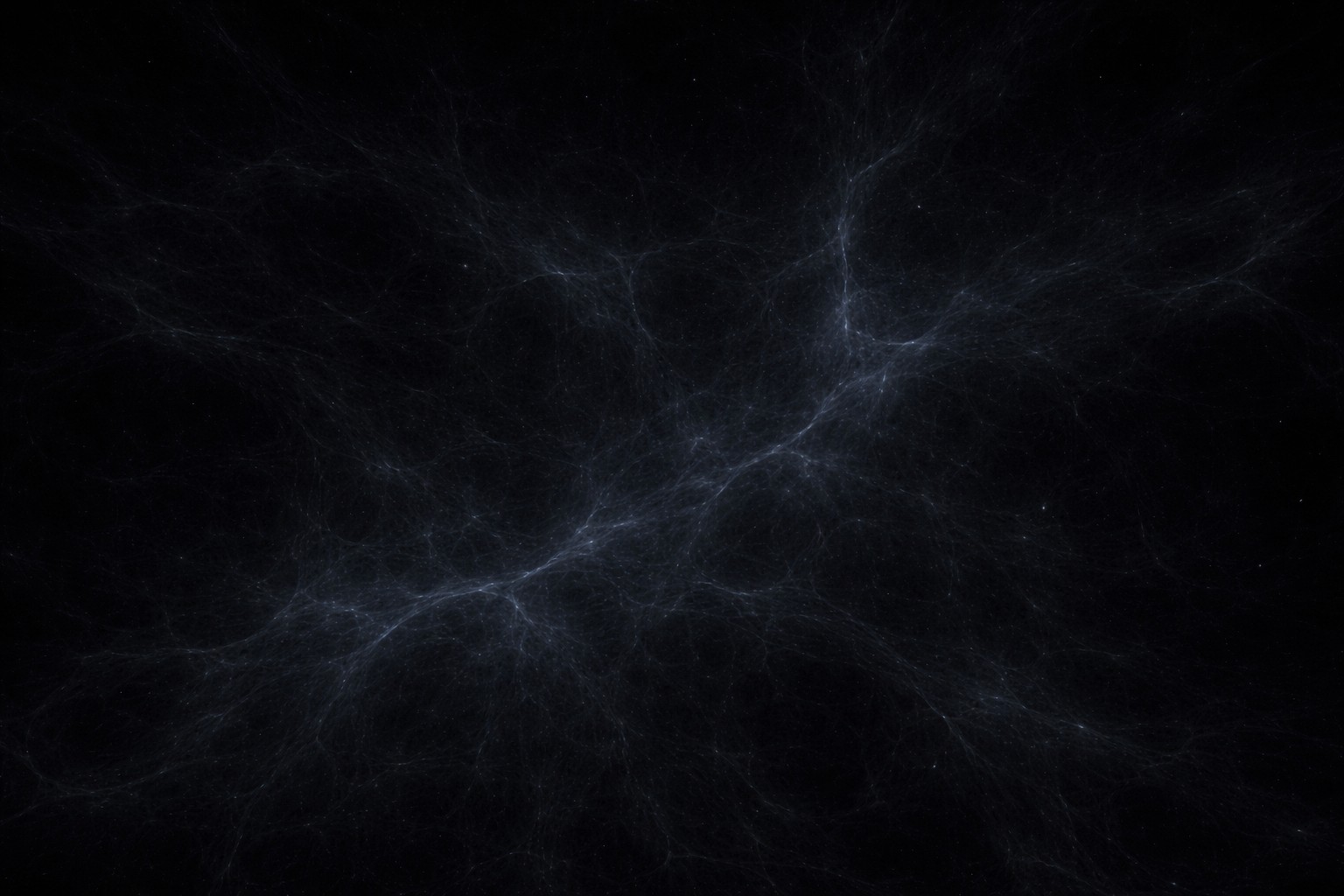
The cosmic dark ages begin after recombination, when electrons bind to nuclei and the universe becomes filled with neutral hydrogen and helium. With no stars, galaxies, or other light sources yet formed, the universe is truly dark. Radiation still exists, but it has cooled into the faint cosmic microwave background and no longer lights space.
During this time, gravity slowly shapes the universe. Tiny density differences grow as gas gathers into clouds, deepening wells of dark matter. Nothing shines yet, but the structure of the cosmos is quietly assembling.
The dark ages end when the first stars ignite. Their light breaks the darkness, begins reionisation, and marks the transition from the primordial universe to the stelliferous era.