Prokaryotic Cells
The simplest cells
Prokaryotes are organisms made from prokaryotic cells, and today we will learn what that means.
Cell organisation
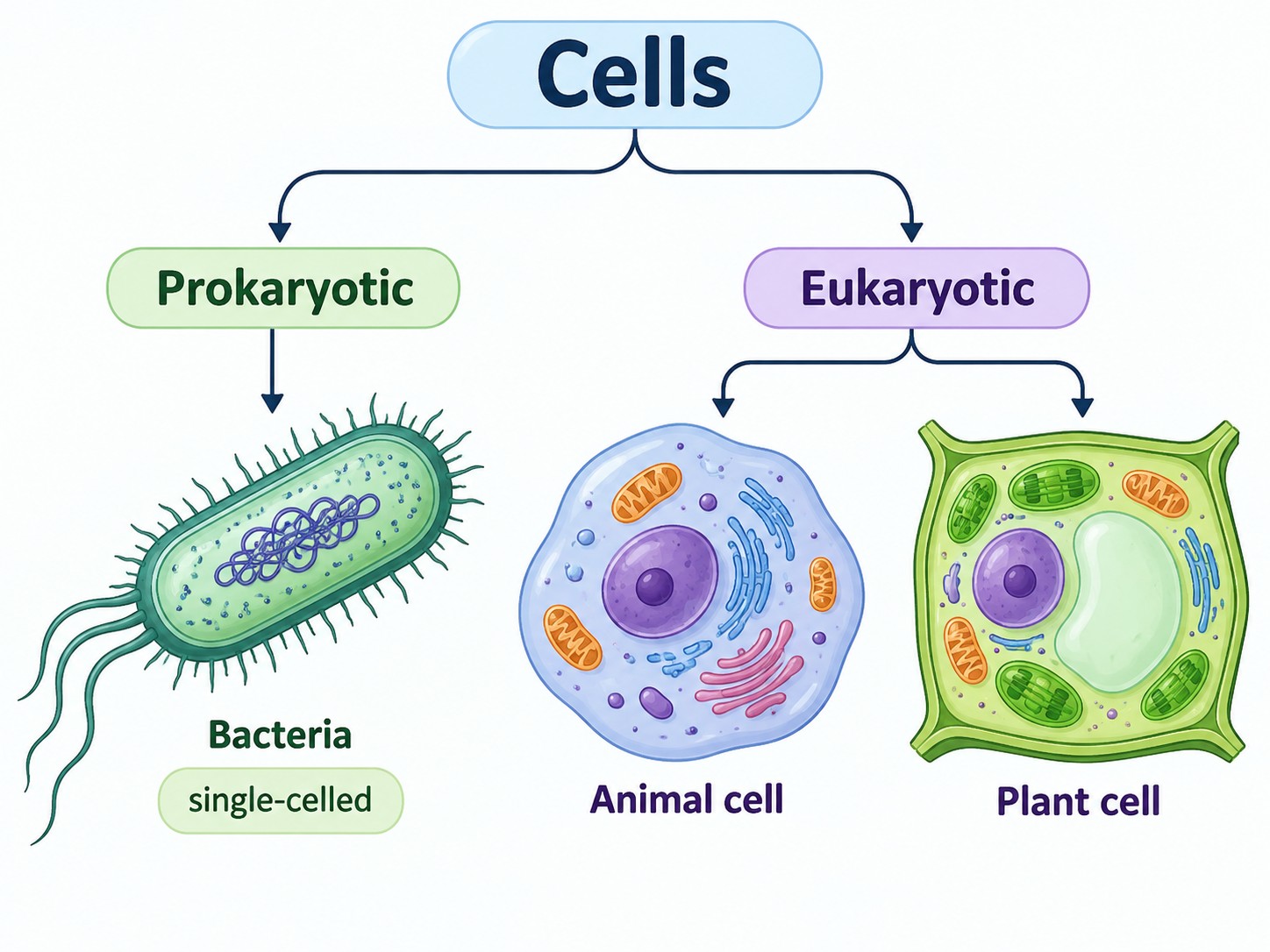
Bacteria are prokaryotes.
Bacteria are single-celled organisms, meaning that each bacterium consists of one cell.
Cells can have two fundamentally different kinds of organisation: prokaryotic and eukaryotic.
Animal cells and plant cells are eukaryotic cells.
Eukaryotic cells
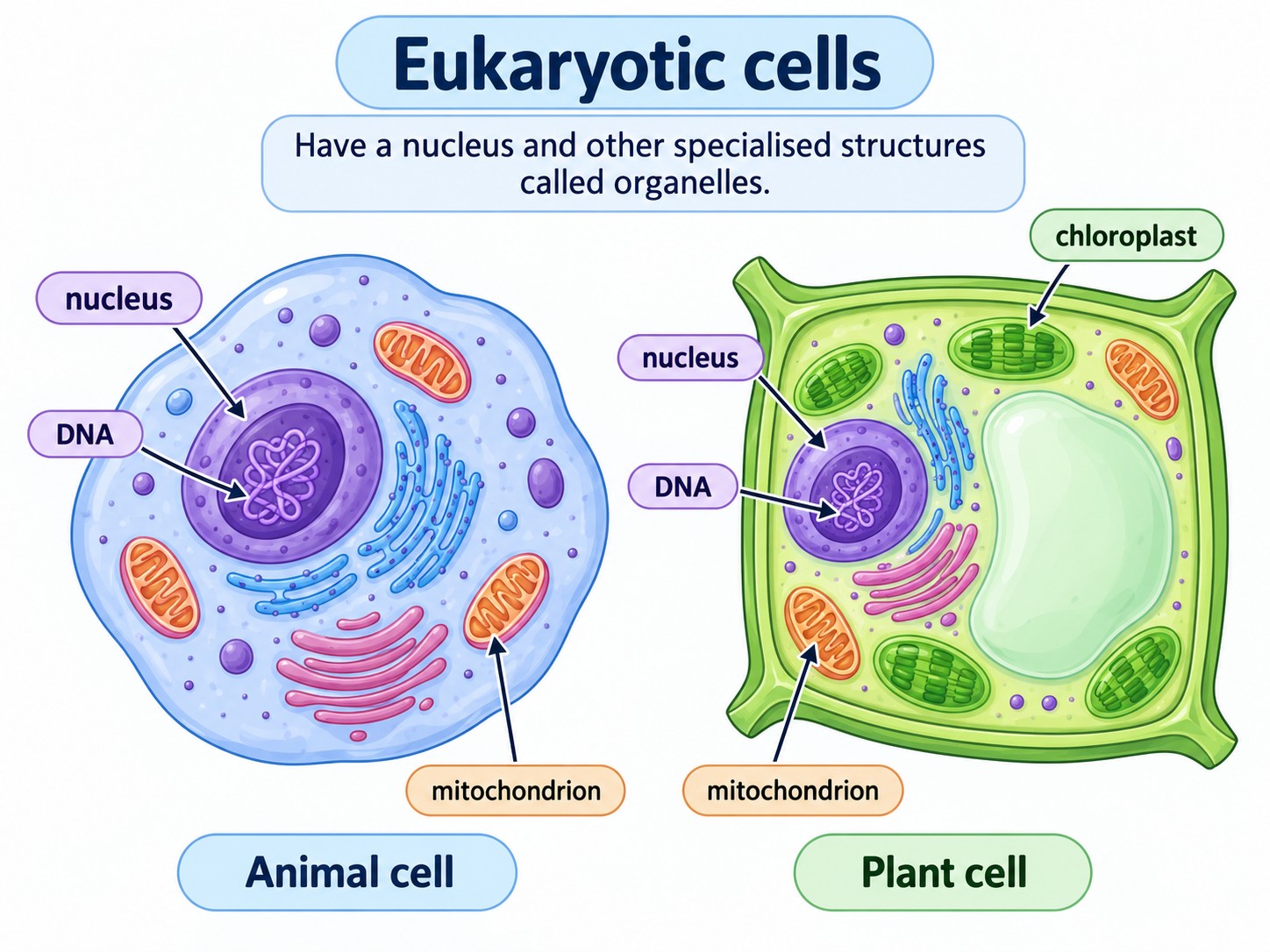
Eukaryotic cells have a nucleus.
The nucleus contains the cell's DNA.
DNA carries genetic information.
An organelle is a specialised structure inside a cell.
Some organelles are surrounded by their own membranes; these are membrane-bound organelles.
Mitochondria are membrane-bound organelles found in animal and plant cells.
Chloroplasts are membrane-bound organelles found in plant cells.
Relative cell size
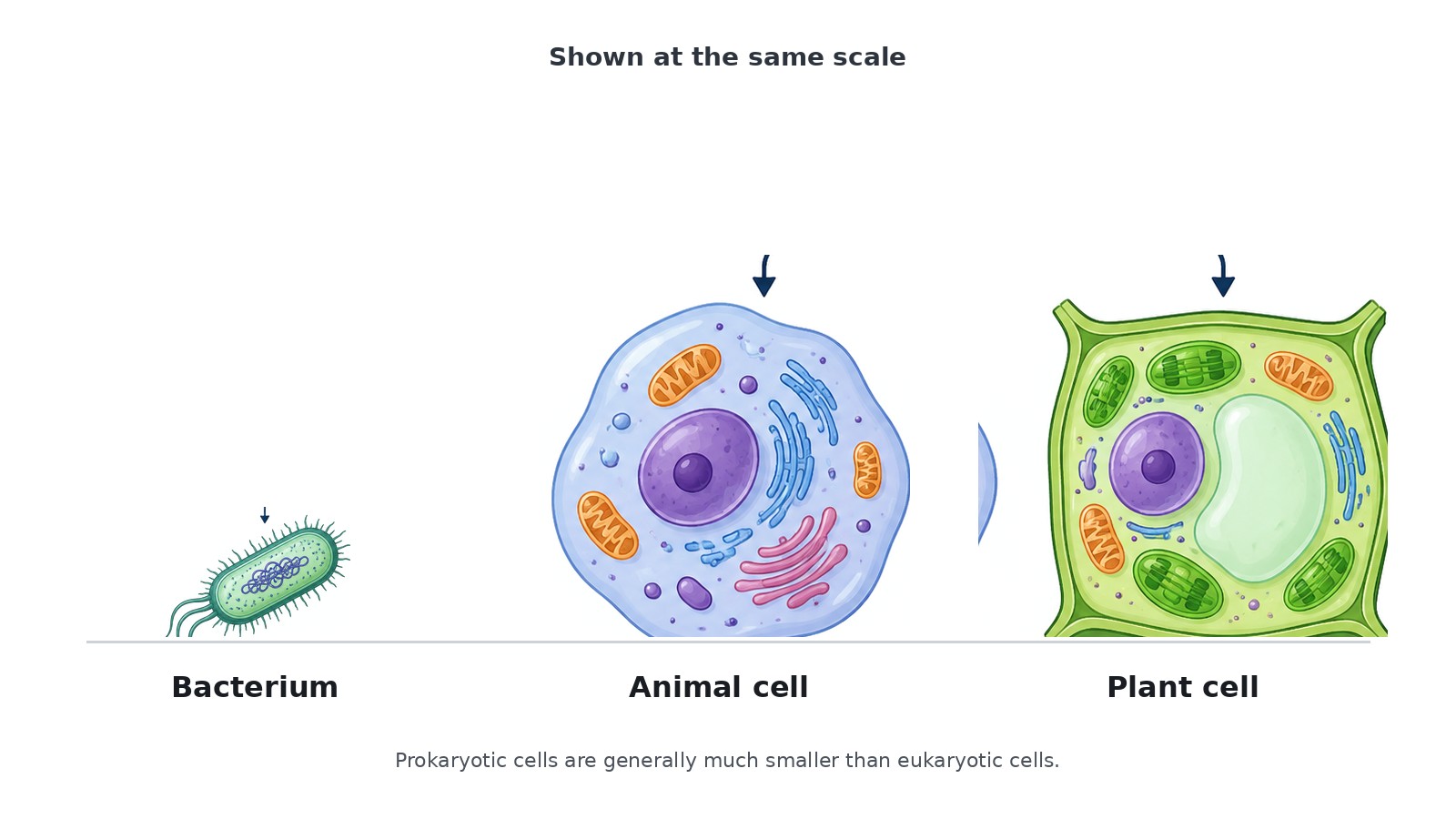
Prokaryotic cells are generally smaller than eukaryotic cells.
Cell interior comparison
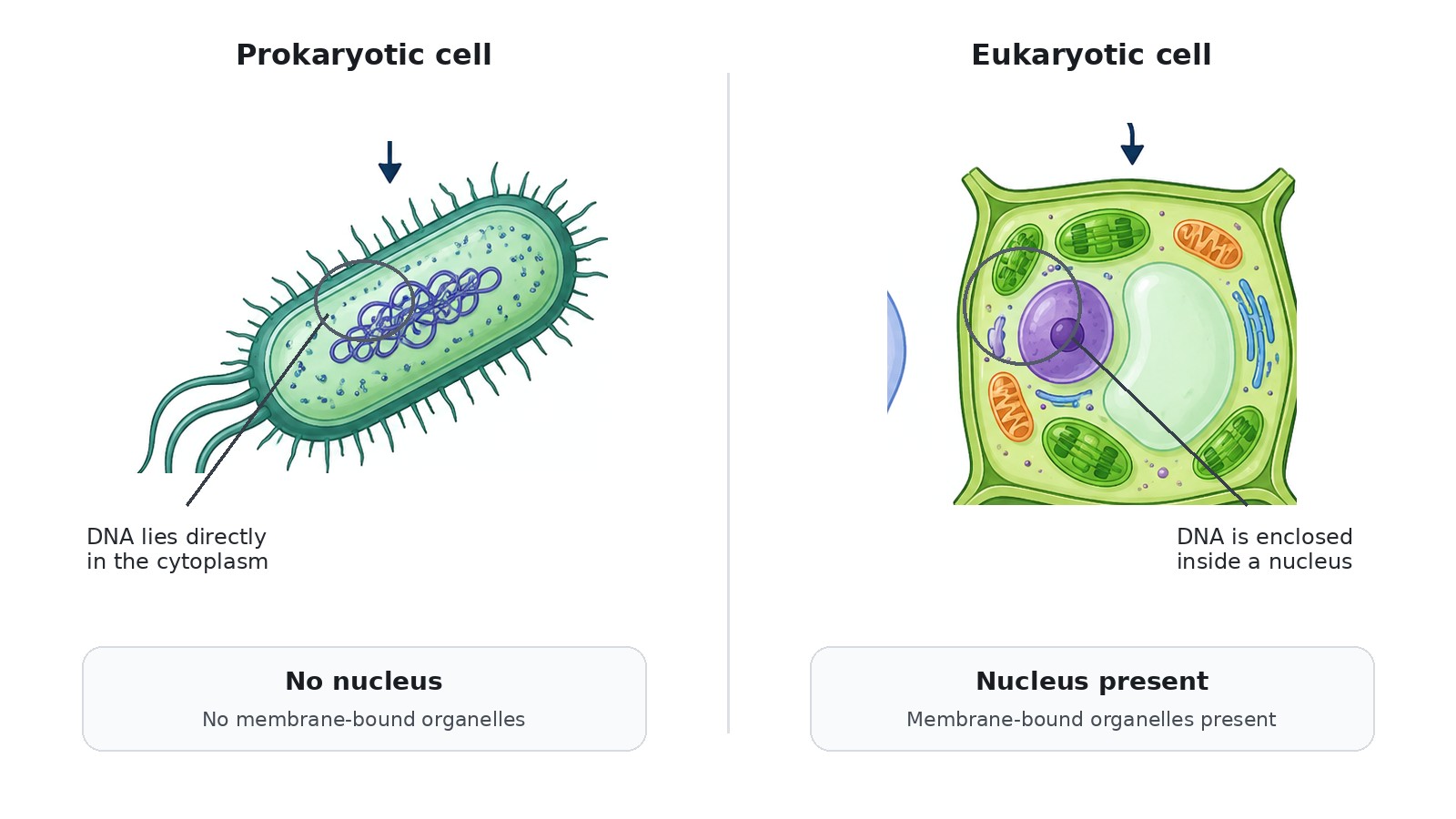
Prokaryotic cells do not have a nucleus.
Their DNA is not enclosed inside a nucleus.
Prokaryotic cells do not contain membrane-bound organelles.
Bacterial cells do not contain mitochondria.
Bacterial cells do not contain chloroplasts.
Bacterial cell construction
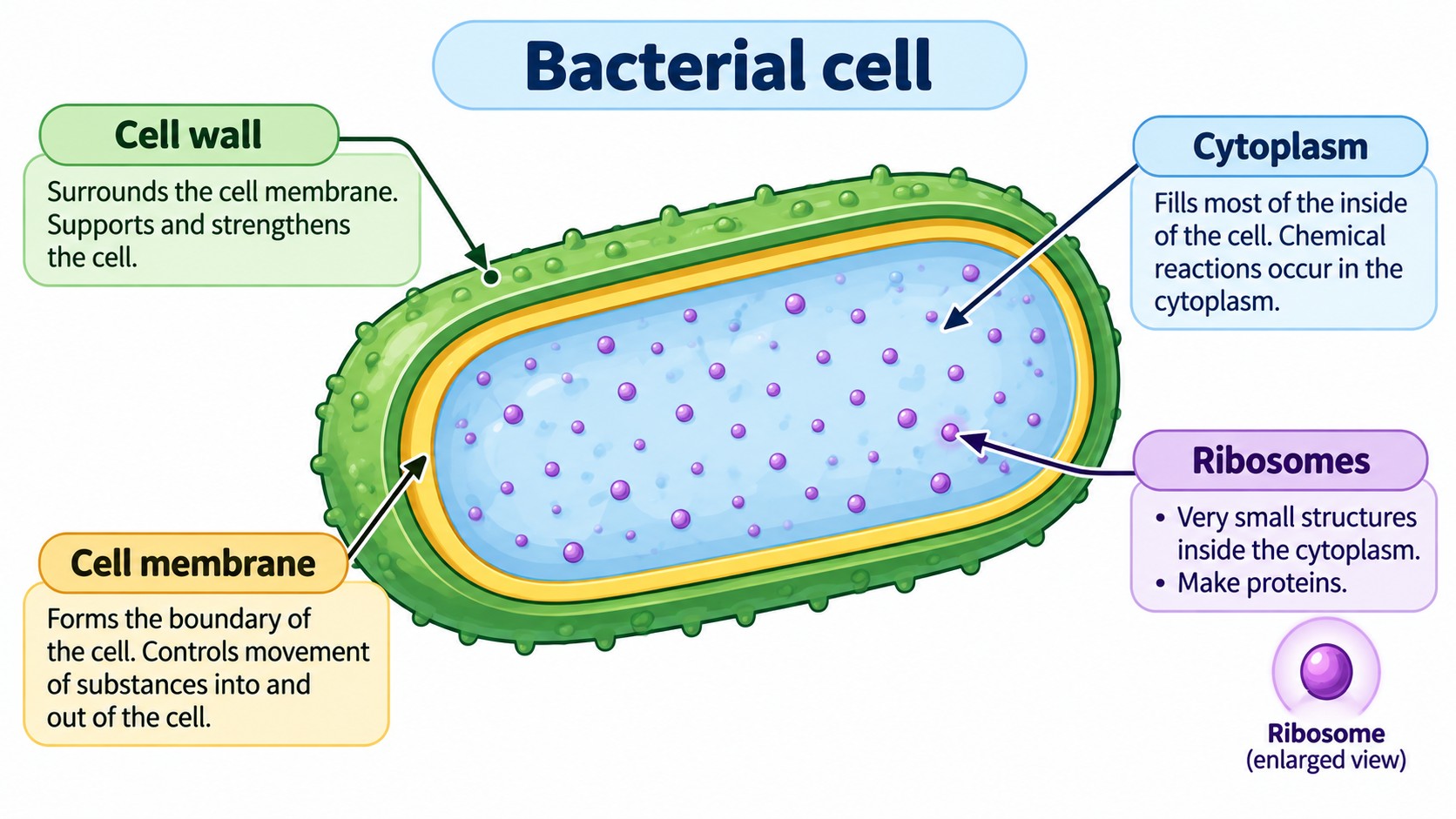
A bacterial cell has a cell membrane.
The cell membrane forms a boundary around the cell.
The cell membrane controls movement of substances into and out of the cell.
A bacterial cell has a cell wall.
The cell wall surrounds the cell membrane.
The cell wall supports and strengthens the cell.
A bacterial cell contains cytoplasm.
Cytoplasm is the material filling most of the inside of the cell.
Chemical reactions occur in the cytoplasm.
A bacterial cell contains ribosomes.
Ribosomes are very small structures inside the cell.
Ribosomes make proteins.
Bacterial DNA
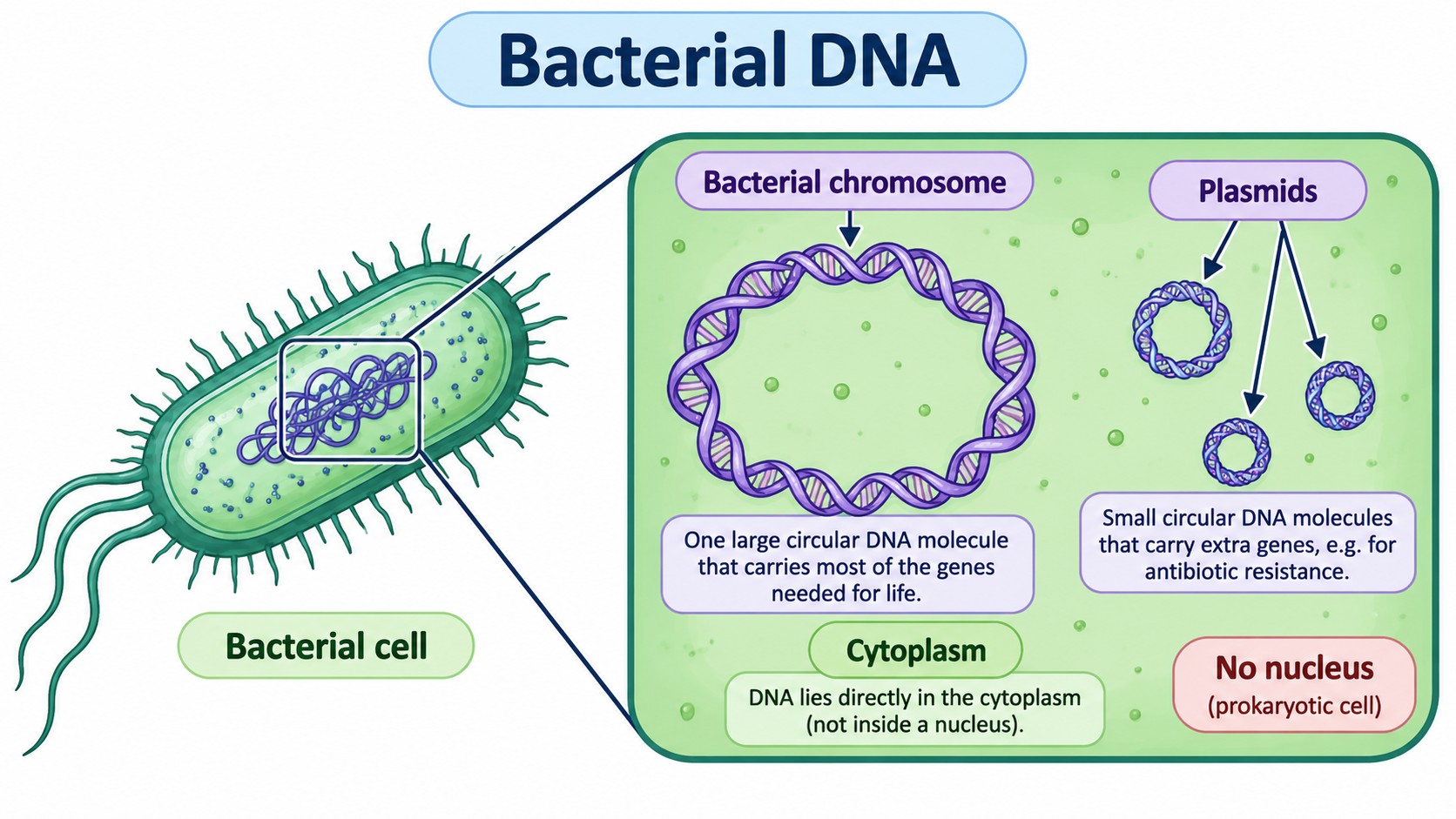
A bacterial cell contains one main chromosome made of DNA.
Chromosomal DNA carries genetic information.
The bacterial chromosome is circular.
The chromosomal DNA lies in the cytoplasm rather than inside a nucleus.
Bacterial cells can also contain structures called plasmids.
Plasmids are small circular molecules of DNA.
Plasmids are separate from the main chromosome.
Plasmids carry additional genetic information.
Flagellum movement

Some bacteria have structures called flagella.
A flagellum is a long, thread-like structure.
Flagella can propel bacterial cells.
Cell comparison
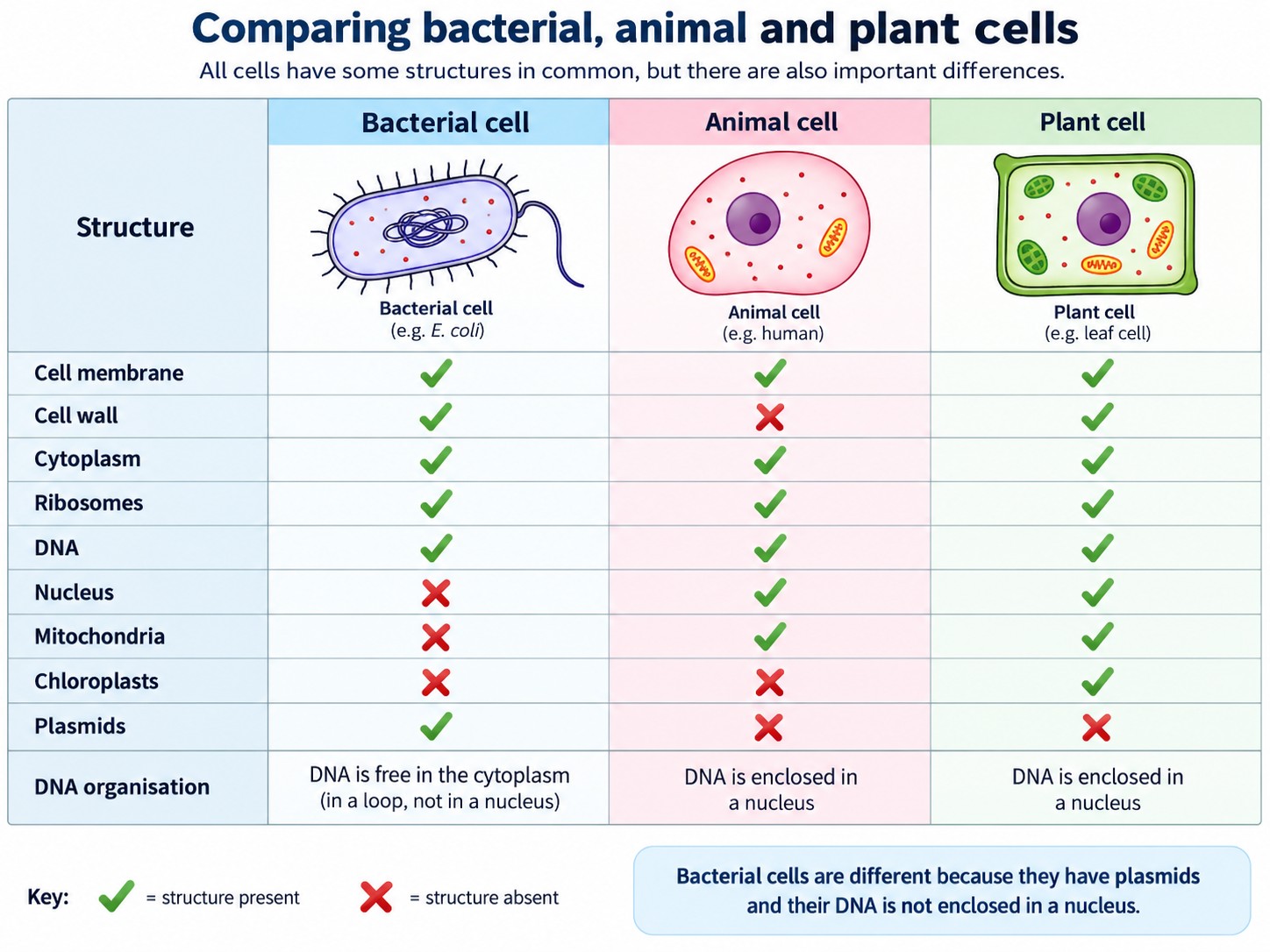
A prokaryotic cell and a plant cell can both have a cell membrane, cell wall, cytoplasm, ribosomes and DNA.
A bacterial cell can be distinguished from a plant or animal cell by which structures it contains and how its DNA is organised.
Identify the structures and their functions
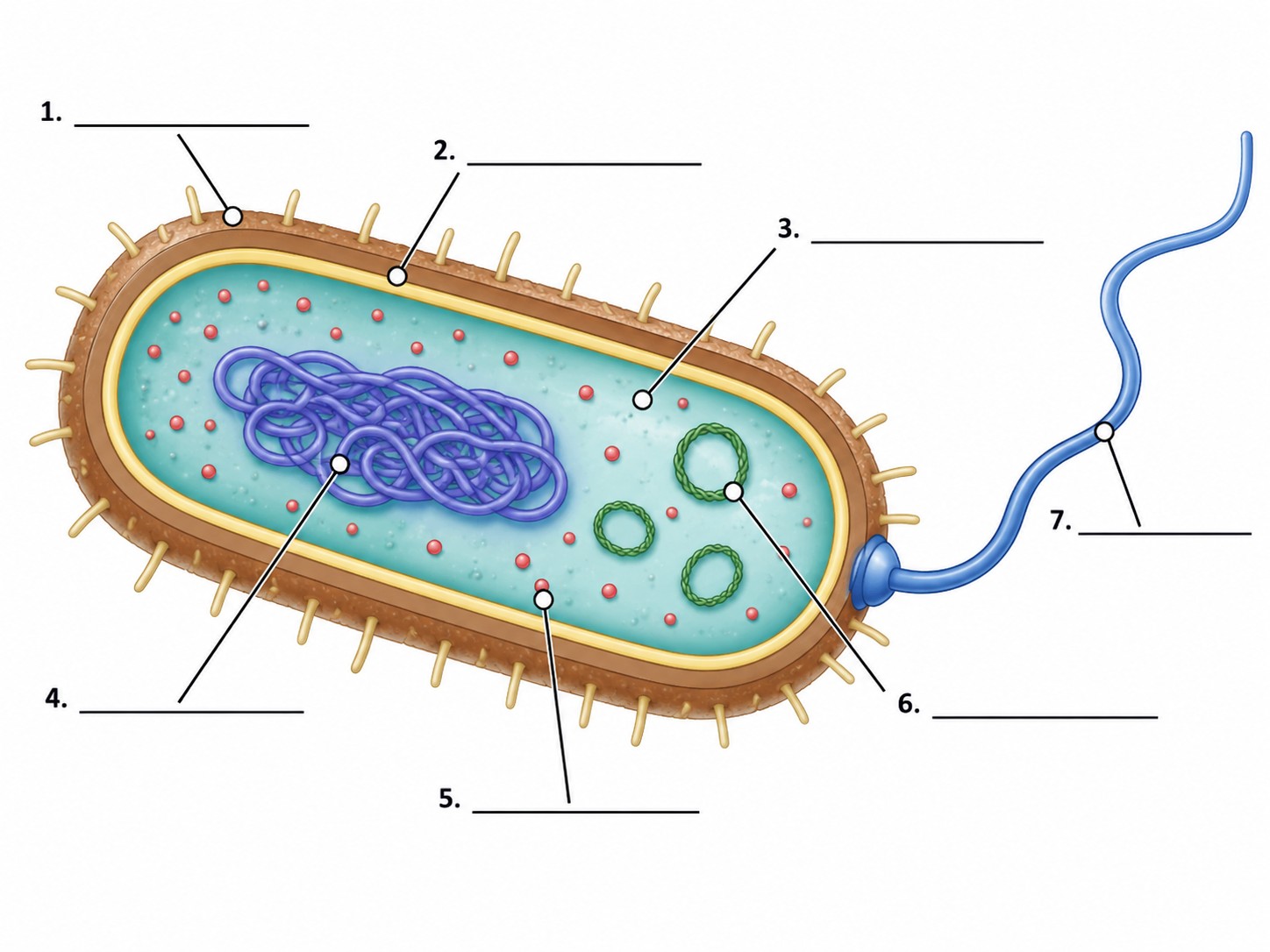
First, use the information on this page to complete both tasks:
1. Identify the structures.
On the bacterial-cell diagram, identify the chromosomal DNA, plasmids, cell membrane, cell wall, cytoplasm, ribosomes and flagella.
2. State their functions.
Give the function of each structure.
Then try both tasks again from memory.
If you cannot remember something, find the answer on the page and then try again from memory.
Keep repeating this until you can complete both tasks correctly from memory without using the page.
GCSE Coverage
Key knowledge:
Prokaryotic cells do not have a nucleus.
covers:
GCSE Biology → Cell biology → Cell structure → Prokaryotic cells
GCSE Combined Science → Biology → Cell biology → Cell structure → Prokaryotic cells
Coverage Table:
| Knowledge covered | Biology | Combined Science |
|---|---|---|
| Bacteria are prokaryotes | ✓ | ✓ |
| Prokaryotes lack a nucleus | ✓ | ✓ |
| DNA lies in the cytoplasm | ✓ | ✓ |
| Cell membrane | ✓ | ✓ |
| Cell wall | ✓ | ✓ |
| Ribosomes | ✓ | ✓ |
| Plasmids | ✓ | ✓ |
| Flagella | ✓ | ✓ |