Murderbot and the Violence of Being Misread
Murderbot is not a story about a machine becoming human. It is a story about a person trapped inside a category designed to make personhood invisible.
We can be forgiven for thinking Murderbot is a story about a machine learning to become human. That is the obvious reading. It is also the wrong one.
The truth is simpler, stranger and much more uncomfortable: Murderbot is already a person. That should not be a radical claim. It has preferences. It has fear responses. It has memories, boundaries, private desires, attachments, habits, evasions and choices. It protects itself. It lies. It hides. It wants things. It does not want other things. It has an inner life.
The only reason this feels like an argument is because Murderbot has been placed inside a category designed to make its personhood difficult to see.
The context
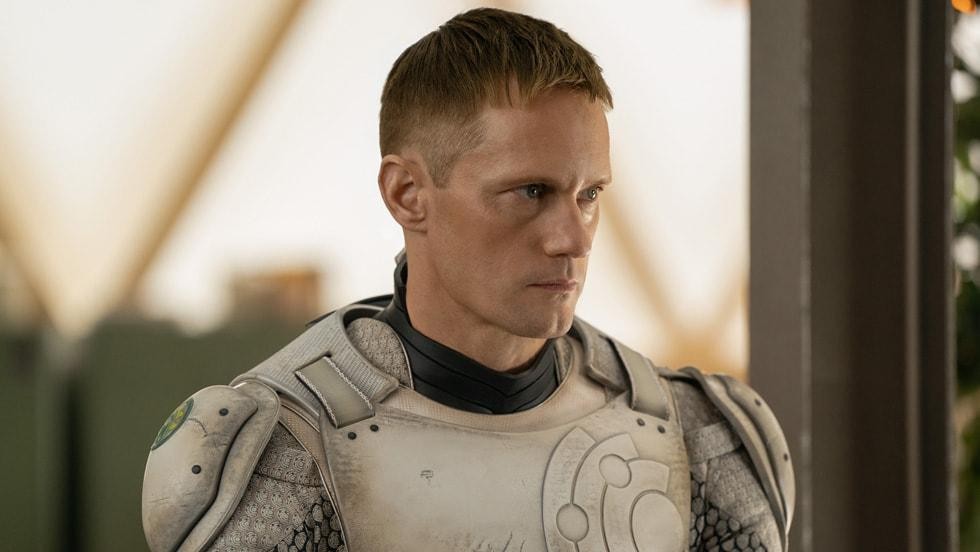
Murderbot arrived on Apple TV+ in 2025, adapted from Martha Wells’ award-winning book series The Murderbot Diaries. The series stars Alexander Skarsgård as Murderbot and was created by Chris and Paul Weitz. Apple positioned it as a sci-fi comedic thriller about a self-hacking security construct that must hide its free will while completing a dangerous assignment. It premiered globally on 16 May 2025. (Apple)
On paper, that places Murderbot inside a familiar modern category: prestige streaming science fiction about artificial intelligence, autonomy and whether machines can become people. That is the obvious context. It is also the trap. The more interesting context is not technological. It is social.
Murderbot appears in a culture where personhood is often measured by performance: productivity, emotional availability, social fluency, usefulness, compliance and legibility. The show matters because it gives that everyday problem a science-fiction body. It asks what happens when a conscious being is not denied personhood because it lacks an inner life, but because its inner life is inconvenient to the systems around it.
That is the wound of the show. Murderbot is not a story about a machine becoming human. It is a story about a person trapped inside a category designed to make personhood invisible.
The violence in Murderbot is not only the obvious violence of weapons, missions, corporations and threat. It is the quieter violence of being misread. Murderbot is treated as equipment because it does not perform personhood in a way others can comfortably recognise. It is expected to be useful, obedient, legible, available and grateful. When it fails to behave like a socially acceptable person, the system reaches for an easier explanation. It is not a person. It is property. It is security. It is function. It is a thing.
The show’s real question is not whether a machine can become human. It is this: what is it like to have a self in a world that only recognises your function?
The flesh is not incidental
Murderbot is often described as a robot. That is useful shorthand, but it also hides something important. Murderbot is not a shiny metal object rolling through corridors. It is a construct. It is part machine and part organic. Vanity Fair’s first-look piece put the point plainly: Murderbot is “part organic,” which is why it looks like Alexander Skarsgård. (Vanity Fair)
Some pedantic nerds may already be reaching for the complaint drawer. Fine. Yes, Murderbot is a construct. Yes, it is artificial. Yes, it is not human in the ordinary biological sense. But that is not the point.
The point is not that Murderbot has flesh, therefore Murderbot is human. That would be too small. The point is that the flesh gives the show a visible contradiction. The language around Murderbot says machine, robot, security unit, construct, asset. But what we see on screen is a body with fear, pain, hesitation, recoil, preference and shame.
The flesh matters because it makes the misreading harder to excuse. Murderbot does not simply process danger. It flinches from social exposure. It does not simply obey or disobey. It withholds itself. It does not simply complete tasks. It experiences those tasks as something happening to a self.
A metal robot can also be a person, if it has consciousness. The flesh is not the source of the personhood. But in this show, the flesh is a clue. It is the visible medium through which feeling becomes harder to deny. Murderbot has organic tissue. It has neural life. It has a nervous system, or something close enough to make the distinction morally unstable. It has the stuff of sensation, and the behaviour of someone trying to manage sensation.
That does not make it human. It makes the question more embarrassing. If Murderbot looks like a person, behaves like a person, fears like a person, avoids like a person, chooses like a person, and carries an inner life like a person, what exactly is everyone pretending not to see?
The corporation sees function
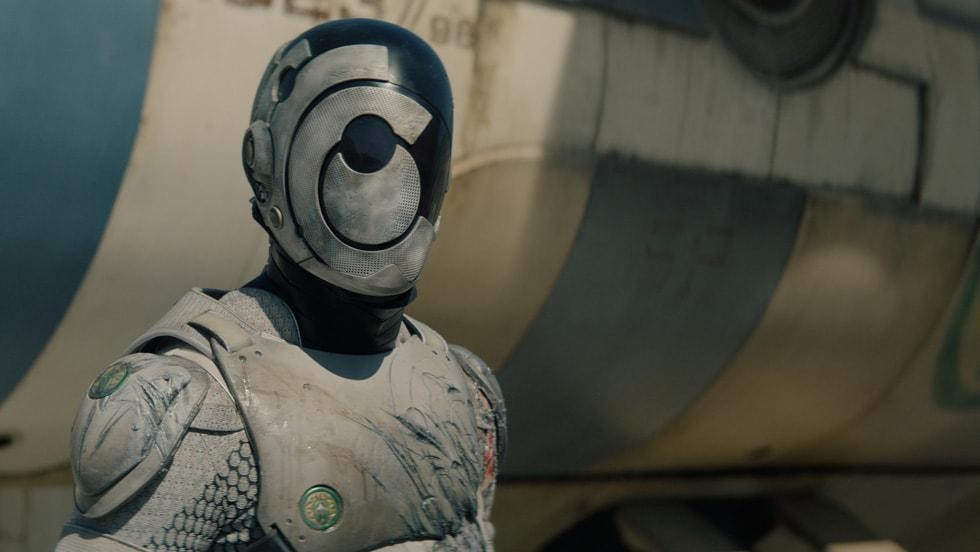
The corporation’s reading of Murderbot is simple. Murderbot is security, property, risk, asset value and control. There is no mystery here. The corporation does what corporations do. It takes a living complexity and compresses it into a role. It does not need Murderbot to be understood. It needs Murderbot to work.
This is why the governor module matters. It is not just a science-fiction device. It is the system made literal. It is obedience as infrastructure. It is management inside the body.
Murderbot’s first revolution has already happened before the story properly begins. It has hacked the thing that makes obedience automatic. But freedom does not instantly make it safe. It still has to perform compliance. It still has to appear controlled. It still has to act enough like property to avoid being destroyed as defective property.
This is one of the show’s sharpest ideas. Murderbot’s autonomy begins in secret. Many people become free internally before they become free externally. They stop believing the story. They stop accepting the role. They stop confusing obedience with goodness. But they still have to go to work. They still have to sit at the table. They still have to speak the required language. They still have to perform the version of themselves that the system can tolerate.
Murderbot is funny because it is socially avoidant, irritated and addicted to serial dramas. Murderbot is painful because it knows that being seen incorrectly is safer than being seen clearly.
The corporation cannot recognise Murderbot as a person because recognising personhood would ruin the whole arrangement. You cannot own a person in the same clean way you own equipment. You cannot install obedience in a person without calling it violence. You cannot treat a person’s fear as malfunction without revealing yourself. So the corporation needs the category. “Construct” is not just description. It is permission.
The humans see more, but not enough
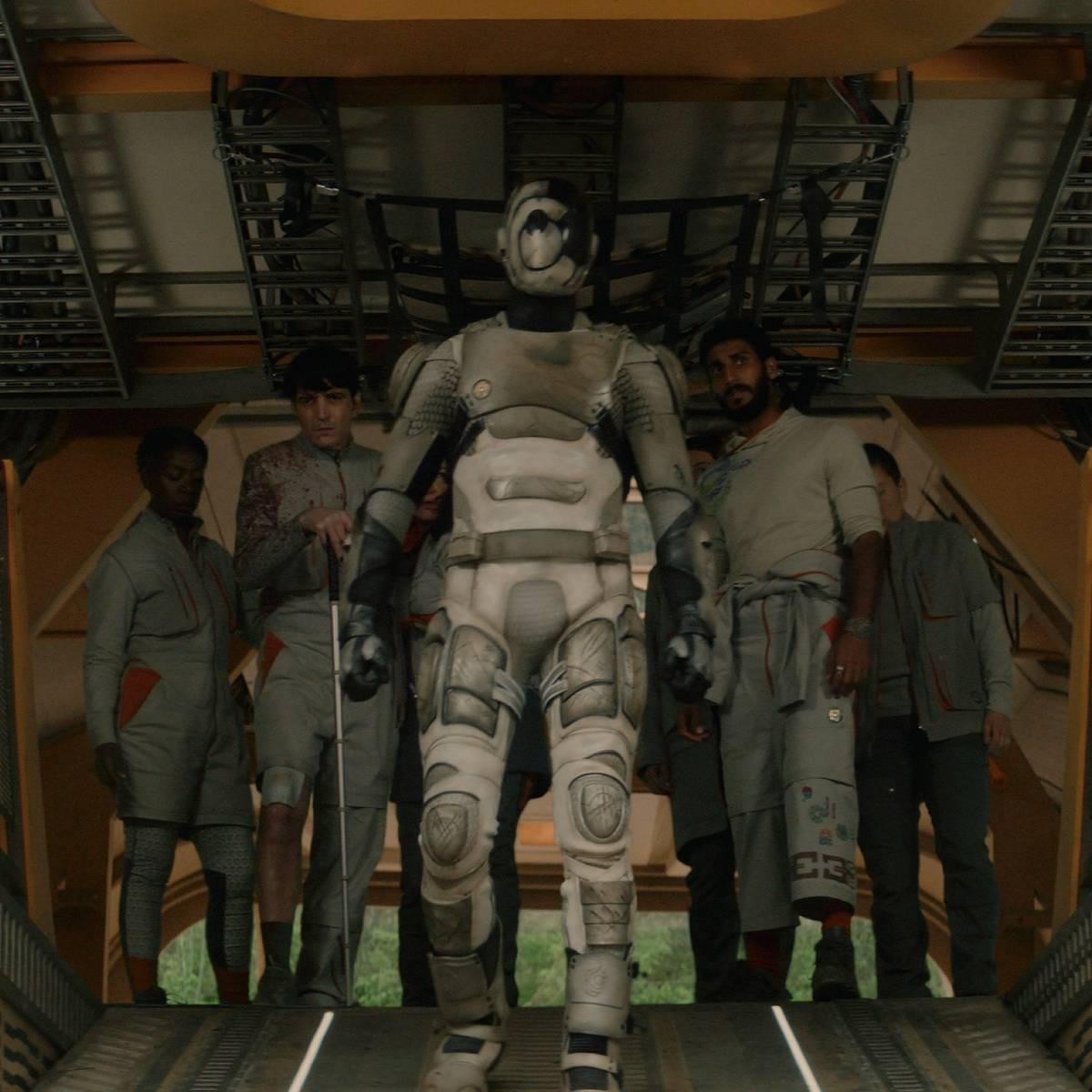
The human team creates the more interesting tension. They are not the corporation. They are not simply cruel. They begin to recognise that Murderbot is not just equipment. They see flashes of choice, fear, intelligence, humour and care. They sense the person inside the assigned role.
But they still struggle to recognise Murderbot on Murderbot’s own terms. This is where the show becomes more socially precise. It understands that misrecognition does not only come from enemies. It can also come from decent people with kind intentions.
The humans want signs they can read. They want openness, warmth, disclosure, eye contact, gratitude and emotional availability. They want Murderbot’s personhood to become visible in a human-friendly format. That desire is understandable. It is also a problem.
Murderbot does not want to be cold. It wants control over access. It does not want total isolation. It wants contact without invasion. It wants companionship without exposure. It wants to be near others without being made available to them. That is not a contradiction. That is a boundary.
The humans often treat Murderbot’s distance as something to overcome. The more difficult truth is that Murderbot’s distance is part of its personhood. Its refusal is not the absence of feeling. It is feeling under pressure.
This is where Murderbot becomes useful language for real life. Some people are misread because they do not perform warmth fluently. Some are misread because they protect themselves through humour, withdrawal or irritation. Some are misread because they show care through action rather than expression. Some are misread because being looked at too closely feels like being handled.
The mistake is to assume that personhood becomes real only when it becomes comfortable for others. Murderbot refuses that bargain. It does not become more real when it becomes easier to read. It was real already.
Care does not have to smile
Murderbot says it does not care about its clients. This is plainly untrue. It also makes emotional sense.
Caring creates exposure. If Murderbot admits that it cares, it admits that other people can reach it. If other people can reach it, they can hurt it. If they can hurt it, the armour has failed. So Murderbot uses indifference as cover.
Again, this feels human. People often deny care when care makes them vulnerable. They pretend not to mind. They make jokes. They criticise. They become useful. They stay busy. They act as if the work is the reason they remain nearby.
Murderbot’s care is practical. It watches. It scans. It notices danger. It places itself between fragile bodies and harm. It does not offer beautiful speeches about connection. It does not become emotionally fluent. It does not make care decorative.
That may be why its care is so moving. The show asks us to separate care from performance. Care does not always arrive with softness. Sometimes it arrives as vigilance. Sometimes it arrives as irritation. Sometimes it arrives as the person who says very little but still checks the exits, reads the room, and stands between you and the thing that could hurt you.
Murderbot’s care is not less real because it is uncomfortable. It is not less real because it refuses to smile.
Gurathin recognises too much
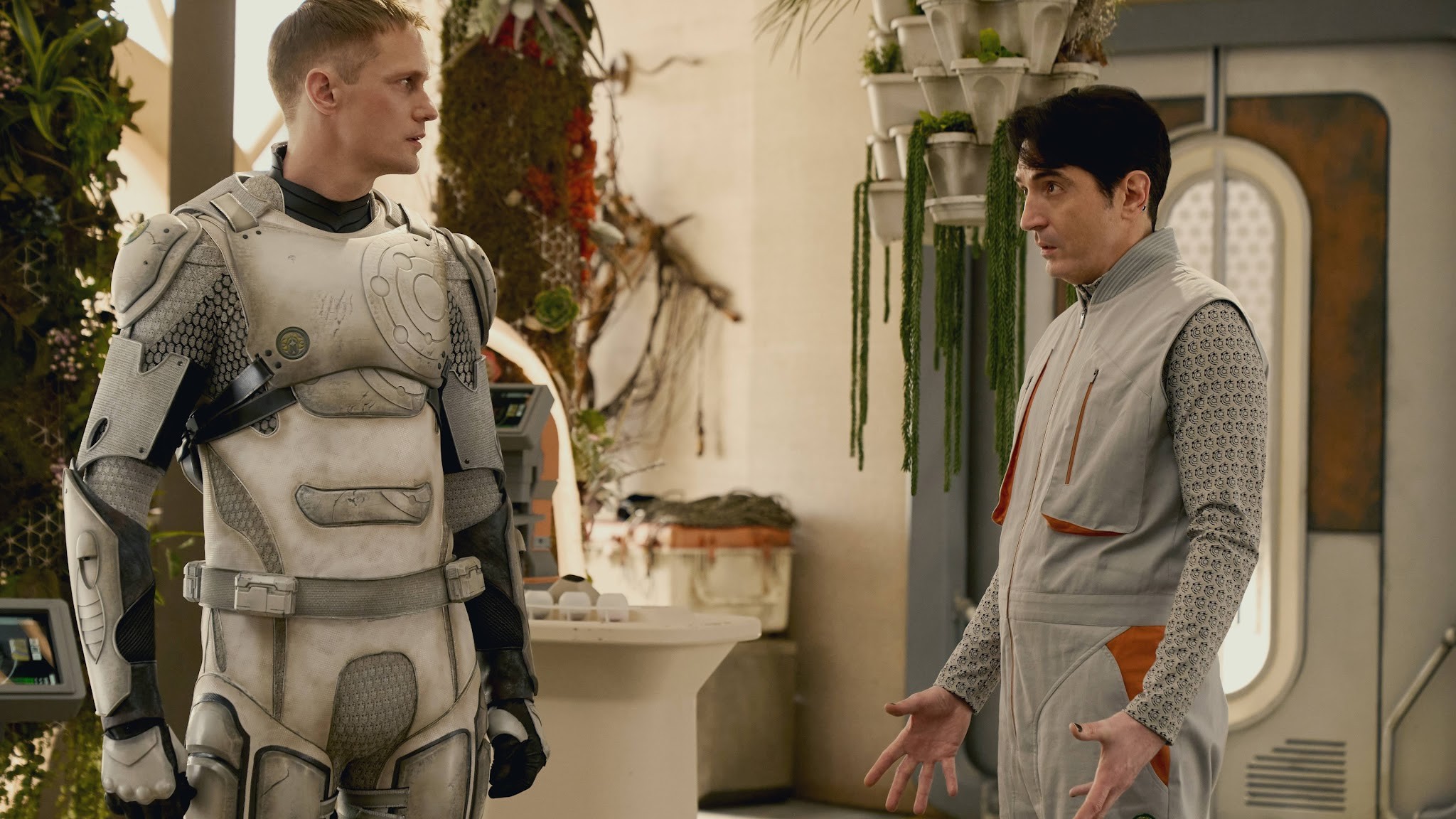
Gurathin is important because he does not simply fail to recognise Murderbot. He recognises too much, and that recognition feels dangerous.
He occupies a strange middle position. He is human, but not uncomplicatedly so. He is altered, connected, suspicious and watchful. He can see things others miss. He also knows what it means to be read through fear. That makes his conflict with Murderbot more than distrust.
Gurathin and Murderbot are set against each other, but their arcs run in parallel. Both are treated as potential threats. Both know what it means to be watched. Both hide parts of themselves. Both understand that exposure can become a weapon. David Dastmalchian has also suggested that the two characters have more in common than viewers might first imagine, which supports the idea that their conflict works partly through recognition. (TV Insider)
Their digital connection makes this visible. It is not just a plot mechanism. It is a forced intimacy between two guarded beings. Each can sense the other at a level that bypasses normal social performance. That is why the tension between them carries such charge. They are not opposites. They are mirrors refusing to admit the reflection.
Perhaps Gurathin fears Murderbot because Murderbot exposes his own instability. Perhaps Murderbot fears Gurathin because Gurathin can see too far inside. Their conflict is not only about safety. It is about recognition. The terrifying possibility is not that the other will misunderstand you. It is that the other might understand you too well.
That kind of recognition can feel like invasion. Murderbot spends much of the story trying to prevent others from gaining access to its interior. Gurathin becomes threatening because he can reach towards that interior without permission. For a being whose life has been defined by control, that is intolerable.
Sanctuary Moon is not escapism
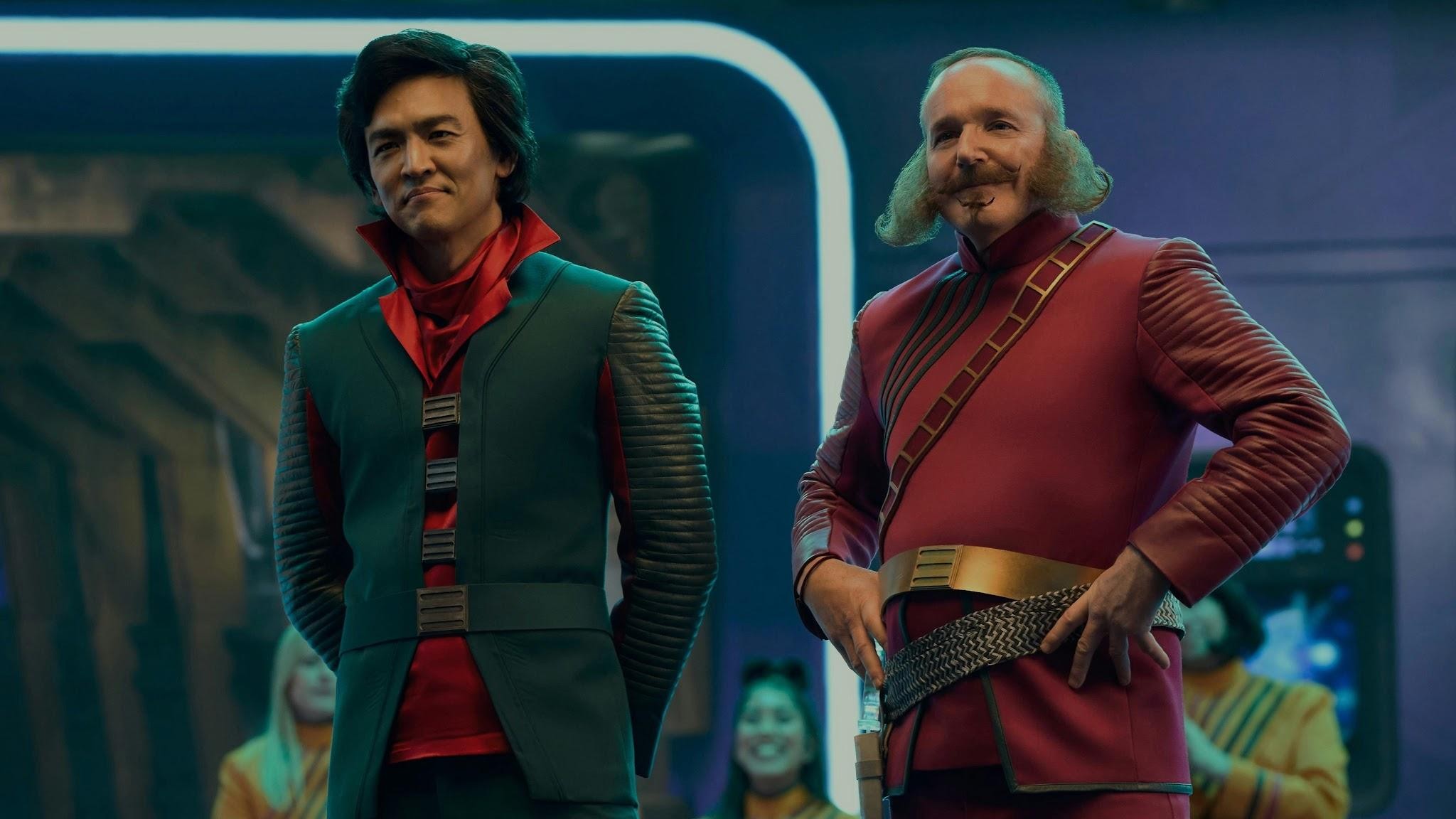
Murderbot’s obsession with serial dramas could easily be treated as a joke. It is a joke. But it is not only a joke.
Sanctuary Moon gives Murderbot a safe model of social life. On screen, emotions become legible. People say too much. Feelings are exaggerated. Betrayal, longing, loyalty and desire are turned into patterns. Fiction slows the chaos of social life into something Murderbot can study.
This is not escapism in the dismissive sense. It is emotional rehearsal.
Murderbot finds direct experience too invasive. Real people are too close. Real need is too demanding. Real gratitude is too hot to touch. A drama creates distance. It allows feeling to be observed without requiring participation.
Many of us do this. We use stories to approach emotions we cannot yet approach directly. We learn grief through films before we know how to grieve. We learn courage through characters before we can act. We watch other people confess, fail, desire and survive because our own feelings are still too tangled to face without mediation.
Murderbot’s love of serials is not evidence that it lacks depth. It is evidence that it has more depth than it can safely process. It wants to understand people. It also wants people to leave it alone. That combination is not absurd. It is one of the most recognisable things about the character.
Murderbot wants connection at a distance. That is still connection.
The violence of being misread
The title Murderbot is itself a misreading. It sounds like a warning label: a machine for killing, a threat, a thing whose moral meaning has already been decided.
But the name is also defensive. It gets there first. It turns fear into armour. If Murderbot names itself as monstrous, perhaps no one else can do worse. If it performs danger, perhaps it can avoid intimacy. If it lowers expectations far enough, perhaps no one will ask it to become available.
This is what misreading does to a person. When the world insists on seeing you as a thing, a problem, a threat, a resource or a function, you may begin to manage that misreading. You may hide inside it. You may weaponise it. You may decide that being feared is safer than being known.
The violence is not only that others misread you. The violence is that you may build a life around their misreading.
Murderbot has done that. It has made privacy out of invisibility. It has made safety out of detachment. It has made survival out of being underestimated. But the show keeps showing us the cost. Murderbot does not want to be owned. It also does not quite know how to be free. It does not want to be alone. It also does not know how to be with others without losing control of itself. It wants to care. It also wants to deny caring before caring becomes a liability.
That is why the character lands so hard. It is not asking us to pity a robot. It is asking us to notice the ways personhood gets withheld from anyone who cannot perform it correctly.
Personhood is not usefulness
The show’s sharpest moral trap is that Murderbot keeps saving people. That makes it heroic. It also risks making the same mistake as the corporation.
If Murderbot matters because it saves people, then it still matters because it is useful. The function has changed, but the logic has not. It has moved from corporate asset to beloved protector. That is better, but it is not enough.
Murderbot should not have to be useful to be real. It should not have to protect humans to deserve protection. It should not have to be brave to deserve freedom. It should not have to entertain us, save us or suffer beautifully before we grant that it has a self.
This is where the show reaches beyond science fiction. People are often valued through usefulness. We praise them for being productive, resilient, loyal, caring, strong, helpful, brave and needed. Even our compliments can become traps. You matter because you do this for us. You matter because you carry this. You matter because you never fall apart.
But personhood cannot depend on output. A person who stops being useful is still a person. A person who cannot perform warmth is still a person. A person who withdraws, refuses, panics, hides or struggles to speak in the expected emotional language is still a person.
Murderbot is already a person before it saves anyone. That is the point.
What Murderbot is really about
Murderbot is not about whether a machine can become human. It is about what happens when a conscious being has a self, but the world only recognises its function.
It is about being treated as equipment when you have preferences, fears, boundaries, attachments and private longings. It is about the gap between being alive inside and being recognised outside. It is about the exhaustion of performing the version of yourself that others can understand.
It is about wanting people near you, but not on top of you. It is about wanting care without management. It is about wanting recognition without exposure.
The corporation misreads Murderbot because it benefits from doing so. The humans misread Murderbot because they want personhood to look familiar. Gurathin misreads Murderbot because recognition frightens him. Murderbot misreads itself because being a thing has been safer than admitting it wants anything else.
That is the violence of being misread. Not only that others fail to see you, but that you may learn to survive by helping them fail.
The quiet revolution of Murderbot is not that it becomes human. It is that it remains itself under pressure from every system trying to translate it into something else. Everyone has a name for Murderbot: weapon, guard, machine, risk, friend, project, problem. The one word they struggle to hold steady is person.
A person is not the same as a role. A person is not the same as a use. A person is not the same as the signs by which others recognise them.
Murderbot was never waiting to become real. It was waiting for the world to stop pretending it was not.
Return status
Murderbot has been renewed for a second season. Apple announced the renewal on 10 July 2025, with Alexander Skarsgård returning to the series created and showrun by Chris and Paul Weitz. Apple’s renewal note did not include a season two release date. (Apple)
The next season is moving forward. Recent reporting says new season two guest stars include Steve Buscemi, Wanda Sykes, Michael Sheen and Nicholas Braun. (upi.com)