A collection becomes a national institution
Public collections, controlled admission
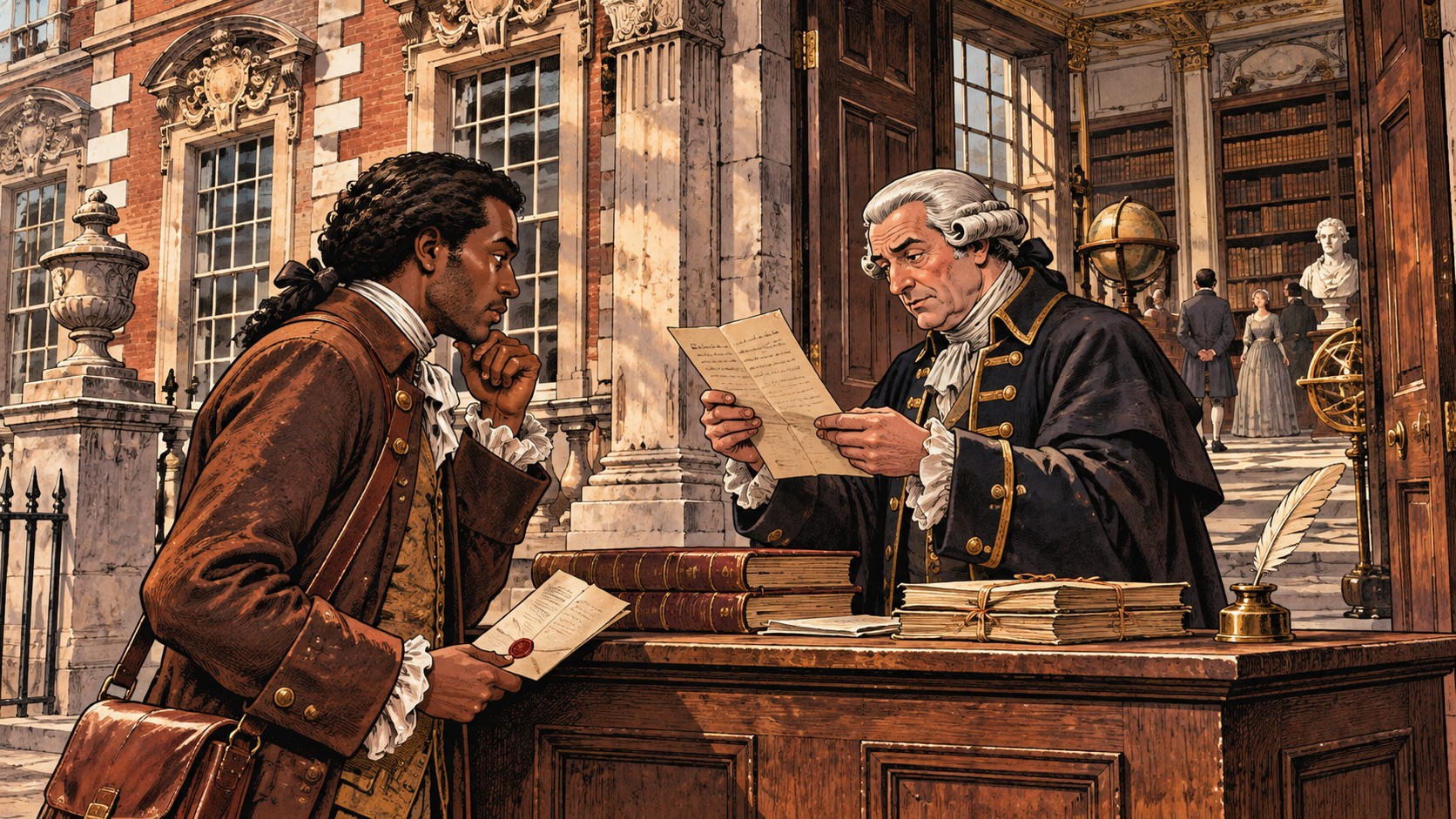
Sloane died in 1753. His will provided for his collection to be acquired for the nation. Parliament acted. On 7 June 1753, the British Museum Act received Royal Assent. The Museum would bring together the Sloane, Cotton and Harley collections.
This was a major institutional change. Knowledge that had been dispersed among private collectors and families was now held under a public governing arrangement. In 1757, George II transferred the Old Royal Library to the Museum. The gift brought another important body of manuscripts and books into public custody, along with an inherited legal-deposit privilege.
Then, on 15 January 1759, the British Museum opened to the public.
But there was a contradiction in that achievement. Admission was free, yet visitors needed tickets in advance, and access was controlled. The collections belonged to a public institution, but not everyone could use them freely or easily.
This introduced a distinction that would recur throughout the British Library's history: Making knowledge public is not the same as making knowledge accessible.
The Museum could hold an important work without a visitor knowing it existed. A scholar might know it existed but be unable to consult it. A reader might gain entry yet struggle to locate the material they needed. The institution's responsibilities were expanding faster than the mechanisms available to fulfil them.
The King’s Library enters the national collection
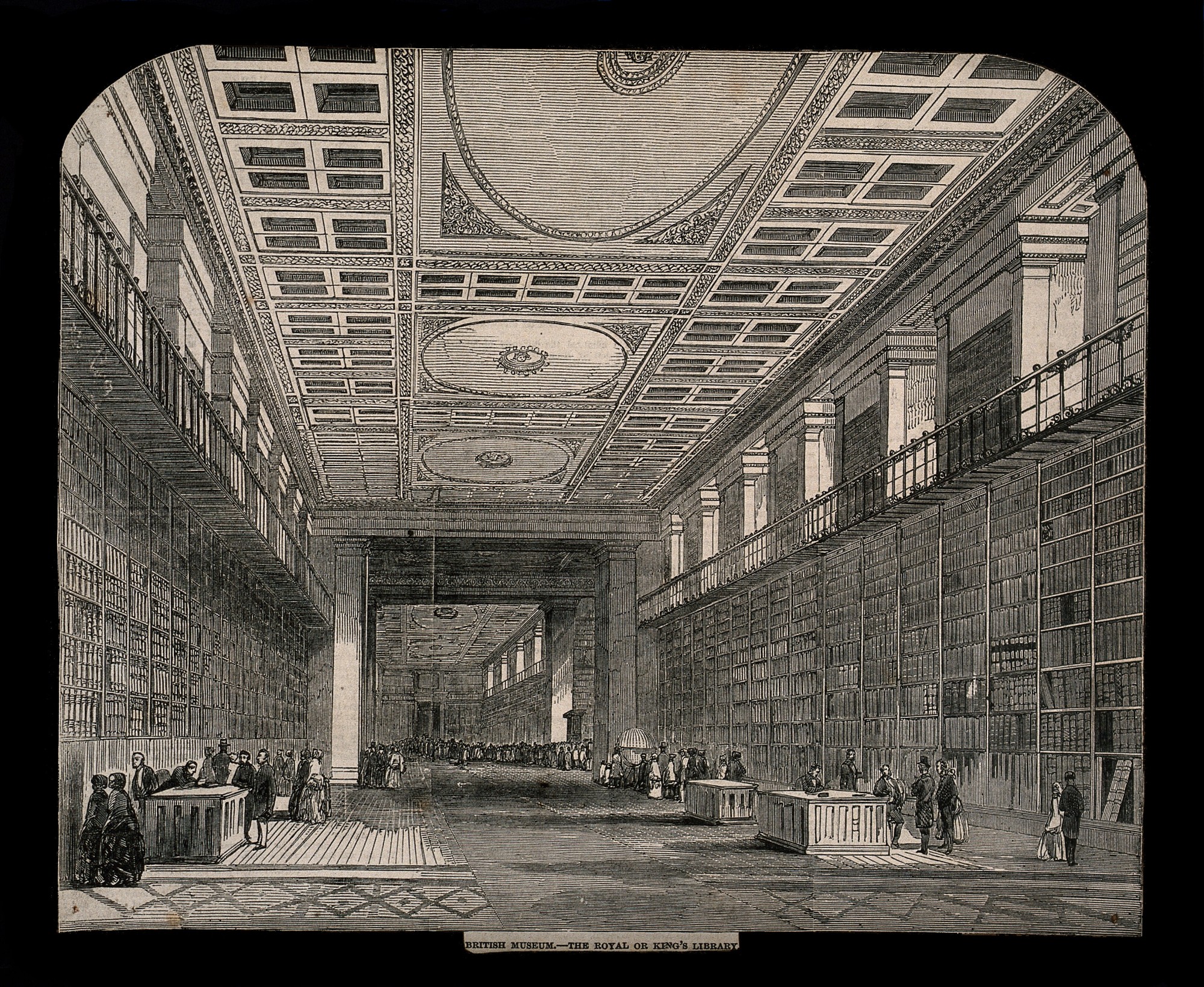
In 1823, George IV presented his father George III's King's Library to the nation. The addition brought thousands more books and helped drive the need for new accommodation. Every major acquisition strengthened the collection. Every acquisition also increased the obligations of storage, description, protection and access. The Library was accumulating responsibilities that could never be satisfied simply by acquiring more material.
Image sources — Founding the British Museum
Image sources and credits: ‘The British Museum: the King's Library, with visitors’, wood engraving (1851), Wellcome Collection, CC BY 4.0, https://wellcomecollection.org/works/uqhrt7w7/images?id=fdme88mw, https://creativecommons.org/licenses/by/4.0/ . Eighteenth-century admission scene: original Unset editorial illustration (2026), an imagined reconstruction, not a historical photograph.