Why Do We Enjoy Watching People Struggle?
We love to gawp at other people’s difficulties. What does that say about us?
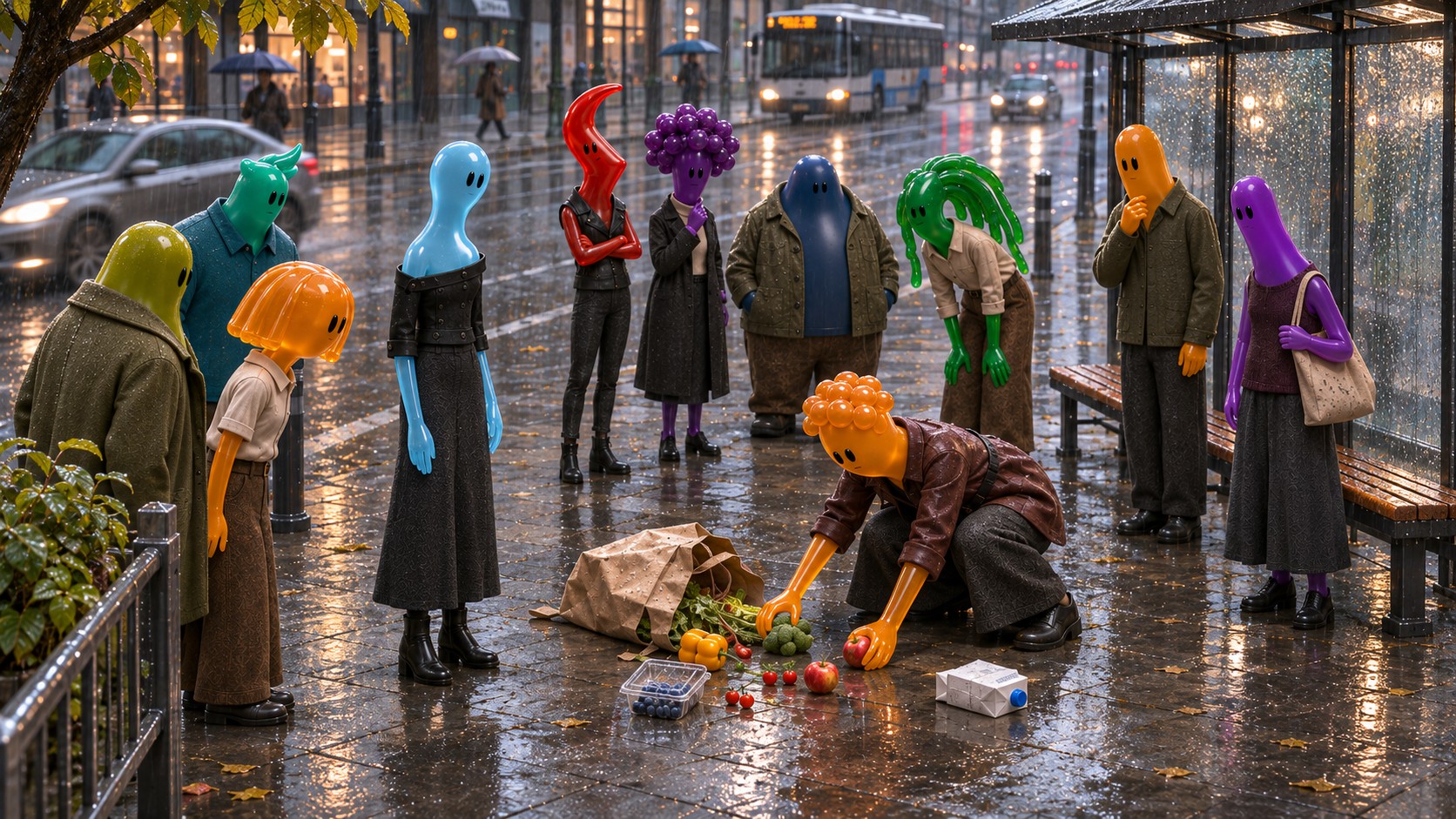
Have you ever noticed how much we seem to enjoy watching other people suffer? A confrontation attracts a crowd. An account of disaster holds our attention. We follow someone’s struggle long after it becomes clear that they are unlikely to succeed. Sometimes we seek these experiences deliberately, even when we know they will upset us.
That is an uncomfortable thing to recognise about ourselves. Most of us would claim to dislike suffering, particularly when it happens to someone who has done nothing to deserve it. Yet we can find the sight of another person’s distress almost impossible to turn away from, even when we have no intention of helping.
Are we all psychopaths?
Surely we just want to see them win
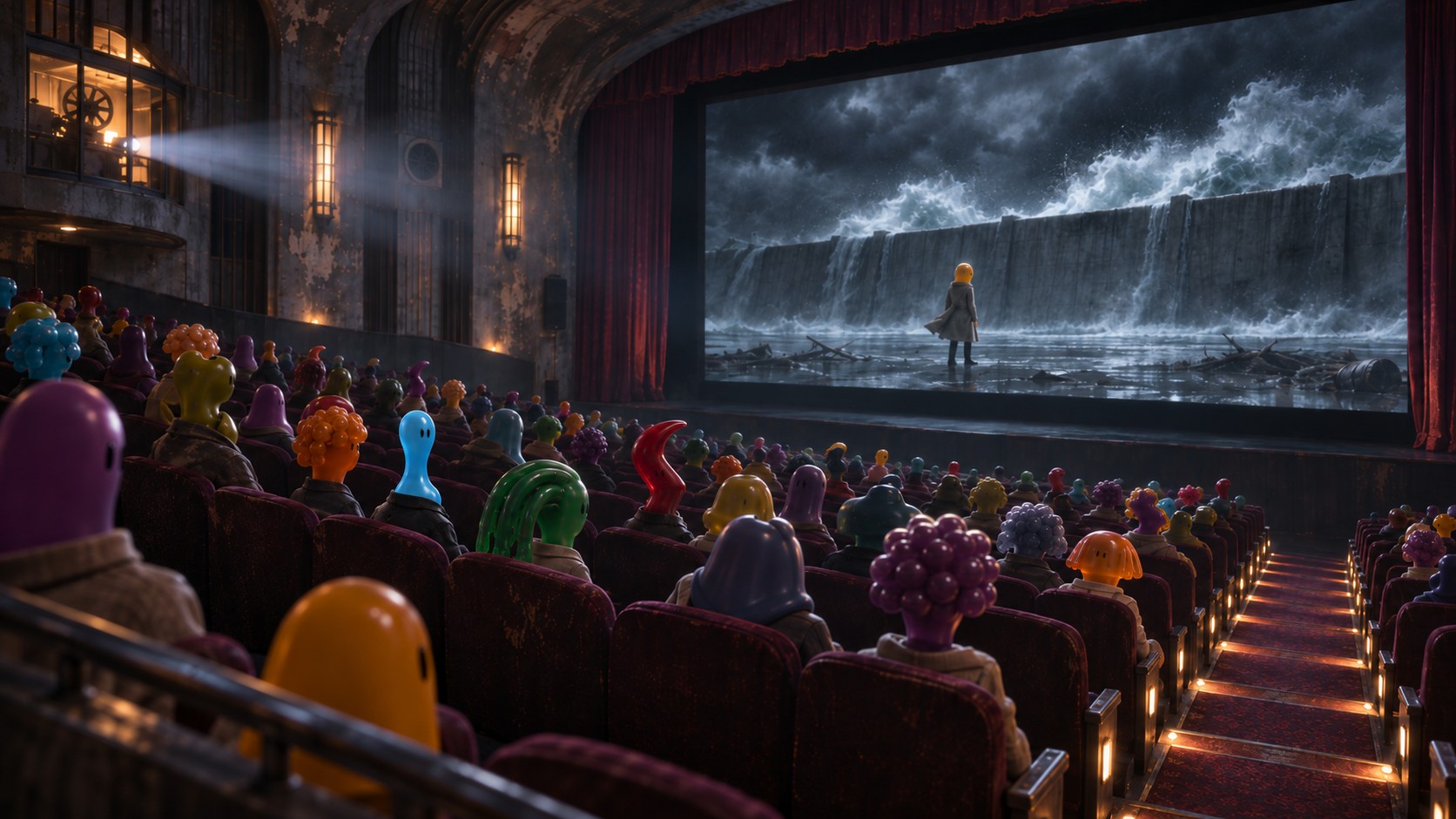
There is a reassuring explanation. Perhaps we are drawn to suffering only because we want to see someone overcome it. In familiar stories, the protagonist is tested, nearly defeated, then finds a way through. Difficulty makes the ending satisfying; we endure the painful part because we expect the reward.
But some of the stories we return to most willingly offer no such reward. Romeo and Juliet cannot escape the conflict that destroys them. Winston Smith does not defeat the power that crushes him in 1984. All Quiet on the Western Front follows a young soldier through a war that offers him no meaningful triumph. These are not stories we reluctantly endure. We read them, watch them, recommend them and return to them.
Often, we know the ending before we begin. We know the lovers will die or the rebel will be defeated. Yet that knowledge does not remove the attraction. If anything, it shows that victory cannot be the only thing we are waiting for.
And that leaves the less comforting question standing. If there is no victory to enjoy, what is the attraction?
Perhaps enjoyment is the wrong word
In 1757, the philosopher David Hume described . People willingly attend performances that make them feel fear, sorrow and anxiety — feelings they generally avoid in ordinary life. He asked why emotions that are unpleasant in themselves can belong to an experience we prize.
The contradiction may be partly hidden in the word enjoyment. We use it for a comedy that makes us laugh, a mystery that holds us in suspense and a tragedy that leaves us devastated. Yet those experiences are not pleasurable in the same way. Feeling moved is different from feeling cheerful; finding something absorbing is different from approving of what happens.
Research by Mary Beth Oliver and Anne Bartsch makes a similar distinction. Their studies of entertainment identified alongside fun and suspense. We can regard an encounter as worthwhile without wishing its painful events had occurred.
This distinction matters beyond fictional stories. If we stay to hear a friend describe an ordeal, our attention does not mean we want it repeated. If we read an account of an injustice, our interest need not amount to delight in its victim’s suffering. The experience can be upsetting and valuable at once.
But this only gives us a more accurate description of the attraction. It doesn't yet explain why the distress of someone else should have value for us.
What becomes visible when things go wrong
When someone's circumstances allow everything to proceed as intended, many of their choices remain invisible. An obstacle changes that. Do they ask for help, change direction, persist, compromise or stop? A decision that once seemed simple becomes consequential because what they want has collided with what their circumstances allow.
Resistance makes relationships visible that ordinary progress can conceal: intention and capacity, judgement and fear, persistence and limitation. We begin to see how someone responds when the expected route is no longer available. That doesn't make hardship necessary or ennobling; it helps explain why observing a difficult situation can teach us more than observing an uneventful one.
Aristotle noticed a related phenomenon in his Poetics. People can take pleasure in representations of things that would be unpleasant to encounter directly, partly because . The claim concerns representation, not permission to treat real suffering as entertainment. But it points towards a more general possibility: we can be drawn to difficult material because we want to understand it.
That possibility is supported by research on morbid curiosity. In experiments published in 2017, Suzanne Oosterwijk found that participants sometimes chose to see disturbing images, and were especially drawn to . The experiments demonstrate the choice, not a universal reason for making it. Still, the difference between a threatening social situation and a decontextualised image of harm suggests that the human circumstances around distress matter.
A later study by Anastassia Vivanco Carlevari, Oosterwijk and Gerben van Kleef investigated why people voluntarily . Across two studies involving 497 participants, people described four broad kinds of motivation: epistemic (seeking knowledge and understanding), eudaimonic (finding meaning or personal growth), social (connecting with others or helping), and affective (experiencing or sharing emotions). The researchers did not uncover one secret appetite for misery. They found several ways in which people thought an encounter with suffering might matter to them.
One of those ways leads us somewhere unexpected. Learning about the person in difficulty can also become a way of thinking about ourselves.
Their struggle, our possibilities
We do not simply observe a person making a difficult decision. We can imagine what making it would feel like. We compare the resources available to them with those we might have, anticipate dangers we have never faced and rehearse possible responses. The question changes from “What will they do?” to “What would I do?”
That movement does not always involve empathy. Curiosity can be detached; preparation can be self-interested; concern can lead us to offer help. These are different motivations, and there is no reason to force them into one virtuous category. What joins them is that somebody else's circumstances have become relevant to our understanding of possible human experience.
We may never face anything resembling another person's ordeal. We do not need to. Their struggle can reveal a relationship between desire and limitation that we recognise in our own lives: continuing a job that drains us, repairing a damaged relationship, or enduring uncertainty over something we cannot control. A difficulty unlike ours can still make our own experience easier to examine.
There is a further consequence. If another person’s circumstances can change what we imagine might happen to us, perhaps they can also change how we evaluate what is happening to us already.
The things we stopped noticing
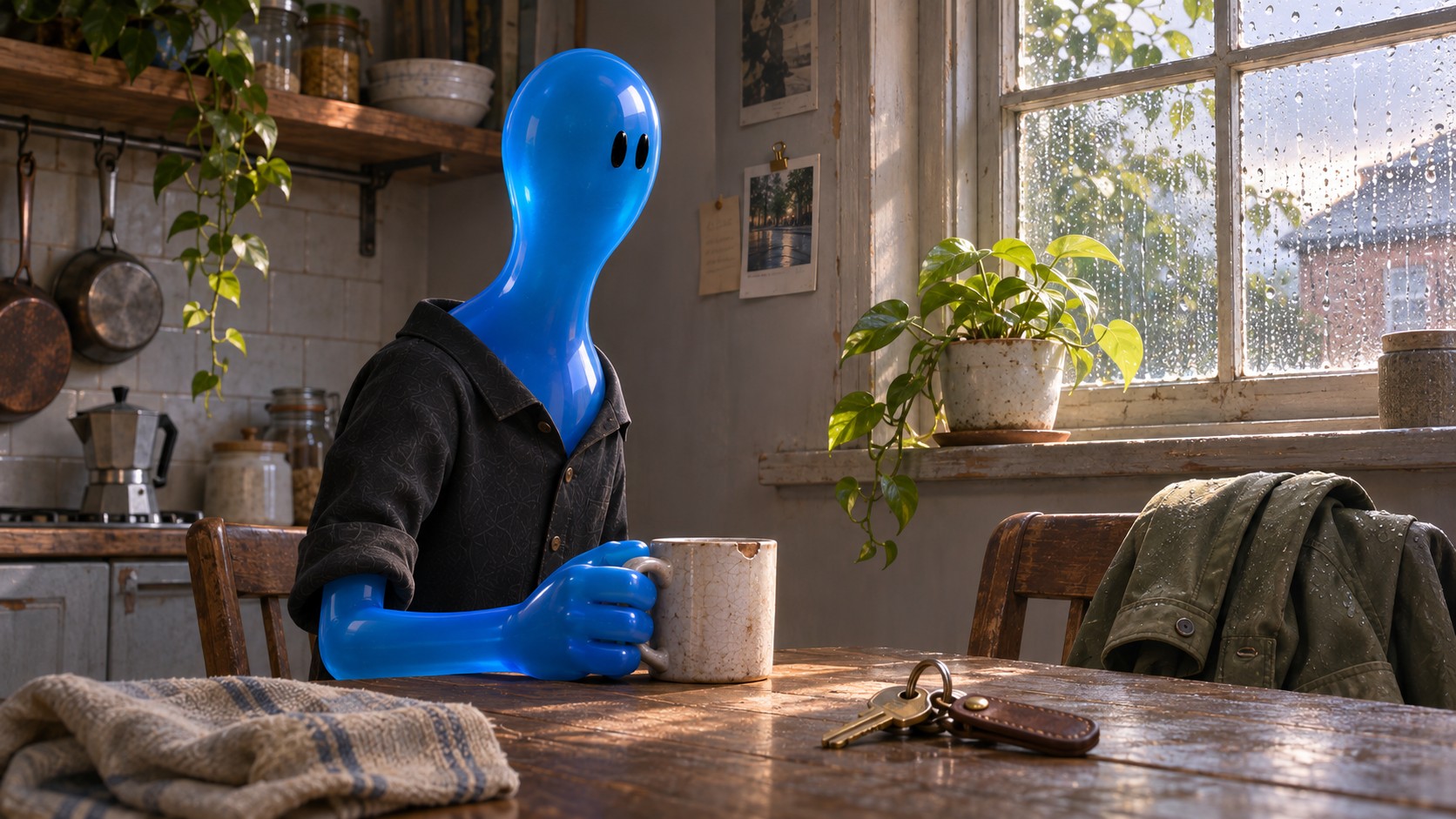
A difficulty has a way of occupying the foreground of our lives. An argument, a financial worry or a setback can become the scale against which everything else is measured. We still possess whatever stability, freedom, relationships or opportunities we had before, but familiarity makes them less noticeable. Attention settles on what is missing.
Then we encounter someone whose possibilities are far more restricted than our own. For a moment, the comparison changes. The safety of a familiar room, the ability to make an ordinary choice, or the presence of somebody willing to help can acquire a significance they did not seem to have an hour earlier. Nothing has been added to our circumstances. Something has changed in the way we assess them.
Psychology calls one possible mechanism downward social comparison: assessing our situation against that of someone who appears worse off. A related approach involves imagining how much worse an event might have been. In two scenario-based studies with Romanian high-school students, Elena Gabriela Nicuță and Ticu Constantin found that these comparisons could . The increase was partly explained by participants assigning greater value to what they had received.
This research does not establish that seeing someone suffer makes everyone grateful. An encounter might instead produce fear, guilt, anger or sadness. But it shows how changing a point of comparison can change the perceived value of something that has not itself changed.
Sometimes, then, witnessing hardship leaves us with more than knowledge about the person experiencing it. We return to our own lives and discover that something ordinary has become worth noticing again. What began as interest in someone else can end as a different relationship with what we already have.
So what were we enjoying?
There is still a problem with the comforting version of this explanation. Some people really do take pleasure in another person’s misfortune. . Research reviews identify several circumstances in which it can arise: when a misfortune seems deserved, when the observer envies the person, or when the observer or their group benefits from the setback. This is different from curiosity or empathy, and it is not the only reason people watch.
Nor should we congratulate ourselves for finding a benefit in another person's pain. It is possible to value what an encounter has taught us while believing that the suffering should never have happened. Gratitude need not cancel sympathy, and the thought that things could be worse need not make our own difficulties trivial. The response matters, not merely the fact that we watched.
Return to those stories whose endings we already know. Romeo and Juliet cannot survive the conflict around them. Winston Smith cannot defeat the system that consumes him. Yet the absence of victory does not empty their struggles of significance. We follow what they try, what they risk, and what their circumstances make impossible. We may grieve for them, question their choices or recognise limits of our own. The outcome has not provided our reward; the encounter has changed what we can see.
At the beginning, our fascination looked like a verdict on our character. Are we all psychopaths? No—not on the evidence of this behaviour alone. The same outward act of watching can come from curiosity, empathy, self-protection or schadenfreude. The more useful question is what we are responding to, and what we do with it.
And sometimes the most surprising effect of watching somebody else struggle is that, when we turn back towards our own lives, we find them changed — although nothing in them has changed at all.