Lithium Nuclei
How do proton number, mass number and isotope rules describe lithium nuclei and their later history?
Focus on lithium
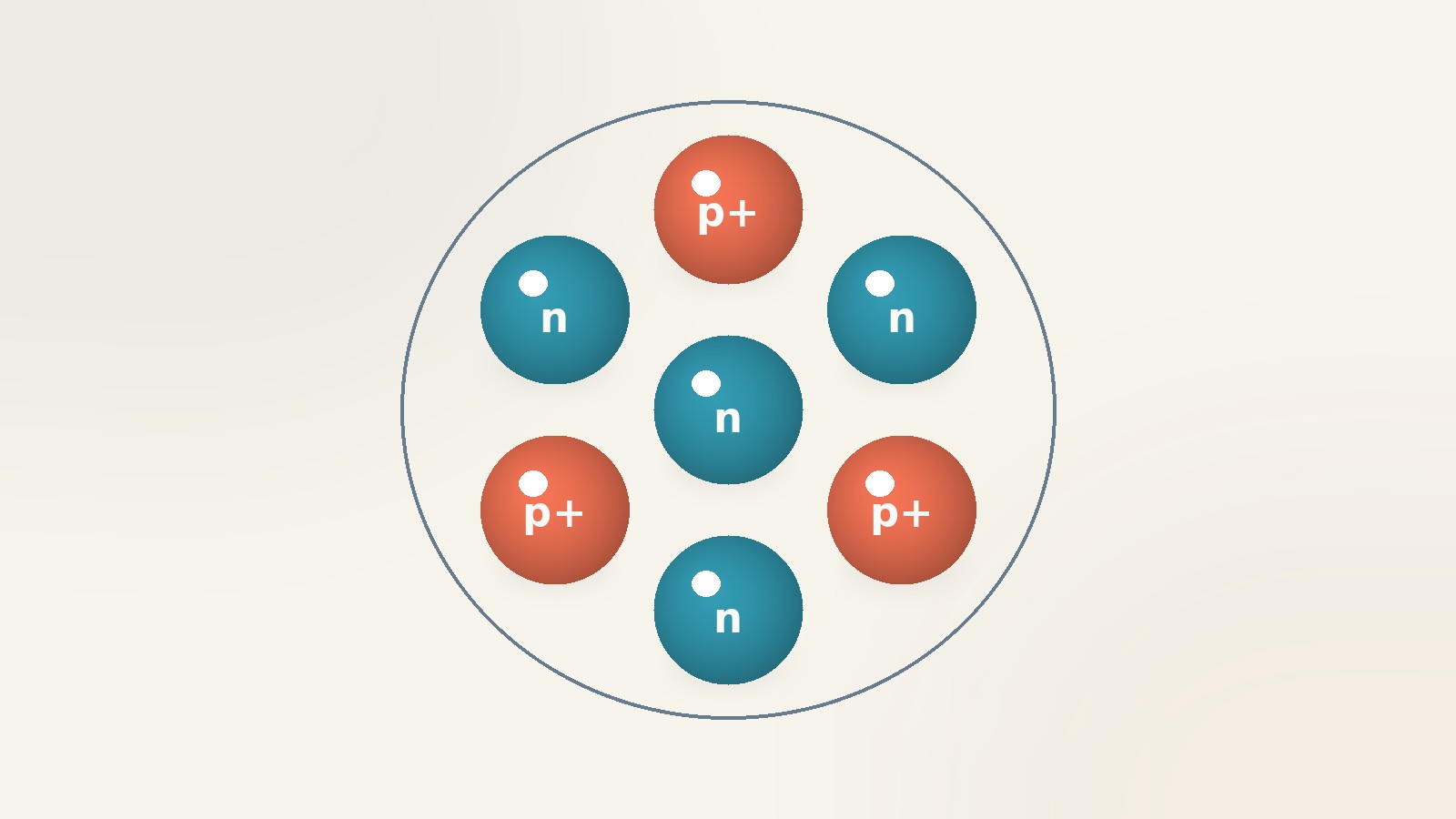
Now focus on lithium itself. A lithium nucleus is identified by three protons.
We can use the nuclear-counting ideas you have already learned to recognise one lithium nucleus and compare lithium isotopes. The parent Formation of Primordial Element Nuclei page has already compared the relative production of the sibling outcomes; here the question is what makes a lithium nucleus lithium, and how its later history can differ.
Recognise a lithium nucleus
1 of 2
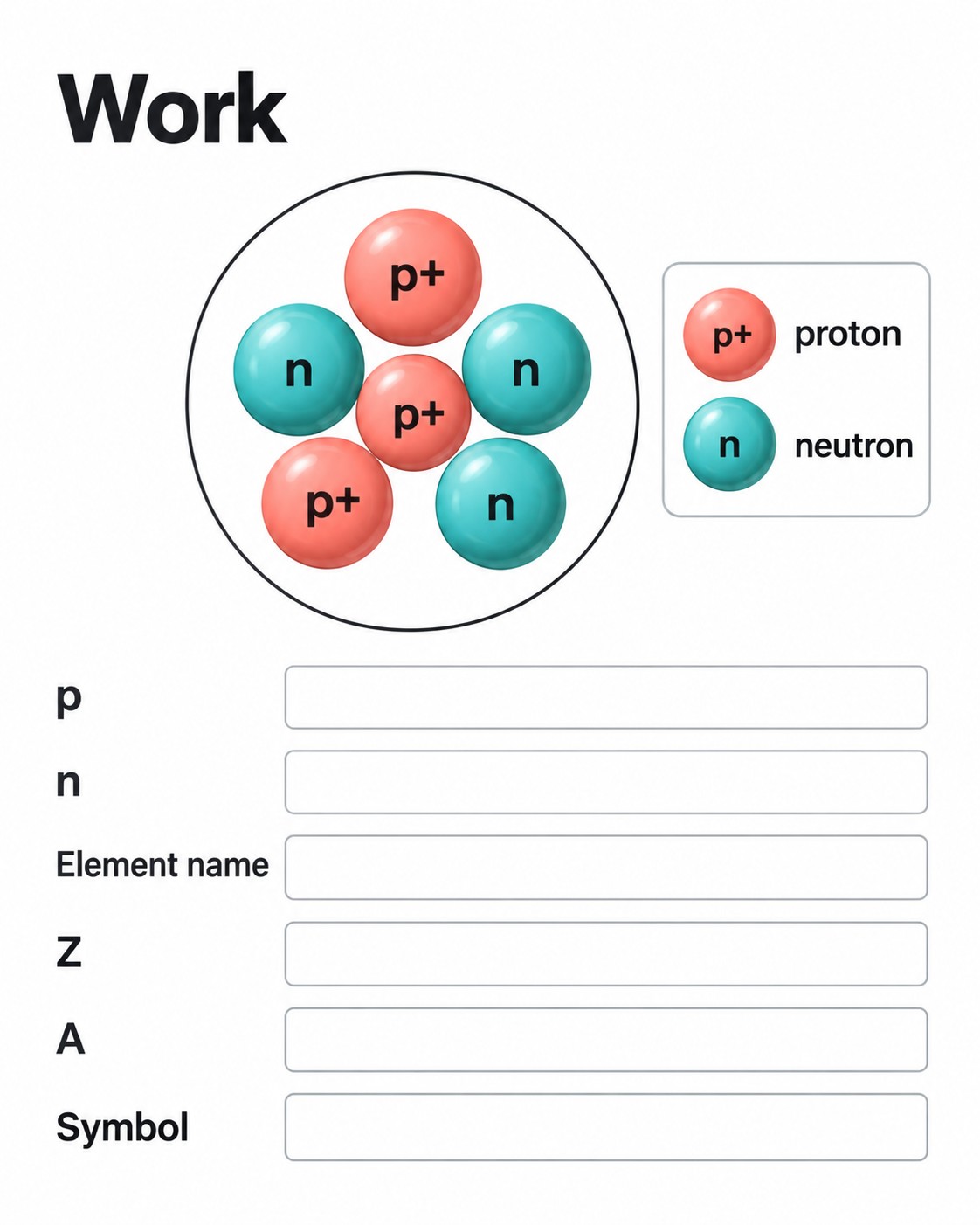
Look at the new bare-nucleus model. Use the proton and neutron key to count what it contains. Record its proton number Z and mass number A, and then identify the element using its proton count.
Explain why you cannot identify the element just by counting ALL the particles together.
Try before viewing the completed model.
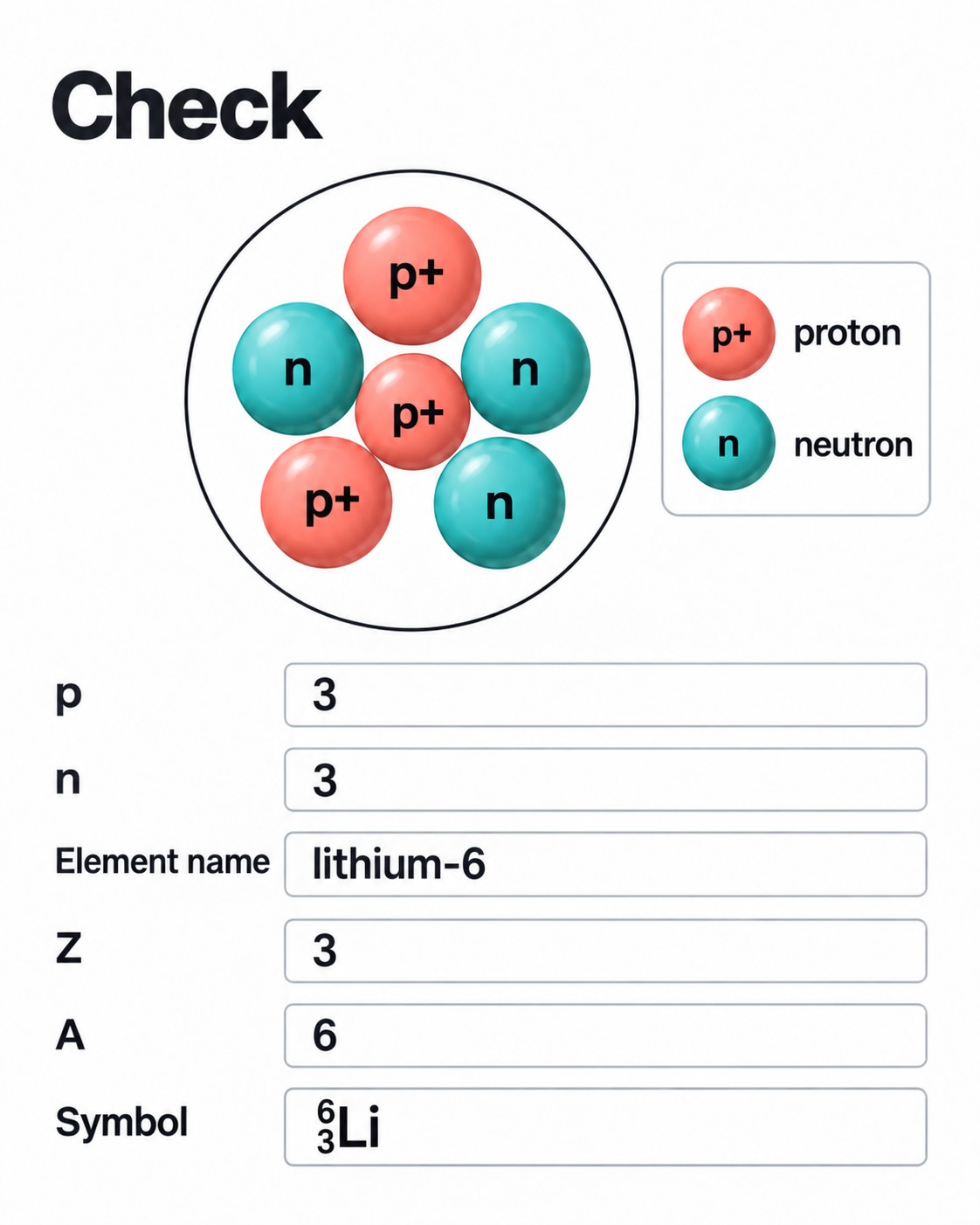
The count
This nucleus contains three protons and three neutrons. Three protons tell us the element is lithium, with atomic number Z = 3. Six nucleons in total give it mass number A = 6. The symbol can therefore be written with 6 at the upper left of Li and 3 at the lower left.
This example is lithium-6. Another lithium nucleus can contain a different number of neutrons while keeping three protons. It is still lithium because its proton number has not changed.
Compare a second isotope
1 of 2
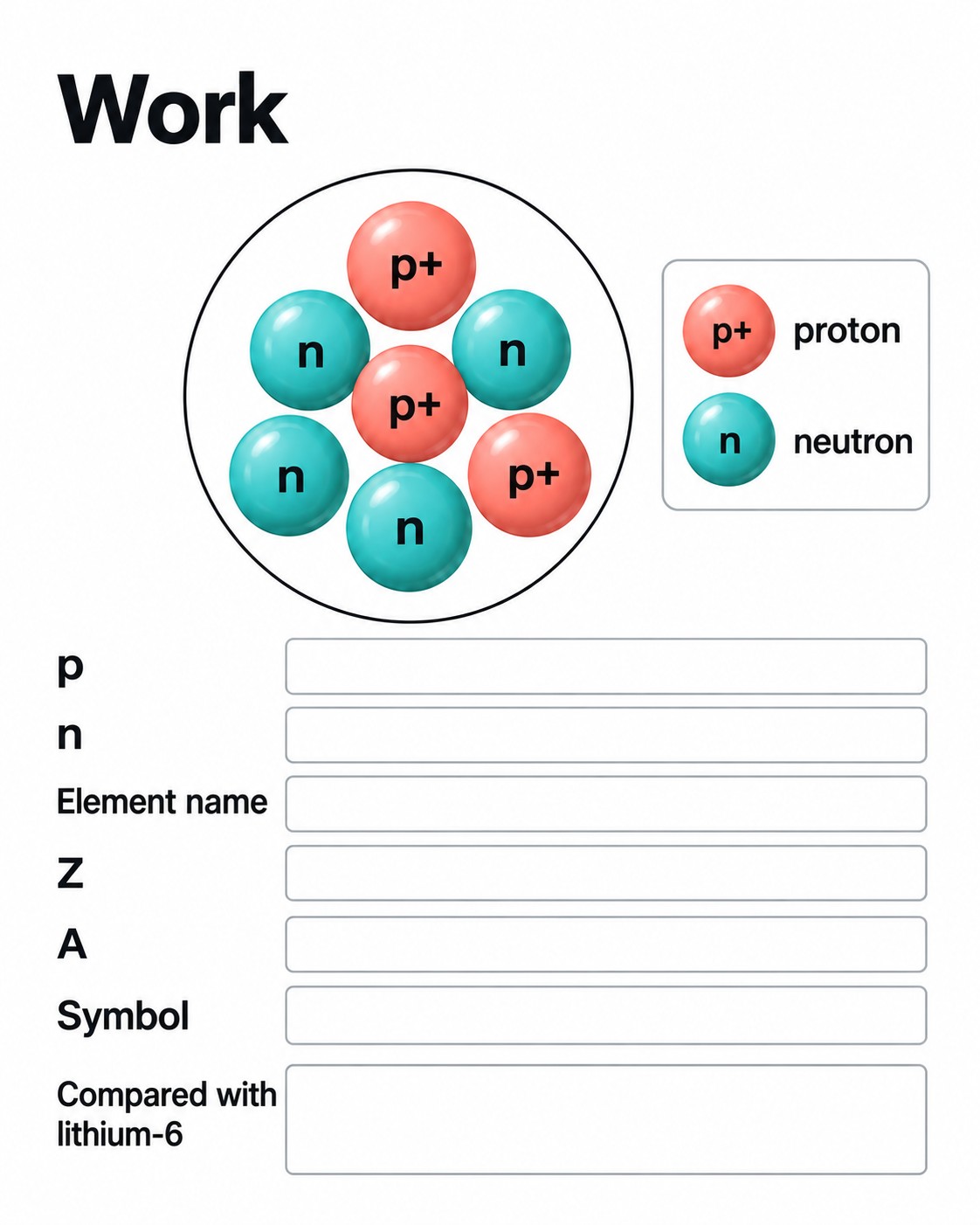
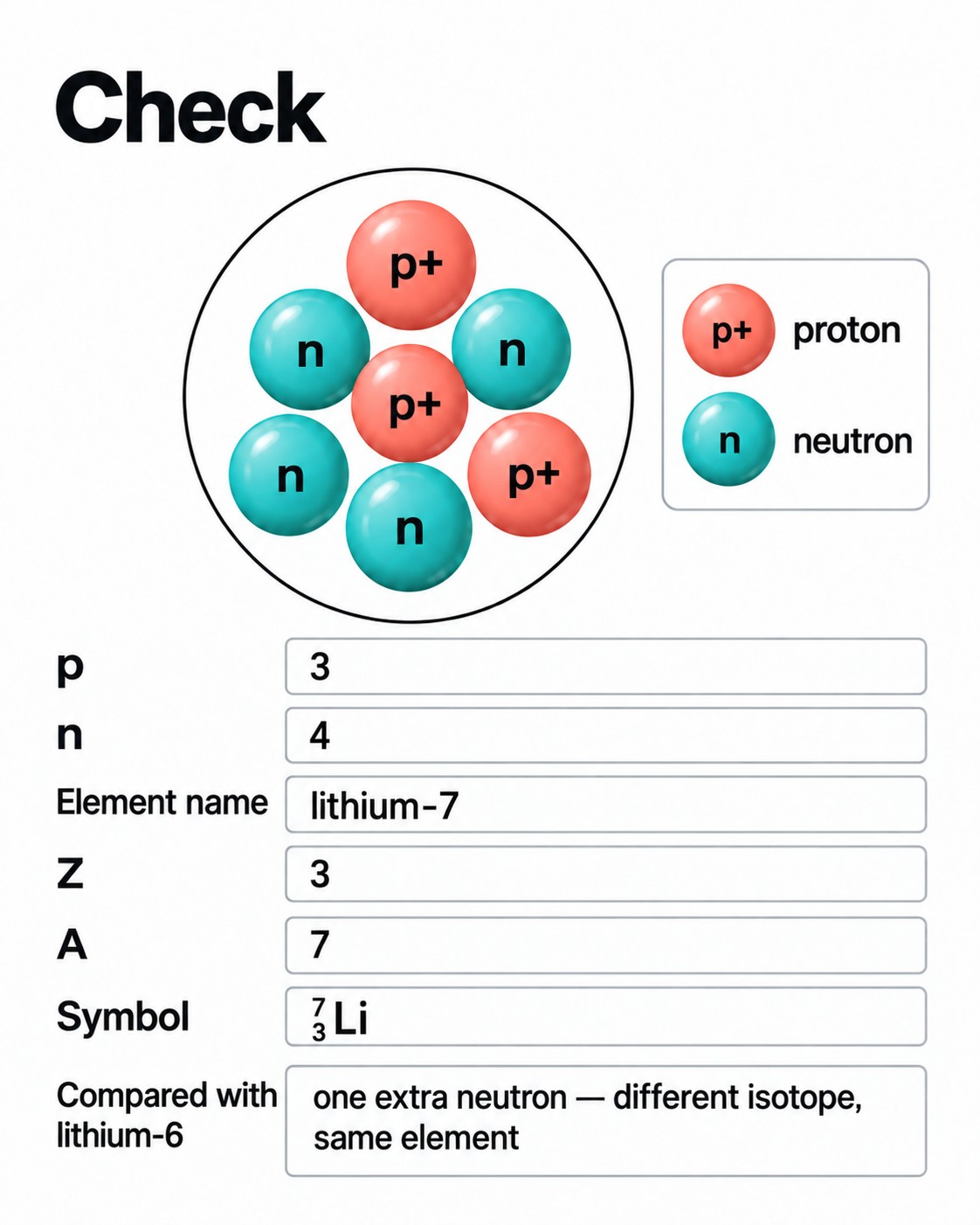
A second lithium nucleus contains three protons and four neutrons. Write its atomic number and mass number. How many neutrons does it have compared with lithium-6? Why do the two nuclei remain the same chemical element?
If you know the nuclear-notation convention, write the second nucleus's symbol with A at the upper left and Z at the lower left. Check your answer after you have made the comparison.
Follow the timeline carefully
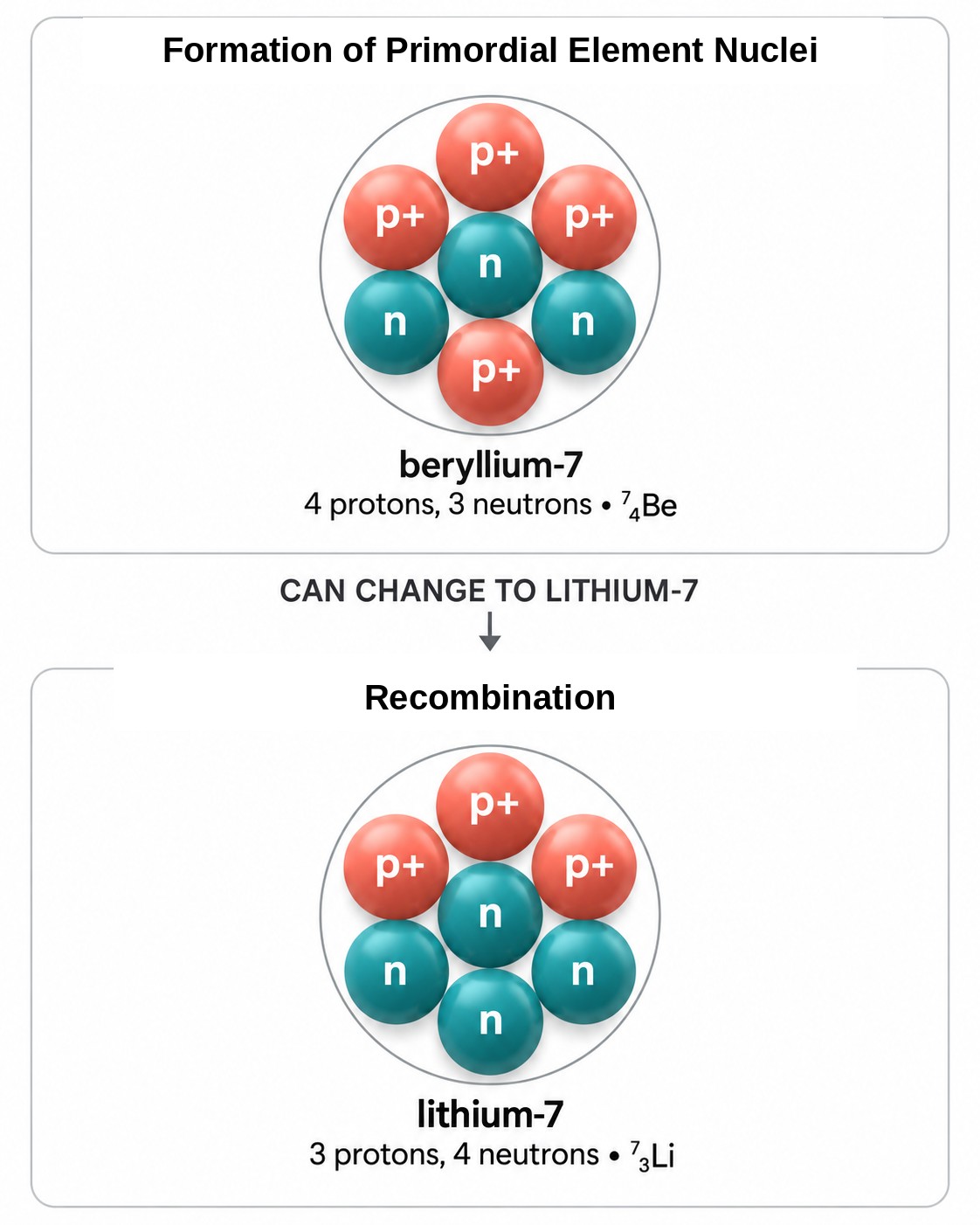
The nuclei involved in early light-element formation did not all have the same later history. One route to lithium-7 goes through another nuclear species, beryllium-7, which can change into lithium-7 at a later stage.
That is why we must be careful with pictures of the first few minutes. A diagram of a lithium-7 nucleus is useful for learning its particle counts, but it does not mean that every such nucleus was already present in the same form at every moment in the early-universe story.
The separate Beryllium nuclei lesson follows that example. We will keep the detailed way it changes separate from this page's GCSE particle-counting work.
Remember / application
A model contains three protons and three neutrons. Another contains three protons and four neutrons. From memory, identify the element, give each nucleus's mass number and explain why they are isotopes of the same element.
Then add one sentence explaining why both models still represent lithium even though their neutron counts differ.
Attempt both before checking.
GCSE knowledge coverage
GCSE knowledge coverage
You have used atomic number to identify lithium nuclei, mass number to count their nucleons, and neutron number to compare lithium isotopes. This is additional practice of the concepts taught on the Atomic Number, Mass Number and Isotopes pages.
The later history of lithium-7 provides context for those calculations. Relative primordial abundance is covered on the parent Formation of Primordial Element Nuclei page. These are not counted as independently new GCSE knowledge on this page. Relative atomic mass, weighted abundances and complete lithium-atom electron structure will be taught at their appropriate later curriculum positions.