Good Luck, Have Fun, Don’t Blame the Kids
Technology has always changed us. Why do we keep treating the newest version of humanity as evidence that something has gone wrong?

What if the young people staring into their phones are not damaged versions of us? What if they are simply becoming people suited to a world different from the one that made us?
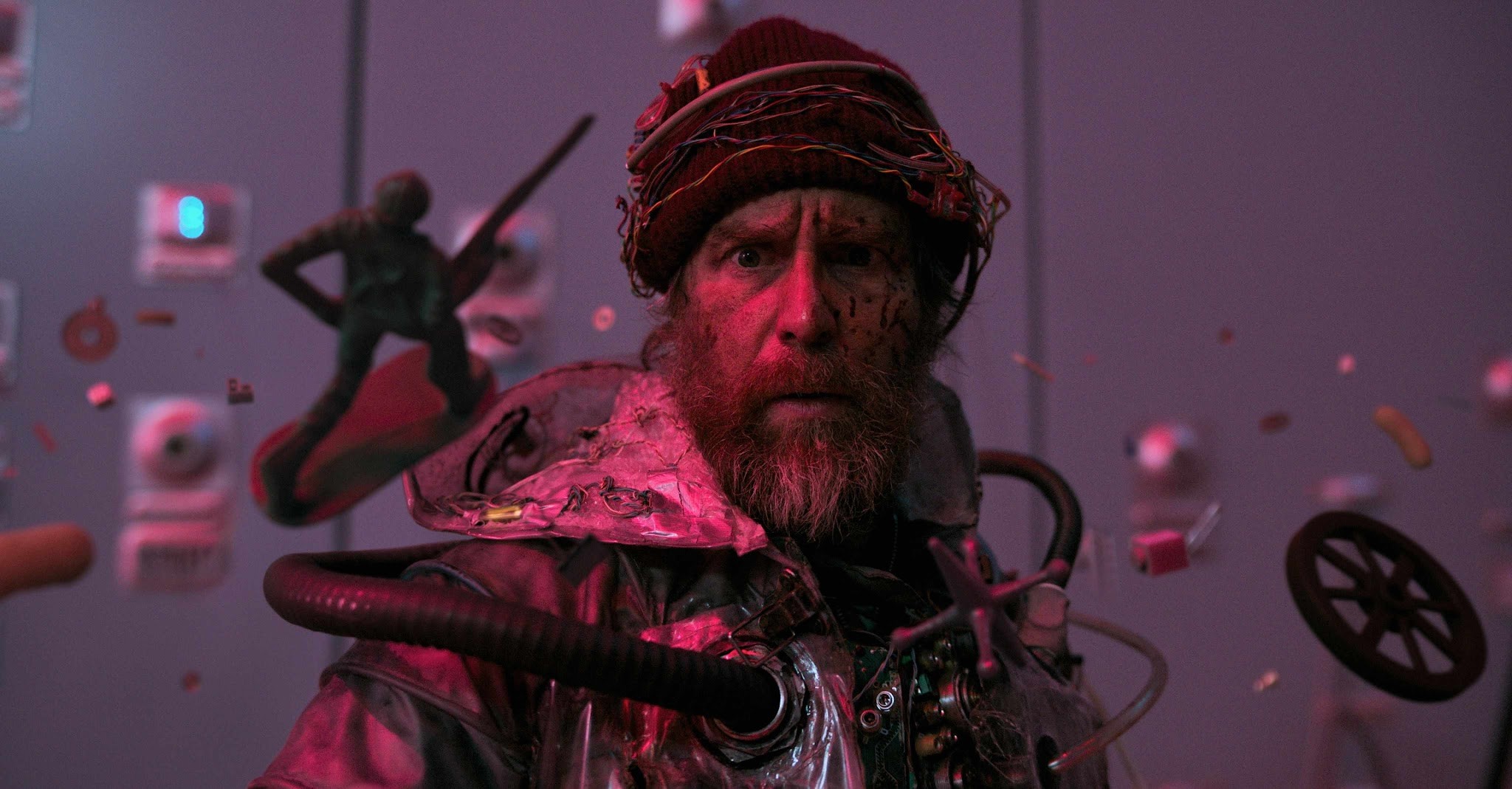
I started watching Good Luck, Have Fun, Don’t Die and lasted about twenty minutes. This is therefore not a review of the film. Perhaps the remaining two hours complicate everything that irritated me about its opening. Perhaps somewhere around the ninety-minute mark Sam Rockwell turns to camera and delivers an eloquent defence of TikTok. I wouldn’t know. I stopped because the film was radiating what I can only describe as hysterical boomer energy: phones are destroying everyone, young people are vacant, nobody communicates any more, reality is disappearing and civilisation appears to be approximately three notifications away from collapse.
The strange thing is that this comes from Gore Verbinski, a filmmaker who has spent much of his career making extravagantly technological entertainment. Verbinski directed The Ring, Rango and the first three Pirates of the Caribbean films. Good Luck, Have Fun, Don’t Die, written by Matthew Robinson, is his first feature since A Cure for Wellness in 2016. Sam Rockwell plays a man who claims to have travelled from an AI-dominated future and arrives in a Los Angeles diner looking for people who can help him prevent it. The film turns phones, virtual worlds, artificial intelligence and technological dependency into parts of the same approaching catastrophe. (Roger Ebert)
The generational element is not accidental. Robinson has said that his dream would be for thirteen-year-olds to watch the film, decide phones are uncool and throw them away. That is certainly an ambition. It also reveals something interesting about the assumptions beneath the story. The phone is imagined as an external contaminant. Remove it and perhaps the young person underneath can return to something more authentic. (Ars Technica)
But return to what?
We keep looking for the original human
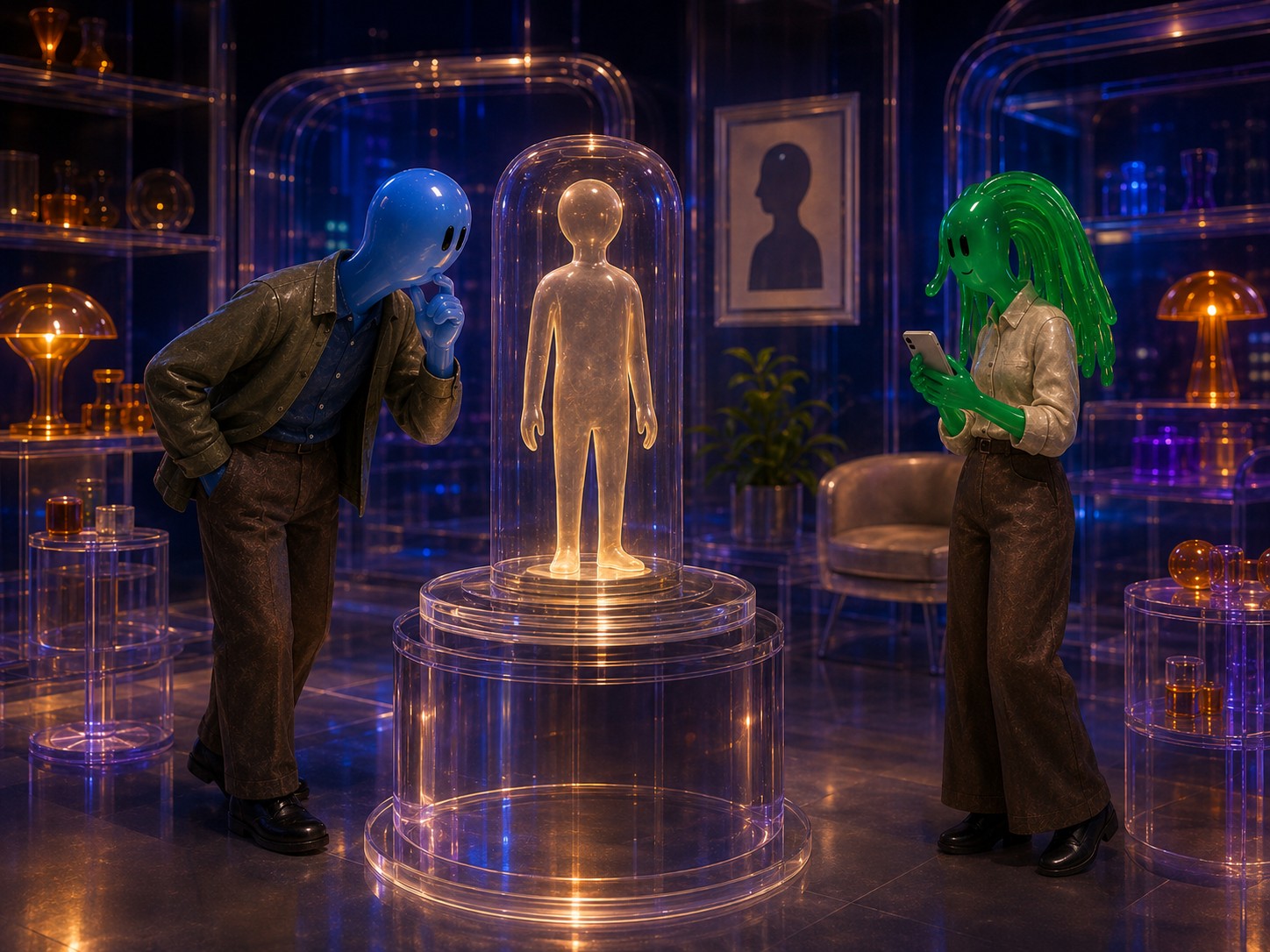
Technological panic usually contains an imaginary person.
This person has a healthy attention span. They communicate properly. They experience the world directly. They remember things rather than looking them up. They form real relationships rather than mediated ones. They are present. They are authentic. Then some technology arrives and begins interfering with them.
The problem is that this person never existed.
Human beings have been modifying their environment with tools for longer than there has been anything we would recognise as civilisation. More importantly, those tools have not merely made particular jobs easier. They have changed the environments in which later humans develop. Archaeologists, anthropologists and cognitive scientists increasingly describe humans as inhabitants of a technological or culturally constructed niche: we make tools and systems, those tools alter our environment, and the altered environment helps shape subsequent human behaviour and cognition. (PubMed)
The relationship runs in both directions. Humans create technology and technology becomes part of the environment that creates humans.
Fire changed what we ate and how we organised ourselves around light and darkness. Agriculture changed where people lived, how labour was organised and how time was understood. Writing allowed information to persist outside a living human memory. Clocks divided time into increasingly precise units that societies could coordinate around. Printing changed the scale at which ideas could travel. Cameras changed our relationship with memory and evidence. Recorded sound separated performance from presence. Cars changed cities, distances, courtship, employment and the meaning of nearby. Television reorganised domestic life. The internet rearranged access to information. Smartphones combined a large portion of this technological history into something we carry against our bodies.
None of these things left the human beings using them unchanged.
Why would they?
We mistake familiarity for normality
The difficulty is that people rarely experience the technologies that formed them as technologies.
They experience them as life.
A person who grew up with books does not generally walk into a room, see somebody reading and think: there sits a human whose consciousness has been radically reorganised by an information technology. A book is simply a book. Writing is simply writing. Reading is something normal people do.
It wasn’t always so.
In Plato’s Phaedrus, Socrates tells the story of an Egyptian king who warns that writing will weaken human memory. Once people can store information outside themselves, the argument goes, they will stop exercising their ability to remember it. Writing will give them the appearance of knowledge rather than knowledge itself. The complaint sounds strikingly familiar more than two thousand years later: this new information technology will encourage cognitive laziness because people will outsource mental work that they previously performed themselves. (OUP Academic)
And there is an important sense in which the criticism is correct. Writing does allow us to remember differently. If I write down a telephone number, I no longer need to keep repeating it to myself. If a civilisation records its laws, every citizen does not have to memorise them. External storage changes what the brain needs to do.
But describing that as damage would miss almost everything interesting that happened next.
Writing enabled contracts, archives, literature, correspondence, complex administration, accumulated scientific knowledge and conversations between people separated by centuries. Humanity did not preserve its previous memory practices while gaining writing on top. We reorganised memory around a new technological possibility.
We lost something. We gained something. Mostly, we became different.
The mistake is to treat the version immediately before the change as the correct one.
We mistake familiarity for normality, and normality for nature.
Your phone is part of reality
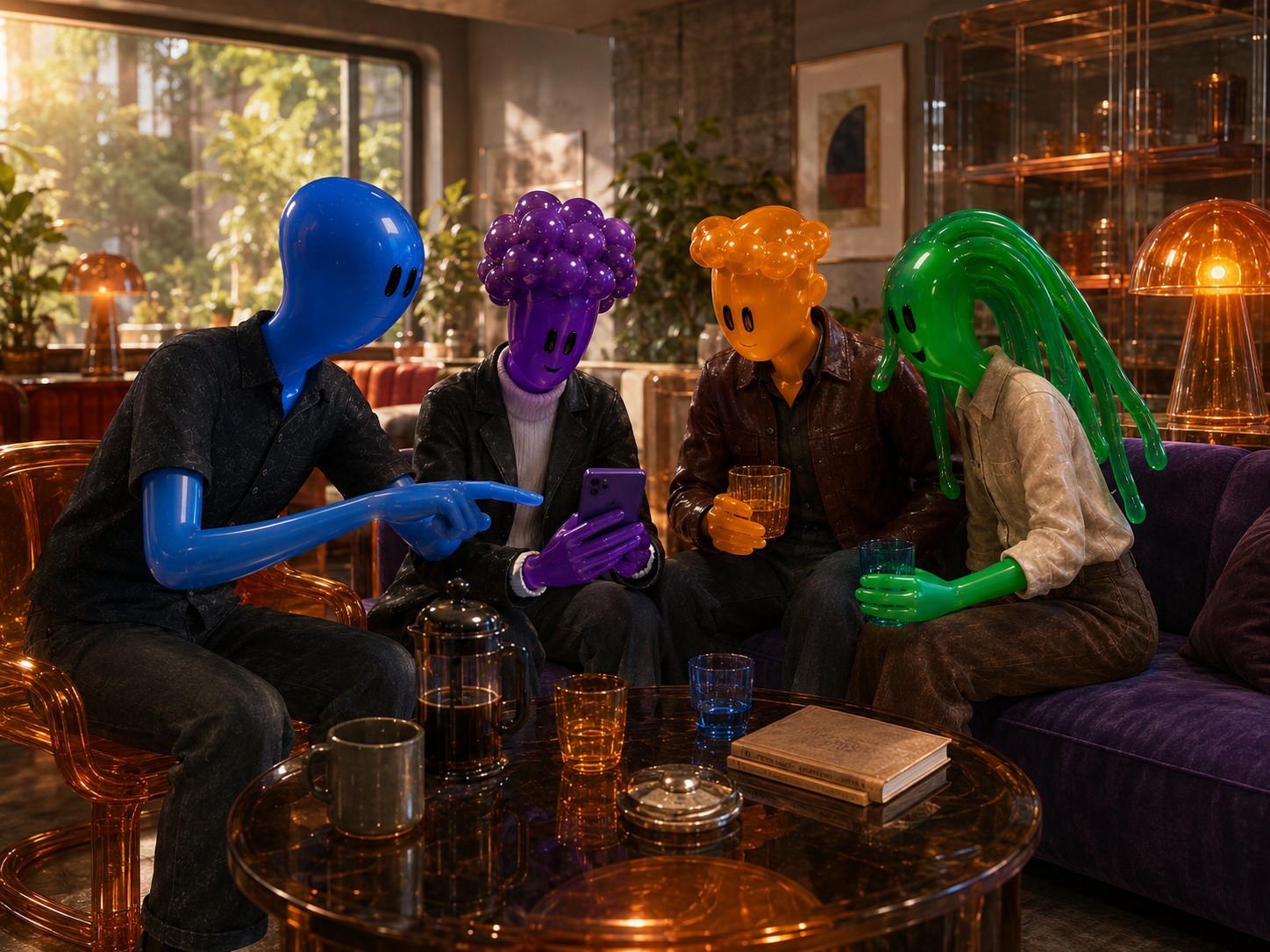
The same mistake appears when people contrast phones with “real life”.
Put the phone away and experience the real world. Stop talking to people online and talk to real people. Stop recording everything and experience the moment. Stop scrolling and do something.
Sometimes this is excellent practical advice. It is also built on an increasingly questionable distinction.
A smartphone contains conversations with people you love. It contains photographs of dead relatives, directions through unfamiliar cities, music, books, payments, work, maps, diaries, newspapers, films, games and messages travelling across continents. People meet partners through it. They discover communities through it. They learn languages through it. They argue, flirt, organise, create, perform, sell, grieve and make each other laugh through it.
Which part isn’t real?
The fact that an experience is technologically mediated does not make it counterfeit. Reading a letter from someone is technologically mediated. Listening to recorded music is technologically mediated. Watching a film is technologically mediated. Looking through a window is technologically mediated, if we want to become sufficiently annoying about it.
Human experience has always been mediated by objects, symbols and systems.
The smartphone is unusual mainly because it mediates so many things at once.
That makes the person staring into one extremely difficult to interpret from the outside. They might be watching rubbish. They might be speaking to their best friend. They might be reading about quantum mechanics. They might be looking at pornography. They might be checking the bus. They might be making a film. They might be doing several of these things within the same five minutes.
Yet we have developed a strangely confident visual shorthand in which the sight of a young person looking at a phone already tells us what is happening inside their mind.
Vacant.
Distracted.
Addicted.
Lost.
Maybe they are just busy.
Outsourcing is not cheating
A large part of technological change involves moving work somewhere else.
Calculators move arithmetic out of the head. Maps move spatial knowledge onto paper. Search engines move factual retrieval into networks. Written calendars move prospective memory into external systems. Contact lists mean most of us can no longer remember the telephone numbers of people we speak to every day.
It is easy to construct this as a story of declining ability. People used to remember telephone numbers. Now they can’t. People used to navigate using landmarks. Now they follow GPS. People used to remember facts. Now they look them up.
All true.
But human beings have always done something more interesting than maximise every individual cognitive ability. We build systems that allow us to stop doing one thing so that we can do another.
You probably cannot make your own shoes, forge your own kitchen knives, navigate by the stars, identify hundreds of edible plants or preserve enough food to survive a British winter without shops. There are humans who could do all of these things. In many earlier environments, some of those abilities could determine whether you lived or died.
Their disappearance from ordinary life does not mean modern people are defective.
The environment changed, so the useful distribution of knowledge changed with it.
Modern civilisation itself depends on this principle. None of us understands the entire system we inhabit. Knowledge is distributed between people, institutions, machines, books, databases, procedures, computer systems and physical infrastructure. Human cognitive power lies partly in our extraordinary ability to construct those external supports. Research into extended and distributed cognition treats this dependence on material and cultural scaffolding not as a strange modern corruption but as something with deep roots in human evolution. (OUP Academic)
The smartphone is an unusually visible cognitive scaffold. That may be why it bothers us.
We can actually see the outsourcing happening.
The kids are doing it wrong
Now put a teenager inside this picture.
They are born into a world where almost all recorded human knowledge can be accessed from a device in their pocket. Their friends can contact them wherever they are. Photographs cost effectively nothing to make. Music is almost infinitely reproducible. Video can be recorded, edited and distributed by a child. Geographic location can be continuously known. Social groups can exist without geographic proximity. Entertainment is abundant enough to fill every idle second.
Why would somebody raised inside that environment develop exactly the same habits as somebody raised in 1975?
It would be astonishing if they did.
They will remember different things because different information needs to be remembered. They will communicate differently because communication has different properties. They will understand privacy differently because the boundary between public and private has moved. They will encounter culture differently because distribution has changed. They will form communities differently because geographic proximity is no longer an absolute requirement.
Some of their behaviours will undoubtedly look absurd to us.
Ours looked absurd too.
Each generation inherits an environment already altered by previous generations, then makes further alterations of its own. The people who grew up before those changes retain a powerful advantage when judging the newcomers: their own adaptations are invisible to them.
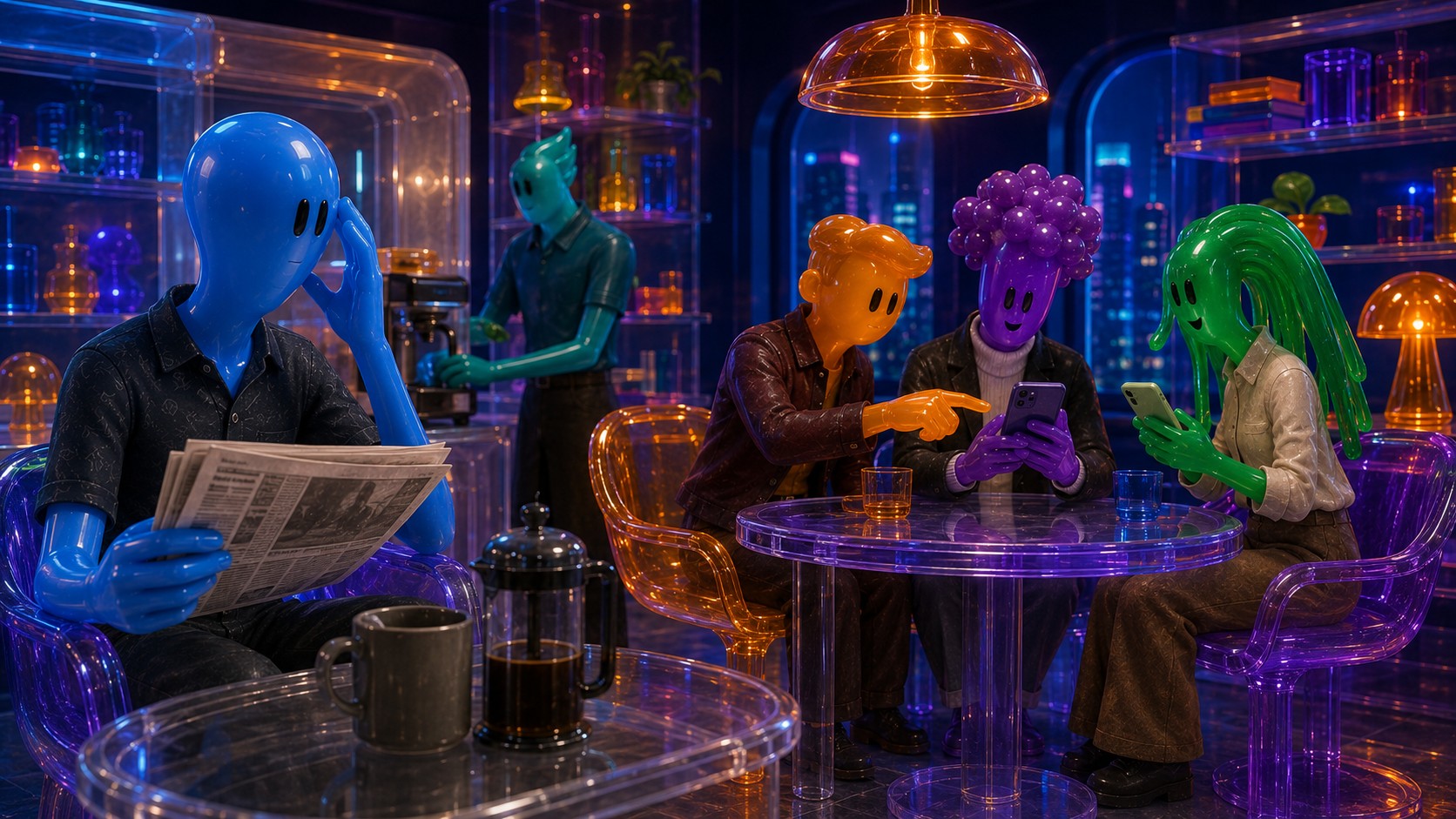
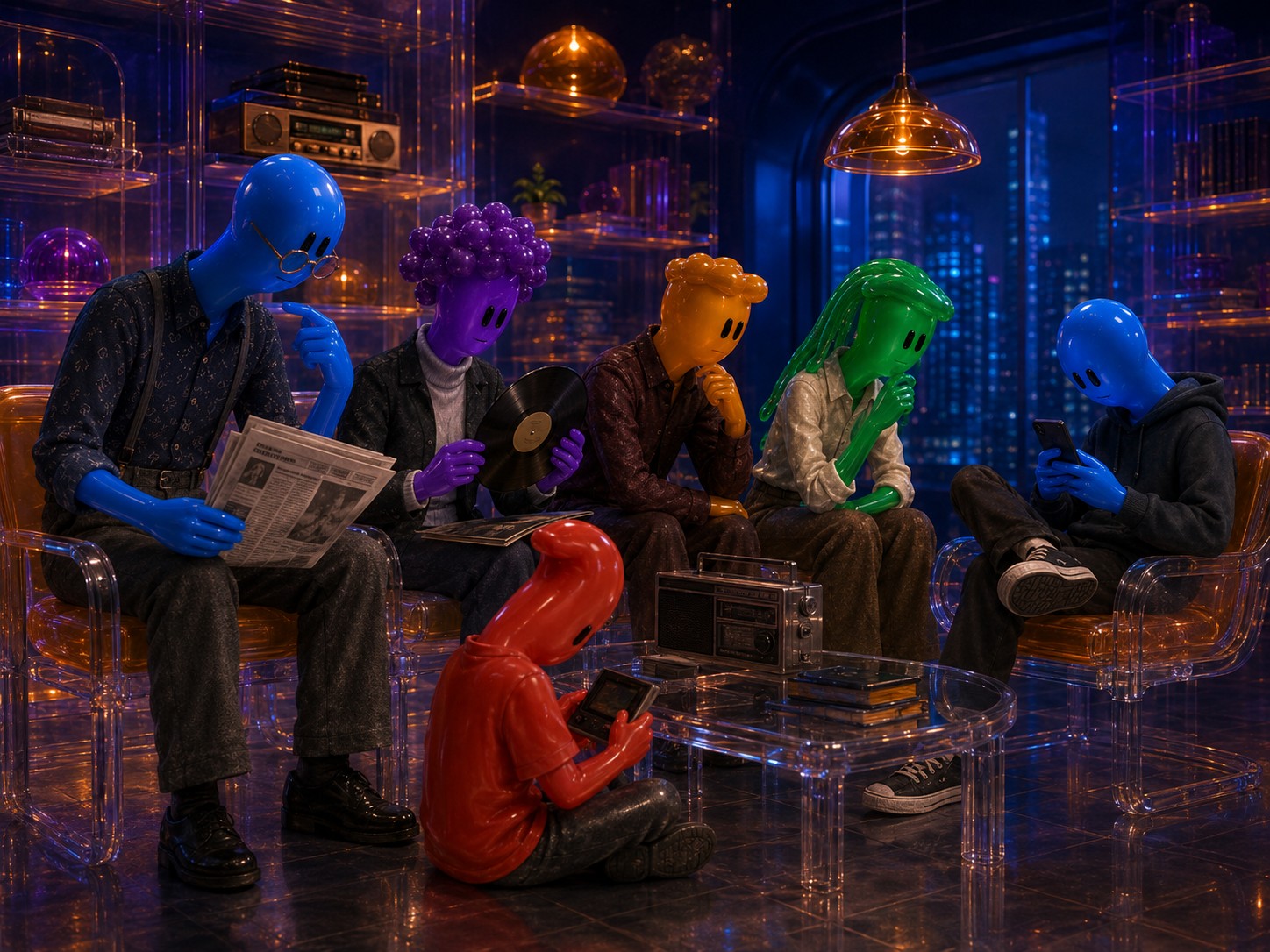
A middle-aged person staring at a newspaper over breakfast represents concentration.
A teenager staring at a phone represents addiction.
Both are humans ignoring the person sitting opposite them while consuming information through a rectangular manufactured object.
One rectangle simply has better public relations.
This doesn’t mean every technology is good
There is a trap here, and it is worth avoiding.
Rejecting technological panic does not require pretending that technologies cannot cause harm. Guns can kill people. Cars can kill people. Industrial processes can poison environments. Software can be badly designed. Platforms can exploit people. Governments can use technologies for surveillance and control. New systems create new vulnerabilities alongside new capabilities.
But “this technology can produce harms” is a very different proposition from “technology is making humanity worse”.
The second statement requires a standard against which the decline can be measured.
Worse at what?
Remembering telephone numbers? Probably.
Finding our way without a map? Perhaps.
Maintaining relationships across continents? Almost certainly not.
Accessing information? No.
Creating and distributing media? No.
Existing in precisely the psychological and cultural configuration of the late twentieth century?
Definitely worse.
But why would preserving that particular configuration be the objective?
Technological change produces trade-offs because change produces trade-offs. When writing stores memory externally, internal memory becomes less important for some tasks while collective memory becomes vastly more powerful. When cars increase mobility, communities reorganise around greater distances and some local patterns disappear. When recorded music makes performances infinitely repeatable, something about the singular live performance changes while billions of people gain access to music that would otherwise be unreachable.
There is no reason to assume that the ledger must always come out positive. There is equally little reason to assume that every loss represents decline.
Sometimes it simply represents transition.
Every generation thinks the next one has lost something
This is why technological panics repeat so reliably.
The new technology does not merely introduce a new object. It creates behaviours that violate the assumptions produced by the previous technological environment.
Writing threatens people formed by oral culture because they understand memory differently. Recorded music threatens assumptions about performance. Television threatens assumptions about attention and family life. Video games threaten assumptions about play. Online friendship threatens assumptions about social presence. Smartphones threaten assumptions about all of these things simultaneously.
The complaint therefore often sounds like an observation about human nature when it is really an observation about historical change.
People don’t talk any more.
People don’t read any more.
Nobody remembers anything.
Children can’t concentrate.
People don’t know how to socialise.
Nobody experiences the moment.
Perhaps some measurable behaviours really have changed. The hidden second half of each sentence remains more difficult to justify:
…the way we did.
That qualifier changes everything.
When adults complain that young people no longer communicate properly, concentrate properly, socialise properly or encounter culture properly, “properly” often means the methods that became normal during the adults’ own formative years.
There is no obvious reason those methods should constitute the final form of humanity.
And now, of course, AI
This makes Good Luck, Have Fun, Don’t Die particularly timely because it places artificial intelligence at the end of the technological slippery slope.
The phone is bad because we stare at it. The algorithm is worse because it learns what keeps us staring. AI becomes the culmination: technology no longer merely mediates reality but creates something capable of replacing it.
It is an effective science-fiction fear because AI really does represent another change in the relationship between humans and their tools. A tool that can respond in language, generate images, interpret information, perform cognitive work and adapt its responses feels different from a hammer or a television.
But different is the operative word.
The most interesting question about AI is not whether it will allow human beings to remain exactly as they were before AI existed. It won’t. Neither did writing.
The interesting question is what happens when people grow up taking this capability for granted.
Children who have always been able to ask a machine questions may develop a different relationship with knowledge. People who can generate images easily may develop a different relationship with visual creation. People who routinely collaborate with artificial systems may distribute cognitive work differently. Some abilities could become less common. New abilities may become important. Entire categories of expertise could change.
That process should be examined closely. It should be researched, debated, regulated where necessary and criticised when criticism is deserved.
But we should resist reaching immediately for the oldest story available to us:
The new thing has arrived.
The children have adapted to it.
The children are therefore ruined.
Good luck, have fun, don’t blame the kids
Maybe I should have kept watching Good Luck, Have Fun, Don’t Die. Reviews suggest that it becomes stranger and more complicated than its opening, and Verbinski himself has described its AI less as an external monster than as something being shaped by human demands. There may be more ambiguity in the complete film than I encountered in its first twenty minutes. (BFI)
But the irritation it produced points towards something larger than the film.
We are living through another alteration of the human technological environment. Smartphones have already changed how people communicate, remember, navigate, create and organise their lives. AI will change some of those things again. Whatever comes after AI will change others.
We should pay attention to those changes without deciding in advance that change means damage.
The teenager with the phone is particularly useful here because young people tend to expose technological change first. They have less investment in the systems that came before. They take the new environment for granted because, for them, it is granted. What older people experience as a disruptive technology may simply be part of the furniture of their world.
That can make young people look alien.
Perhaps that is why they are so often mistaken for warnings.
Look again at the teenager staring into the phone. They may communicate differently from us, remember differently from us, entertain themselves differently from us and eventually think differently from us.
Good.
Human beings have been doing that to one another for thousands of years.
The kids are not failing to become us.
That was never their job.